FA+
FA+ Shop
Shop

The revolution should not be televised
General | Posted 5 years ago"The force for this change isn't coming from safety or ethics. Neither is it activism. If you see any group advocating influentially for change in a media they don't own or control, you can double down and split the 10s, the dealer is holding status and quo. No change is possible on someone else's dime, and if what looks like a supermodel approaches you with a microphone and a camera crew, you should run like she's Johnny Carcosa. On occasion what the activists think they want may happen coincidentally to align with what the system wants, and from that moment on they will be led to believe they are making a difference, which means they're making money for someone else."
(In other words: if the media is picking up your cause and running with it, you aren't going to change a thing...)
-- The Last Psychiatrist(In other words: if the media is picking up your cause and running with it, you aren't going to change a thing...)
How to Write A Suicide Note...
General | Posted 5 years ago... but probably not the kind of note that you're expecting...
Every process has a genesis and ends with a revelation
General | Posted 5 years agoI stumbled on Luv(sic) while checking out tunes by the Japanese hip-hop artist Nujabes. I actually found Part 3 on its own and listened and liked it enough that it wasn't long before I sat down to listen to the entire Luv(sic) Hexology.
It wasn't until my second listening, treading the mill at the gym when things started to jump out at me. Mainly, the line "every process has a genesis and ends with a revelation". I binked and thought, "Oh no, that's not a coincidence." I was on guard... and started hearing other little things. Purgatory. Return to our souls and let the spirit flow. The God in me saw the devil in you. Like an olive branch brought back like a dove. There seemed to be a religious theme running through this!
Thinking he would be interested, I brought this to a religious friend of mine who knows the Bible like the back of his hand. And he pointed out to me that the six parts of Luv(sic) detail a growing relationship, from the infatuation at the start, hanging out, getting closer, the deepening love, through eventual loss and death at the end. And in that perspective, it becomes something truly beautiful.
The Luv(sic) Hexology was recorded over the course of nearly a decade, one part at a time. Sadly for the hip-hop world, Nujabes was killed in a traffic accident in 2010, before the sixth part of Luv(sic) could be finished and recorded. But it couldn't be left undone: it was completed and released posthumously to complete the set. Oddly poetic in some way that the final part of the Luv(sic) journey, about having the access code to the pearly gates and the angels drawing the drapes over the earthscape... would be the one finished with Nujabes gone.
If you think that you've heard Nujabes and Shing02 perform together before, you're probably right.
It wasn't until my second listening, treading the mill at the gym when things started to jump out at me. Mainly, the line "every process has a genesis and ends with a revelation". I binked and thought, "Oh no, that's not a coincidence." I was on guard... and started hearing other little things. Purgatory. Return to our souls and let the spirit flow. The God in me saw the devil in you. Like an olive branch brought back like a dove. There seemed to be a religious theme running through this!
Thinking he would be interested, I brought this to a religious friend of mine who knows the Bible like the back of his hand. And he pointed out to me that the six parts of Luv(sic) detail a growing relationship, from the infatuation at the start, hanging out, getting closer, the deepening love, through eventual loss and death at the end. And in that perspective, it becomes something truly beautiful.
The Luv(sic) Hexology was recorded over the course of nearly a decade, one part at a time. Sadly for the hip-hop world, Nujabes was killed in a traffic accident in 2010, before the sixth part of Luv(sic) could be finished and recorded. But it couldn't be left undone: it was completed and released posthumously to complete the set. Oddly poetic in some way that the final part of the Luv(sic) journey, about having the access code to the pearly gates and the angels drawing the drapes over the earthscape... would be the one finished with Nujabes gone.
Gotta finish what we started, so I cut the tape

As our records will stay on rotate...
If you think that you've heard Nujabes and Shing02 perform together before, you're probably right.
What's a five letter word for it ain't better?
General | Posted 5 years agoOh oh-oh oh-oh, keep on educatin', meditatin', anything to keep me up.
Oh oh-oh oh-oh, keep on meditatin', activatin', anything to keep me up-lifted.
Keep on relevatin', elevatin', anything to keep me up.
Oh-oh, oh, oh, oh-oh, oh, oh...
How bad do you want it? (Which way?)
This way to the truth, oh!
I put everything on it (Which way?)
This way, follow suit, oh!
How bad do you want it? (Which way?)
This way to the truth, oh!
Put everything on it (Which way?)
This way, follow suit, oh!Za gimme za gimme za!
General | Posted 5 years agoOh. My. God. I found out yesterday that "Na Na Na" by My Chemical Romance was a song in The Sims. And you know what that means...
The 600MHz Gamble
General | Posted 6 years agoSo 5G is coming to our mobile devices whether we want it or not. And almost all the mobile carriers have staked their claim in the 5GHz band, requiring a transceiver on every other telephone pole or light post or power pole in your neighborhood.
Almost... all.
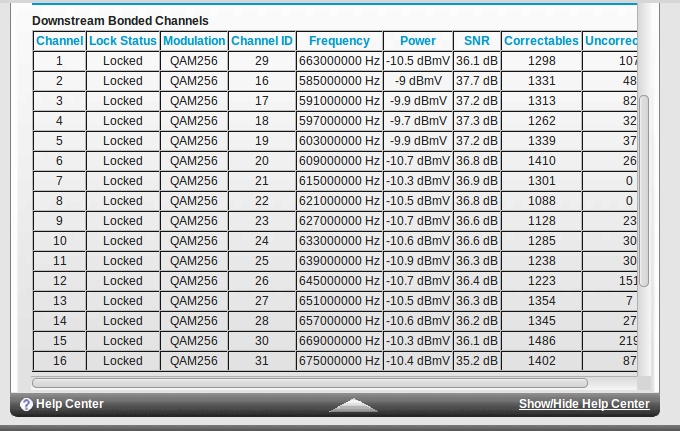
Because broadcast TV signals have gotten more efficient in the digital age and take up less space, the FCC has mandated the "repack", a de-fragmenting of the broadcast spectrum, getting existing stations moved down into the lower ranges and freeing up space above Channel 35 (roughly 600MHz). And the FCC then auctioned off that bandwidth to the mobile companies. T-Mobile shelled out $8 billion to buy this spectrum with plans to use it for their nationwide 5G coverage. So why is this interesting?
First you need to know about the trade-off between frequency bandwidth and wave propagation. Ultra High Frequency waves can carry a lot of bandwidth but can be easily attenuated by... like... rain. On the other end of the scale, Extremely Low Frequency waves (with wavelengths of thousands of miles) circle the Earth several times before fading out and can penetrate into the ocean to signal submarines... but pretty much all they can do is signal the submarine to rise to the surface where it can use a different radio to find out more. Waves that long are useless for transmitting actual coded information.
5GHz seems like the right choice for something as high-bandwidth as 5G. It only takes a little slice of that spectrum to move a lot of data. But... well... you probably know how hard it is for your 802.11 wireless on 5GHz to get through the walls of your house. Now you've got a transceiver on a lamp post outside trying to get into several houses in the neighborhood. Hence... needing another transceiver every 100 feet to blanket a neighborhood.
But 600MHz... we know 600MHz, it's broadcast TV! The kind you set a transmitter up on a hill and blanket an entire city. It's the kind you can stick up on Mt. Wilson and blanket Los Angeles, Orange, San Bernardino and Riverside counties. If T-Mobile has found a way to push 5G speeds out over the 600MHz spectrum... this could be a huge advantage, especially reaching out into communities outside the major cities.
Is the 600MHz gamble going to pay off? Stay tuned. This is going to be very... very interesting...
Almost... all.
Because broadcast TV signals have gotten more efficient in the digital age and take up less space, the FCC has mandated the "repack", a de-fragmenting of the broadcast spectrum, getting existing stations moved down into the lower ranges and freeing up space above Channel 35 (roughly 600MHz). And the FCC then auctioned off that bandwidth to the mobile companies. T-Mobile shelled out $8 billion to buy this spectrum with plans to use it for their nationwide 5G coverage. So why is this interesting?
First you need to know about the trade-off between frequency bandwidth and wave propagation. Ultra High Frequency waves can carry a lot of bandwidth but can be easily attenuated by... like... rain. On the other end of the scale, Extremely Low Frequency waves (with wavelengths of thousands of miles) circle the Earth several times before fading out and can penetrate into the ocean to signal submarines... but pretty much all they can do is signal the submarine to rise to the surface where it can use a different radio to find out more. Waves that long are useless for transmitting actual coded information.
5GHz seems like the right choice for something as high-bandwidth as 5G. It only takes a little slice of that spectrum to move a lot of data. But... well... you probably know how hard it is for your 802.11 wireless on 5GHz to get through the walls of your house. Now you've got a transceiver on a lamp post outside trying to get into several houses in the neighborhood. Hence... needing another transceiver every 100 feet to blanket a neighborhood.
But 600MHz... we know 600MHz, it's broadcast TV! The kind you set a transmitter up on a hill and blanket an entire city. It's the kind you can stick up on Mt. Wilson and blanket Los Angeles, Orange, San Bernardino and Riverside counties. If T-Mobile has found a way to push 5G speeds out over the 600MHz spectrum... this could be a huge advantage, especially reaching out into communities outside the major cities.
Is the 600MHz gamble going to pay off? Stay tuned. This is going to be very... very interesting...
NACHO FRIES ARE BACK!
General | Posted 6 years agoMost of the time we try our best to skip over or otherwise avoid all the advertising that's out there. Same old themes, same old tricks, trying to instill a need that's not necessarily there and teach us how to want things. But if I ever meet the ad agency behind the Taco Bell Nacho Fries ad campaign, I'm buying all of them a case of Baja Blast.
Because when nacho fries first came on the scene, the question was asked: why doesn't Taco Bell have fries? That led down a rabbit hole of deception, treachery and big corporation greed, ultimately leading to the Web of Fries.
Of course it was a limited time promotion. But when they came back, the story picked up with the daughter, now grown, leading a revolution of her own in the future. The conspiracy to keep the Mexican spices and nacho cheese out of the hands of the common folk continues with Web of Fries II: Franchise Wars.
Nacho fries were supposed to come back again, except they didn't. Because they'd all disappeared. One man takes up the epic quest across time and space to find out where nacho fries disappeared to and bring them back in Retrieval.
Nacho fries would inspire a down-and-out man with an amazing talent, discovered accidentally and thrust into the limelight to sing about what he loves. But when that love is taken away, can he still go on with this life? Find out in Chasing Gold. (Special Bonus: listen to the full version of the song by Darren Criss)
Nacho fries aren't always around and in their absence, the desire is still there. Two enterprising men decide to take matters into their own hands and distribute nacho fries on the down-low. When Taco Bell brings the beloved side back offically, can the two men still keep their business going? It's a matter of Supply and Demand.
Seriously, when I found out a few months ago that nacho fries were back, the first words out of my mouth were "Is there a new commercial?" I think you now know why.
Because when nacho fries first came on the scene, the question was asked: why doesn't Taco Bell have fries? That led down a rabbit hole of deception, treachery and big corporation greed, ultimately leading to the Web of Fries.
Of course it was a limited time promotion. But when they came back, the story picked up with the daughter, now grown, leading a revolution of her own in the future. The conspiracy to keep the Mexican spices and nacho cheese out of the hands of the common folk continues with Web of Fries II: Franchise Wars.
Nacho fries were supposed to come back again, except they didn't. Because they'd all disappeared. One man takes up the epic quest across time and space to find out where nacho fries disappeared to and bring them back in Retrieval.
Nacho fries would inspire a down-and-out man with an amazing talent, discovered accidentally and thrust into the limelight to sing about what he loves. But when that love is taken away, can he still go on with this life? Find out in Chasing Gold. (Special Bonus: listen to the full version of the song by Darren Criss)
Nacho fries aren't always around and in their absence, the desire is still there. Two enterprising men decide to take matters into their own hands and distribute nacho fries on the down-low. When Taco Bell brings the beloved side back offically, can the two men still keep their business going? It's a matter of Supply and Demand.
Seriously, when I found out a few months ago that nacho fries were back, the first words out of my mouth were "Is there a new commercial?" I think you now know why.
Martin, Reyn and Sunday Service at The Church
General | Posted 6 years agoMartin Galway made a name for himself writing music for computer games, way back in the heyday of the Commodore 64. Chances are if you played a game published by Ocean, you probably heard something Martin Galway wrote. And one of those games from Ocean was Wizball. A game about a wizard and his cat, going on a quest to collect colors and re-color the drab, greyscale world. It was challenging and had the best co-op, with one player controlling Wiz and the other controlling Cat. Because Wiz carries the weapons but only Cat can collect the color droplets... it's the best kind of co-op where you each truly depend on each other to advance.
Martin Galway wrote good tunes for Wizball, tunes that have stuck with me for decades now. The title theme especially... playful and bright with a soaring, soulful melody line before plunging down into strange, deep atmospheric shades.
So when I found myself searching for the tune online, just to get a little taste again... I was surprised to find Reyn Ouwehand, a multi-instrumentalist from the Netherlands, had done a cover of it. With a little hesitation, I clicked... after all, how could anyone really pay tribute to the original? But Reyn... Reyn kills it. It started a little differently than I expected, but when he got on the guitar and laid out those all too familiar opening notes, I won't lie: I got chills up and down my spine. Reyn pays homage to the original while still making it truly his own tune, and he absolutely crushes it.
And what could he possibly do for an encore? He takes Martin's high-score music from Wizball and spins it his own way, via an aging Eminent organ with dodgy buttons and a melodica. It's... just... perfect.
(By the way... how do you trigger your loop-box when you're using all four limbs at a drum kit? See if you can figure it out...)
Reyn crosses paths with Martin Galway again... taking the loader music from Green Beret and laying down his own blistering version of it. Awesome use of a Rhodes electric piano...
What else has Martin Galway done? Well, there's certainly a lot to be said for the music he wrote for the game based on Rambo: First Blood Part 2... those are more tunes that have stayed with me for decades. And for very good reason!
Martin Galway wrote good tunes for Wizball, tunes that have stuck with me for decades now. The title theme especially... playful and bright with a soaring, soulful melody line before plunging down into strange, deep atmospheric shades.
So when I found myself searching for the tune online, just to get a little taste again... I was surprised to find Reyn Ouwehand, a multi-instrumentalist from the Netherlands, had done a cover of it. With a little hesitation, I clicked... after all, how could anyone really pay tribute to the original? But Reyn... Reyn kills it. It started a little differently than I expected, but when he got on the guitar and laid out those all too familiar opening notes, I won't lie: I got chills up and down my spine. Reyn pays homage to the original while still making it truly his own tune, and he absolutely crushes it.
And what could he possibly do for an encore? He takes Martin's high-score music from Wizball and spins it his own way, via an aging Eminent organ with dodgy buttons and a melodica. It's... just... perfect.
(By the way... how do you trigger your loop-box when you're using all four limbs at a drum kit? See if you can figure it out...)
Reyn crosses paths with Martin Galway again... taking the loader music from Green Beret and laying down his own blistering version of it. Awesome use of a Rhodes electric piano...
What else has Martin Galway done? Well, there's certainly a lot to be said for the music he wrote for the game based on Rambo: First Blood Part 2... those are more tunes that have stayed with me for decades. And for very good reason!
Harry Potter and the Story of Redemption
General | Posted 6 years agoFresh back from seeing the "Harry Potter in Concert" rendition of Sorcerer's Stone... wherein the movie is projected on a big screen suspended over the stage, and on the stage is the local symphony orchestra playing the movie score live... well... it reminds me that the Harry Potter redemption plot is a fairly popular one.
I mean, a lot of us have miserable little lives in uninspiring jobs, making just enough to get by and knowing we'll have to work until two days before we die. Who among us wouldn't want Hagrid to come in and tell us that this miserable existence that we resigned ourselves to is nothing, because deep down inside we're something amazing and special! The reason you've felt so alone and out of place in the world is because you belong in a different world altogether! Harry Potter takes it to a bit of an extreme... not just a miserable life but Harry is practically a slave at the Dursley's and mistreated in ways that would probably bring criminal charges if Child Protective Services ever found out... but it's about right for the story, I suppose.
But you see that theme pop up in other places. "The Matrix", right? Mr. Anderson has that dead-end cubicle-bound job... although to be fair, he is a pretty slick hacker by night. Again... he's spirited away from his dull life and hey Neo, you're The One! Bonus points: the whole world he lived in is fake! Granted, the real world isn't exactly glamorous... but at least he's part of the cool kids that know what's really going on. And he gets to go out and fight the forces of evil and heck, he becomes practically a superhero by the end of it. Not bad for a cubicle washout, huh?
One I never saw but was tipped to by The Last Psychiatrist: "Wanted". Once again, the dead-end job, the cheating girlfriend... the rotten life. Until some magical woman finds him and tells him he's special... because his father was special. Those aren't anxiety attacks, they're his secret weapon. And with a little work and coaching, now look at him. He's a badass, taking orders from a higher power and executing those orders. Don't forget the hot chick with her own extraordinary powers chooses him, when she could have chosen anyone. And now he can totally tell off his cheating ex-girlfriend!
I suppose they all fall under the category that TLP eventually calls "waiting for your powers to kick in". How many of us are sitting here, getting older, working that McJob while still waiting for our real life to march in the door and whisk us away? Waiting for your powers to kick in could be one of the only things keeping a lot of people alive these days.
Fortunately (or unfortunately?) Hollywood is happy to keep feeding us these fairy tales... and we probably want them as bad as ever.
I mean, a lot of us have miserable little lives in uninspiring jobs, making just enough to get by and knowing we'll have to work until two days before we die. Who among us wouldn't want Hagrid to come in and tell us that this miserable existence that we resigned ourselves to is nothing, because deep down inside we're something amazing and special! The reason you've felt so alone and out of place in the world is because you belong in a different world altogether! Harry Potter takes it to a bit of an extreme... not just a miserable life but Harry is practically a slave at the Dursley's and mistreated in ways that would probably bring criminal charges if Child Protective Services ever found out... but it's about right for the story, I suppose.
But you see that theme pop up in other places. "The Matrix", right? Mr. Anderson has that dead-end cubicle-bound job... although to be fair, he is a pretty slick hacker by night. Again... he's spirited away from his dull life and hey Neo, you're The One! Bonus points: the whole world he lived in is fake! Granted, the real world isn't exactly glamorous... but at least he's part of the cool kids that know what's really going on. And he gets to go out and fight the forces of evil and heck, he becomes practically a superhero by the end of it. Not bad for a cubicle washout, huh?
One I never saw but was tipped to by The Last Psychiatrist: "Wanted". Once again, the dead-end job, the cheating girlfriend... the rotten life. Until some magical woman finds him and tells him he's special... because his father was special. Those aren't anxiety attacks, they're his secret weapon. And with a little work and coaching, now look at him. He's a badass, taking orders from a higher power and executing those orders. Don't forget the hot chick with her own extraordinary powers chooses him, when she could have chosen anyone. And now he can totally tell off his cheating ex-girlfriend!
I suppose they all fall under the category that TLP eventually calls "waiting for your powers to kick in". How many of us are sitting here, getting older, working that McJob while still waiting for our real life to march in the door and whisk us away? Waiting for your powers to kick in could be one of the only things keeping a lot of people alive these days.
Fortunately (or unfortunately?) Hollywood is happy to keep feeding us these fairy tales... and we probably want them as bad as ever.
Delusion
General | Posted 6 years agoLegion is over, and what a story it was. But in Season Two, there were a series of short pieces about ideas, delusion, insanity, perception and the world. I went looking for them today, when considering how an idea becomes a delusion. And I found that some enterprising individual had stitched them all together into one piece titled Facets of Delusion. Darn fine edits, too... looks like it was made that way.
Honestly I don't know what I like better: Jon Hamm's narration, or Jeff Russo's score.
Honestly I don't know what I like better: Jon Hamm's narration, or Jeff Russo's score.
Glitching
General | Posted 6 years agoNo wonder, you're so stubborn.
Nobody ever made you dig deeper.
No wonder you've got demons.
Everything you ever did is coming back around.
I can't help you, if I'm weaker.
You took the honey from the queen bee keeper.
No wonder, you have demons.
Everyone's got a choice this time around!I never knew of The Glitch Mob until a music player app threw the whole of "Love, Death, Immortality" into my play queue after I had started with some Pendulum. I immediately became a fan, at least of "Love, Death, Immortality". Nothing like some arena dubstep to get you in the right mindset for the gym.
We Will Meet Again
General | Posted 6 years agoWhere have you gone my love, my friend?
Somewhere without the rain
I feel afraid now, I feel alone
Will we meet again?
Can you recall what we once knew?
Somewhere without the pain
I feel afraid now, but not alone
We will meet again
I can't hear your voice
But you know I feel your soul
I can't hear your voice
But you know I feel your soul
Where have you gone my love, my friend?
Somewhere without any pain
I'm not afraid now, I'm not alone
We will meet again
* * * * *
Craig Wilhelm "Cetas" Smith
December 10, 1979 - June 18, 2019
Godspeed, my friendRUN, RABBIT, RUN!
General | Posted 6 years agoThe first weekend of May saw the first race weekend of the Cascade Sports Car Club season. And in it was one of the most epic battles I have ever seen in all my years of club racing. Probably not since the two Formula Mazdas that went toe-to-toe back at Buttonwillow (and ended up coming together in the last corner) has such a battle been fought. And those were two of the same type of car.
This... well... do you think a Mark 2 VW Rabbit could take on an E46 BMW? Not a chance, right? Except this is no ordinary Rabbit... this is a Super Production class Rabbit, up against a SPEC E46 BMW. These two went at it the whole race. Each lap when they came in to view around Turn 9 on the back stretch I had no idea who was going to be in front. When the race was over and they drove by on the cool-down lap, I bowed in reverence to two warriors.
But this week, I heard rumors... rumors of race video. And I found it. It's even better than I could have imagined: both drivers got together and created a synchronized split-screen from their respective in-car cameras. You get to see it all, from both perspectives.
I won't spoil who ends up winning... or what happens during the race. You should watch it yourself and find out...
This... well... do you think a Mark 2 VW Rabbit could take on an E46 BMW? Not a chance, right? Except this is no ordinary Rabbit... this is a Super Production class Rabbit, up against a SPEC E46 BMW. These two went at it the whole race. Each lap when they came in to view around Turn 9 on the back stretch I had no idea who was going to be in front. When the race was over and they drove by on the cool-down lap, I bowed in reverence to two warriors.
But this week, I heard rumors... rumors of race video. And I found it. It's even better than I could have imagined: both drivers got together and created a synchronized split-screen from their respective in-car cameras. You get to see it all, from both perspectives.
I won't spoil who ends up winning... or what happens during the race. You should watch it yourself and find out...
To Sleep... Perchance to Dream
General | Posted 7 years ago"Randy you've been here so many times you work here. Let's get past Vegas today. Let's go deeper. Let's go further."
"Like... to Reno?"
"Deeper..."
I don't remember exactly why i started watching Dream Corp LLC. Something about the original promos... maybe the rotoscoped animation a-la "Waking Life" or "A Scanner Darkly". Whatever it was, I gave it a shot. And found a very strange show. Silly, comedic, nonsensical, absurd... and yet poignant at times.
How strange? This strange.
If you're sitting there wondering "What the hell did I just watch?"... maybe you should check it out.
P.S. Thanks to a user in the video comments for pointing out the music is "Gentry" by Chris Garneau. The trailer would not have the same impact without that amazing soundtrack backing it up.
"Like... to Reno?"
"Deeper..."
I don't remember exactly why i started watching Dream Corp LLC. Something about the original promos... maybe the rotoscoped animation a-la "Waking Life" or "A Scanner Darkly". Whatever it was, I gave it a shot. And found a very strange show. Silly, comedic, nonsensical, absurd... and yet poignant at times.
How strange? This strange.
If you're sitting there wondering "What the hell did I just watch?"... maybe you should check it out.
P.S. Thanks to a user in the video comments for pointing out the music is "Gentry" by Chris Garneau. The trailer would not have the same impact without that amazing soundtrack backing it up.
Slip-slidin' away
General | Posted 7 years agoHey friends, today we're going to talk about LSD!
No, no, not Lysergic Acid Diethylamide. I'm talking about a Limited Slip Differential! What's all the fuss about? Well first, I suppose we need to talk about what a regular differential is and why it's bad when it slips.
A differential is an ingenious and simple arrangement of gears that allows power to be transmitted to two drive wheels while still letting them turn at different speeds. This is necessary because when a car turns, the inside wheel follows a shorter path than the outside wheel. It's basic physics and the same idea behind why the inside of a corner is a shorter distance than the outside.
The problem with a differential is that it transmits the same amount of torque to each side. Now at first that sounds like an incorrect statement, because we all know about getting stuck in the snow or the mud, when one drive wheel is slipping and no matter how much you tread on the throttle, one wheel spins and the other does not and the car goes nowhere. But it's correct: if it takes 5 pound-feet of torque to spin the loose wheel, only 5 pound-feet of torque will get to the wheel with traction. And 5 pound-feet of torque is not going to move a 3000-pound car.
The simplest LSD senses a large difference in speed between the two wheels and will apply pressure to a set of discs or a clutch to tie the two halves together. If the difference is small enough like when the car is going around a corner, the diff remains "open" and both wheels can turn at different rates. But if the car gets stuck in the sand, or you put the hammer down and one wheel breaks traction and spins at a largely different speed from the other, the diff will "lock up" and both wheels will get equal power. In essence, it limits the slip.
In this enlightened age of anti-lock brakes, some vehicles are inclined to cheat. They have standard open differentials, but thanks to the wheel speed sensors, they can detect when one wheel is slipping. And then using the anti-lock brake system they will apply the brake to the spinning wheel. Now it takes more torque to turn that wheel and more torque will be transmitted to the wheel that has traction. It behaves like an LSD but it's all done through computerized magic instead of mechanical systems. It's also pretty much for emergency situations when you get stuck, not for when you're throwing down along the twisties.
Now in the realm of racing, an LSD isn't governed by a difference in wheel speeds, but by how much power is being applied to the drive wheels. The thought here is that in the on-the-edge world of racing, if a tire breaks traction you've already lost so you have to lock up the differential before that has a chance to happen. In a racing diff, there are different wedge-shaped pieces that can be dropped in to govern how much power can be applied before the diff locks.
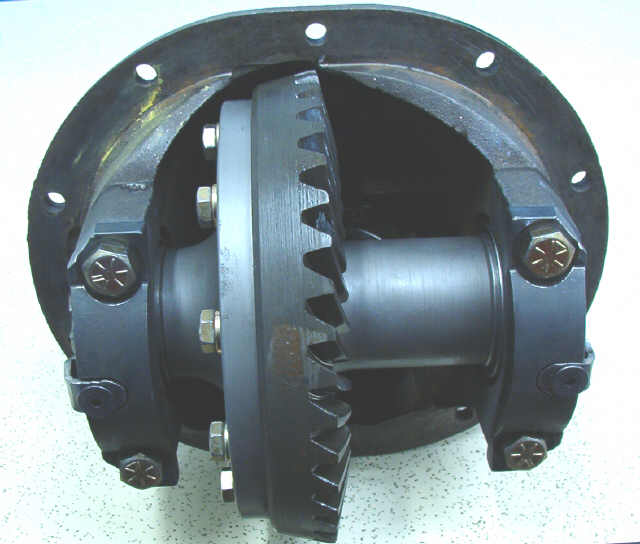
So wait... if the risk of a tire slipping has such dire consequences, why not leave the diff locked all the time? If you never plan on turning, that's exactly what you want! Drag racers call it a "spool" and it's pretty much a solid piece of metal that attaches to the crown wheel. Both drive wheels turn at the same speed regardless of which has more or less traction. For the rest of us who want to drive on a road course and make turns... we do need the ability for the wheels to turn at different rates.
Ideally, when accelerating hard on a straight the diff should lock up and it should unlock when it's time to turn a corner. Unfortunately that point between locking and unlocking is hard to define. If the diff locks too early... like starting to put down power in a corner, the car will resist turning and understeer. But if it locks up too late... you might put down enough power that the inside wheel (which isn't loaded as much as the outer wheel... forces in the turn and all that) might break traction and slip. Suddenly the majority of the power that's making it to the ground is being delivered by the outside wheel, the thrust becomes asymmetric and the nose of the car tries to turn further into the corner. This is classically known as Power Oversteer.
This balance between locking and unlocking is something that needs to be dialed in for each race course and each driver, because every driver is going to attack corners differently (and get on the throttle differently coming out of corners).
But wait, there's more! So far we've only been talking about LSDs that lock up during acceleration. As hinted above by the "wedge" diagrams, very good LSDs also have settings for locking up when coasting or braking. The stability provided by both wheels being hooked together to keep the car in a straight line is a huge benefit when braking too! This is the same idea as acceleration... when a certain amount of deceleration force is encountered, the LSD will lock, and then unlock when the forces subside. Having the LSD locked during braking keeps the car stable and allows more braking force to be sent to the rear wheels. But just like acceleration, if it doesn't unlock by the time you want to turn into the corner, the car will want to keep going straight. And if it unlocks too early, you might lock one wheel under braking and destabilize the car.
Having the diff lock under coasting forces also helps avoid Trailing Throttle Oversteer, when the driver lifts off the throttle in the middle of a corner and due to the weight transfer, the back end of the car wants to come around. If the LSD locks when the throttle is lifted, both wheels will equally grip the surface and create understeer (trying to make the car go straight). Neither situation is ideal, but generally understeer is easier to recover from than oversteer (going wide and having to slow down more versus ending up facing the wrong way).
Hopefully now you have a better idea of the advantages of a limited slip differential and how it can be anything from a brute-force "get out of sand-trap free" card to a finely-tuned precision scalpel helping stabilize a race car on the ragged edge. It's been offered on street vehicles before: anyone who's seen "My Cousin Vinny" knows about Chevrolet's Posi-Traction system. Limited slip was quite a popular option in the 1950s and 1960s. More recently the Ford Focus RS (that was never sold in the US) came with a Quaife LSD. Sources say that the limited slip in the RS made it a real handful on the street, but when you took it to the track it was amazing!
The very simplest limited slip is a viscous coupling: a coupling with a fluid that thickens when it's churned. Each half of the coupling has vanes that move through the fluid. If the two halves have a small speed difference, the fluid remains viscous and they can rotate independently. But if the halves have a greater speed difference, the greater disturbance of the fluid causes it to thicken up and resist the independent motion of the two halves. Volkswagen used this as a center differential on early all-wheel-drive models.
And yes, that's right... full-time all-wheel-drive vehicles almost always have a differential in the center, between the front and rear axles. This allows the speed of the front axle to be different from the speed of the rear axle while still applying power to all of it. But just like the diff between wheels, if it doesn't have a limited slip component, then any one wheel free will get all the power and cut the torque to the three other wheels.
In the olden days (1980s) if you had an Audi with the Quattro all-wheel-drive system, you had a pull-out knob or a twist-knob in the center console that would allow you to manually lock the center and rear differentials. Locking the center diff made sure power was evenly sent to front and rear axles (even if wheels were slipping) and locking the rear diff would make both rear wheels get all the power sent to the rear. It pretty much guaranteed you could push yourself out of a jam if your rear wheels had traction.
You did _not_ want to drive around with it engaged though... in a straight line on level ground it might be okay. But once the front axle wanted to rotate at a different speed from the rear axle or the two rear tires wanted to turn at different speeds... it would be very hard on the whole drivetrain, not to mention your tires!
No, no, not Lysergic Acid Diethylamide. I'm talking about a Limited Slip Differential! What's all the fuss about? Well first, I suppose we need to talk about what a regular differential is and why it's bad when it slips.
A differential is an ingenious and simple arrangement of gears that allows power to be transmitted to two drive wheels while still letting them turn at different speeds. This is necessary because when a car turns, the inside wheel follows a shorter path than the outside wheel. It's basic physics and the same idea behind why the inside of a corner is a shorter distance than the outside.
The problem with a differential is that it transmits the same amount of torque to each side. Now at first that sounds like an incorrect statement, because we all know about getting stuck in the snow or the mud, when one drive wheel is slipping and no matter how much you tread on the throttle, one wheel spins and the other does not and the car goes nowhere. But it's correct: if it takes 5 pound-feet of torque to spin the loose wheel, only 5 pound-feet of torque will get to the wheel with traction. And 5 pound-feet of torque is not going to move a 3000-pound car.
The simplest LSD senses a large difference in speed between the two wheels and will apply pressure to a set of discs or a clutch to tie the two halves together. If the difference is small enough like when the car is going around a corner, the diff remains "open" and both wheels can turn at different rates. But if the car gets stuck in the sand, or you put the hammer down and one wheel breaks traction and spins at a largely different speed from the other, the diff will "lock up" and both wheels will get equal power. In essence, it limits the slip.
In this enlightened age of anti-lock brakes, some vehicles are inclined to cheat. They have standard open differentials, but thanks to the wheel speed sensors, they can detect when one wheel is slipping. And then using the anti-lock brake system they will apply the brake to the spinning wheel. Now it takes more torque to turn that wheel and more torque will be transmitted to the wheel that has traction. It behaves like an LSD but it's all done through computerized magic instead of mechanical systems. It's also pretty much for emergency situations when you get stuck, not for when you're throwing down along the twisties.
Now in the realm of racing, an LSD isn't governed by a difference in wheel speeds, but by how much power is being applied to the drive wheels. The thought here is that in the on-the-edge world of racing, if a tire breaks traction you've already lost so you have to lock up the differential before that has a chance to happen. In a racing diff, there are different wedge-shaped pieces that can be dropped in to govern how much power can be applied before the diff locks.
So wait... if the risk of a tire slipping has such dire consequences, why not leave the diff locked all the time? If you never plan on turning, that's exactly what you want! Drag racers call it a "spool" and it's pretty much a solid piece of metal that attaches to the crown wheel. Both drive wheels turn at the same speed regardless of which has more or less traction. For the rest of us who want to drive on a road course and make turns... we do need the ability for the wheels to turn at different rates.
Ideally, when accelerating hard on a straight the diff should lock up and it should unlock when it's time to turn a corner. Unfortunately that point between locking and unlocking is hard to define. If the diff locks too early... like starting to put down power in a corner, the car will resist turning and understeer. But if it locks up too late... you might put down enough power that the inside wheel (which isn't loaded as much as the outer wheel... forces in the turn and all that) might break traction and slip. Suddenly the majority of the power that's making it to the ground is being delivered by the outside wheel, the thrust becomes asymmetric and the nose of the car tries to turn further into the corner. This is classically known as Power Oversteer.
This balance between locking and unlocking is something that needs to be dialed in for each race course and each driver, because every driver is going to attack corners differently (and get on the throttle differently coming out of corners).
But wait, there's more! So far we've only been talking about LSDs that lock up during acceleration. As hinted above by the "wedge" diagrams, very good LSDs also have settings for locking up when coasting or braking. The stability provided by both wheels being hooked together to keep the car in a straight line is a huge benefit when braking too! This is the same idea as acceleration... when a certain amount of deceleration force is encountered, the LSD will lock, and then unlock when the forces subside. Having the LSD locked during braking keeps the car stable and allows more braking force to be sent to the rear wheels. But just like acceleration, if it doesn't unlock by the time you want to turn into the corner, the car will want to keep going straight. And if it unlocks too early, you might lock one wheel under braking and destabilize the car.
Having the diff lock under coasting forces also helps avoid Trailing Throttle Oversteer, when the driver lifts off the throttle in the middle of a corner and due to the weight transfer, the back end of the car wants to come around. If the LSD locks when the throttle is lifted, both wheels will equally grip the surface and create understeer (trying to make the car go straight). Neither situation is ideal, but generally understeer is easier to recover from than oversteer (going wide and having to slow down more versus ending up facing the wrong way).
Hopefully now you have a better idea of the advantages of a limited slip differential and how it can be anything from a brute-force "get out of sand-trap free" card to a finely-tuned precision scalpel helping stabilize a race car on the ragged edge. It's been offered on street vehicles before: anyone who's seen "My Cousin Vinny" knows about Chevrolet's Posi-Traction system. Limited slip was quite a popular option in the 1950s and 1960s. More recently the Ford Focus RS (that was never sold in the US) came with a Quaife LSD. Sources say that the limited slip in the RS made it a real handful on the street, but when you took it to the track it was amazing!
The very simplest limited slip is a viscous coupling: a coupling with a fluid that thickens when it's churned. Each half of the coupling has vanes that move through the fluid. If the two halves have a small speed difference, the fluid remains viscous and they can rotate independently. But if the halves have a greater speed difference, the greater disturbance of the fluid causes it to thicken up and resist the independent motion of the two halves. Volkswagen used this as a center differential on early all-wheel-drive models.
And yes, that's right... full-time all-wheel-drive vehicles almost always have a differential in the center, between the front and rear axles. This allows the speed of the front axle to be different from the speed of the rear axle while still applying power to all of it. But just like the diff between wheels, if it doesn't have a limited slip component, then any one wheel free will get all the power and cut the torque to the three other wheels.
In the olden days (1980s) if you had an Audi with the Quattro all-wheel-drive system, you had a pull-out knob or a twist-knob in the center console that would allow you to manually lock the center and rear differentials. Locking the center diff made sure power was evenly sent to front and rear axles (even if wheels were slipping) and locking the rear diff would make both rear wheels get all the power sent to the rear. It pretty much guaranteed you could push yourself out of a jam if your rear wheels had traction.
You did _not_ want to drive around with it engaged though... in a straight line on level ground it might be okay. But once the front axle wanted to rotate at a different speed from the rear axle or the two rear tires wanted to turn at different speeds... it would be very hard on the whole drivetrain, not to mention your tires!
And There Are Blackouts In LA Tonight
General | Posted 7 years agoLike a cloud ushered in by wind
You were just a reaction to my confusion
A hybrid of hundreds of troubles
People felt us connect and ran for shelter...
And there are blackouts in L. A. tonight
There's an evident lack of light tonight
An increase in desire
You'll catch me hanging out on a wire
Cutting the voltage to your power line
(And the lights... go... out!)I was recently listening to the usual suspects from "Wide Angle" on YouTube when I decided to sample something off of Hybrid's second album "Morning SciFi". All I can say is... why didn't I listen to this album earlier! From "Higher Than A Skyscraper" -- once again showing how a big beat backing to a string section is a completely sick combination -- to the super-dark, super sexy "Visible Noise", it's another masterpiece of techno-orchestral hybridization.
And then when I heard "Lights Go Down, Knives Come Out"... I gotta wonder if Chris Healings and Mike Truman are scoring movies yet.
And if not... why not?!
The Phase Game
General | Posted 7 years agoOne of the things you can do with two-phase electricity (at least for those of us in the US that have 120-volt power as standard) is get 240 volts.
If you ever hooked a computer fan up to the 5-volt and 12-volt lines in an attempt to get something more than 5 but less than 12, that's exactly the way it works. A 5-volt line is 5-volts potential in reference to neutral ("zero" volts). Same with the 12-volt line. But if you use the 5-volt and 12-volt lines, the potential between them is 7-volts, and that's what the fan sees.
Because of the timing offset between phases there are times when one phase is cresting while the other is dipping below zero into the negative. Each phase still only develops a 120-volt potential versus neutral, but there are times where the potential between two phases becomes greater than 120-volts.
Now just because your home doesn't have any 240-volt outlets, don't think there aren't two phases present. Each phase can be used against neutral to get 120-volts, but you have to be very careful how the house is wired if there's any possibility that equipment plugged into different outlets might be hooked together somehow (A/V equipment especially). I learned this lesson very painfully in a criminally mis-wired rental property and my laptop and surround receiver suffered greatly in the process.
But if you know what you're doing and have a sane grip on electrical theory, you can do some silly things with this knowledge. For example, back at KEZI engineering, we were testing a translator that needed two-phase power to develop 240-volts for the transmitter power supplies. Unfortunately, there were no 240-volt outlets available in the shop. So the engineers wired a custom cable with two standard plugs on the end and a four-conductor two-phase connector on the other. They plugged the 120-volt ends into two different power outlets that they knew were on different phases and that's how they got 240-volts for the transmitter.
When that very same transmitter was installed, they set it up next to the existing translator which had a hard-wired 240-volt power conduit that they planned to re-use for the new rig once the old one was taken out. But in the mean time, they were up the creek because nobody had a four-conductor cable... only three conductor. The two engineers there pondered on this problem and finally decided to use the three conductor cable to get two phases (plus ground) out to the translator so it had 240-volts.
The problem with that was there was no neutral line. The power section of this translator used the two hot phases to make 240-volts for the transmitter, but also took each phase and put it against neutral to power standard 120-volt plugs for auxiliary equipment (exciter, telemetry, control panel, etc). With no neutral line, there was no 120-volt output. What they ended up doing (strictly temporarily) was to run an extension cord from a 120-volt outlet to the rack, put a power strip on the end of it and plug in all the 120-volt equipment to the power strip. It was a wonder it all worked!
I'm happy to report that once the old translator was stripped out, the new one was made to work on the existing hard-wired two-phase conduit and all that Rube Goldberg wiring was thankfully retired.
If you ever hooked a computer fan up to the 5-volt and 12-volt lines in an attempt to get something more than 5 but less than 12, that's exactly the way it works. A 5-volt line is 5-volts potential in reference to neutral ("zero" volts). Same with the 12-volt line. But if you use the 5-volt and 12-volt lines, the potential between them is 7-volts, and that's what the fan sees.
Because of the timing offset between phases there are times when one phase is cresting while the other is dipping below zero into the negative. Each phase still only develops a 120-volt potential versus neutral, but there are times where the potential between two phases becomes greater than 120-volts.
Now just because your home doesn't have any 240-volt outlets, don't think there aren't two phases present. Each phase can be used against neutral to get 120-volts, but you have to be very careful how the house is wired if there's any possibility that equipment plugged into different outlets might be hooked together somehow (A/V equipment especially). I learned this lesson very painfully in a criminally mis-wired rental property and my laptop and surround receiver suffered greatly in the process.
But if you know what you're doing and have a sane grip on electrical theory, you can do some silly things with this knowledge. For example, back at KEZI engineering, we were testing a translator that needed two-phase power to develop 240-volts for the transmitter power supplies. Unfortunately, there were no 240-volt outlets available in the shop. So the engineers wired a custom cable with two standard plugs on the end and a four-conductor two-phase connector on the other. They plugged the 120-volt ends into two different power outlets that they knew were on different phases and that's how they got 240-volts for the transmitter.
When that very same transmitter was installed, they set it up next to the existing translator which had a hard-wired 240-volt power conduit that they planned to re-use for the new rig once the old one was taken out. But in the mean time, they were up the creek because nobody had a four-conductor cable... only three conductor. The two engineers there pondered on this problem and finally decided to use the three conductor cable to get two phases (plus ground) out to the translator so it had 240-volts.
The problem with that was there was no neutral line. The power section of this translator used the two hot phases to make 240-volts for the transmitter, but also took each phase and put it against neutral to power standard 120-volt plugs for auxiliary equipment (exciter, telemetry, control panel, etc). With no neutral line, there was no 120-volt output. What they ended up doing (strictly temporarily) was to run an extension cord from a 120-volt outlet to the rack, put a power strip on the end of it and plug in all the 120-volt equipment to the power strip. It was a wonder it all worked!
I'm happy to report that once the old translator was stripped out, the new one was made to work on the existing hard-wired two-phase conduit and all that Rube Goldberg wiring was thankfully retired.
Ph-ph-phases!
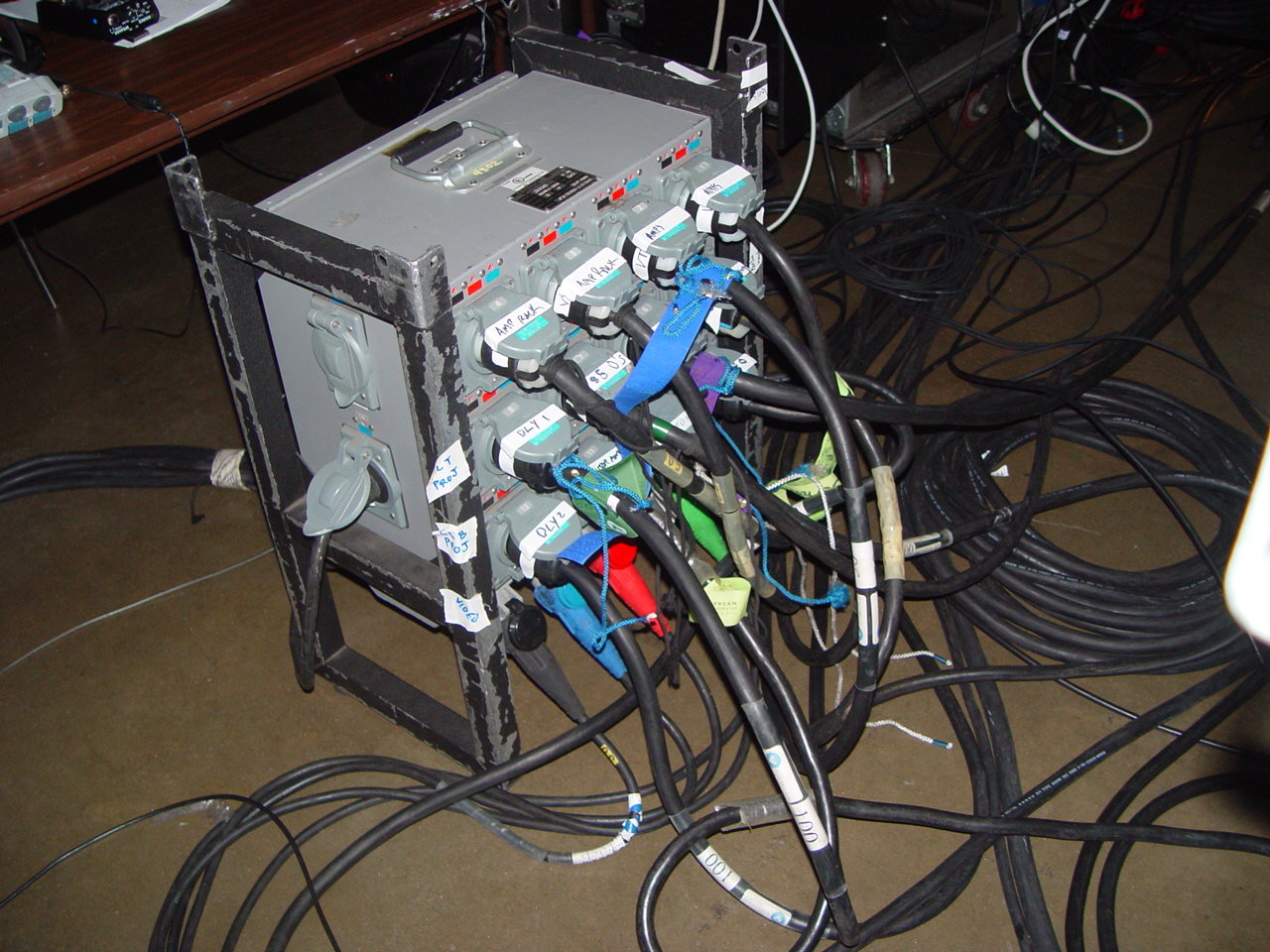
General | Posted 7 years agoAnother thing I learned at AX this year -- or rather, finally noticed -- had to do with the electrical system. I've posted pictures before of the 150kVa transformer carts that are set up backstage, and that these supply five pigtail connections (three phases plus neutral and ground) that are then distributed via various states of spaghetti throughout the backstage area. There are blocks that distribute all three phases (plus neutral and ground) down one five-conductor cable with a five-connection twist-lock plug at the end. You can even see over each socket there are status lights for each phase above their color (black/red/blue).
There was another variety of distribution box that took the five separate pigtails and broke it out into 240- and 120-volt plugs. The inside of the box was circuit breakers, with four 240-volt twist-lock sockets opposite the pigtails and the other two sides were all 120-volt 20-amp Edison plugs. And I noticed that the plugs were colored black and red and blue. That is, each plug was on a different electrical phase, which made for a greater current capacity than if they were all run from a single phase.
That would have been all, except later I was standing in line to see the premiere of "Dragon Pilot", sweating it out with all the other poor unfortunate souls under an awning. I looked up and around the rim of the awning was an electrical cable with a plug-box every 10 feet or so. And as I looked, I realized that on each box, the plugs were a different color. Black... red... blue... it was a five-conductor cable carrying all three phases and once again, giving three times the potential capacity of a single-phase cable.
Of course, I say extra capacity, but you still have to use your brain. If you plug all your illumination into only red plugs, then of course you're going to load down that one phase and might trip a breaker. But if you spread all the lights out among the different phases and balance it a bit, you could push a lot of watts!
Even backstage, there were cute little boxes that could pass-through a 5-conductor twist-lock and had three plugs (black/red/blue!) so you could locate an easy 120-volt power tap wherever you needed it. It was a small detail, but one I thought was pretty cool to notice.
There was another variety of distribution box that took the five separate pigtails and broke it out into 240- and 120-volt plugs. The inside of the box was circuit breakers, with four 240-volt twist-lock sockets opposite the pigtails and the other two sides were all 120-volt 20-amp Edison plugs. And I noticed that the plugs were colored black and red and blue. That is, each plug was on a different electrical phase, which made for a greater current capacity than if they were all run from a single phase.
That would have been all, except later I was standing in line to see the premiere of "Dragon Pilot", sweating it out with all the other poor unfortunate souls under an awning. I looked up and around the rim of the awning was an electrical cable with a plug-box every 10 feet or so. And as I looked, I realized that on each box, the plugs were a different color. Black... red... blue... it was a five-conductor cable carrying all three phases and once again, giving three times the potential capacity of a single-phase cable.
Of course, I say extra capacity, but you still have to use your brain. If you plug all your illumination into only red plugs, then of course you're going to load down that one phase and might trip a breaker. But if you spread all the lights out among the different phases and balance it a bit, you could push a lot of watts!
Even backstage, there were cute little boxes that could pass-through a 5-conductor twist-lock and had three plugs (black/red/blue!) so you could locate an easy 120-volt power tap wherever you needed it. It was a small detail, but one I thought was pretty cool to notice.
Nintendo is winning!
General | Posted 7 years agoLast year at Anime Expo, I was formally introduced to the Nintendo Switch. And in 2 minutes I got a better handle on it than months of TV advertising. I understood the form factor, the size of it. And then got to see it go from single person to two-player and how each controller "side" was easily converted into a small but fully functional controller. I got it! You could carry it around and it was ready to go for single or double player action without any additional equipment.
I also realized how deadly a game-night system it was. Suddenly the scenes of everyone playing Splatoon in the empty classroom or the units set up on the table in the garage, it all made sense. Roll up, set up, link up and go. No cables, no network switches... no messing around.
This year at Anime Expo... I got to see just how serious Nintendo is about making sure everyone can have fun with the Switch. This year in Main Events, there were two Switches. Both with Mario Kart. So damn right we were gonna throw down some four-player karting action. The problem was, when one Switch tried to connect to the other, a message came up informing the first user that they had a different version of MK from the host. We all looked at each other and there was talk of hooking to the backstage hot-spot to get on the internet and update the deficient version.
Except when we calmed down and looked at it, the out-of-date Switch had a screen that said all Switches needed to go to that screen. Almost as soon as the question was uttered, we saw that on the message screen was a button labeled "How do I get to this screen?" It provided step-by-step instructions and then we had them both on this screen. One Switch hosted a group, the other joined it... and I swear I am not making this up...
The up-to-date Switch pushed a patch to the out-of-date Switch!
I was absolutely floored. I'm sure we've all been in version hell at a LAN party, trying to get everyone on the same version so multiplayer gaming could commence. And here Nintendo has built a system to let Switches push version patches to each other so that everyone can play. No muss, no fuss... we were multiplayer gaming in less than two minutes! And I would not be surprised at all that if you had say, four different Switches with three different versions of a game among them, that if everyone joined the same update group, the most up-to-date Switch would push to the rest and get everyone updated.
It's such a little thing... but it blew my mind completely! I think it just shows the level of thought that was put into making the Switch a machine you can have a "flash game" with fellow Switch users, on the fly.
(Now someone is going to tell me that, like, the PS Vita has been doing this for years. If so, I never knew about it. But regardless of who came up with it, it's a really sweet feature)
I also realized how deadly a game-night system it was. Suddenly the scenes of everyone playing Splatoon in the empty classroom or the units set up on the table in the garage, it all made sense. Roll up, set up, link up and go. No cables, no network switches... no messing around.
This year at Anime Expo... I got to see just how serious Nintendo is about making sure everyone can have fun with the Switch. This year in Main Events, there were two Switches. Both with Mario Kart. So damn right we were gonna throw down some four-player karting action. The problem was, when one Switch tried to connect to the other, a message came up informing the first user that they had a different version of MK from the host. We all looked at each other and there was talk of hooking to the backstage hot-spot to get on the internet and update the deficient version.
Except when we calmed down and looked at it, the out-of-date Switch had a screen that said all Switches needed to go to that screen. Almost as soon as the question was uttered, we saw that on the message screen was a button labeled "How do I get to this screen?" It provided step-by-step instructions and then we had them both on this screen. One Switch hosted a group, the other joined it... and I swear I am not making this up...
The up-to-date Switch pushed a patch to the out-of-date Switch!
I was absolutely floored. I'm sure we've all been in version hell at a LAN party, trying to get everyone on the same version so multiplayer gaming could commence. And here Nintendo has built a system to let Switches push version patches to each other so that everyone can play. No muss, no fuss... we were multiplayer gaming in less than two minutes! And I would not be surprised at all that if you had say, four different Switches with three different versions of a game among them, that if everyone joined the same update group, the most up-to-date Switch would push to the rest and get everyone updated.
It's such a little thing... but it blew my mind completely! I think it just shows the level of thought that was put into making the Switch a machine you can have a "flash game" with fellow Switch users, on the fly.
(Now someone is going to tell me that, like, the PS Vita has been doing this for years. If so, I never knew about it. But regardless of who came up with it, it's a really sweet feature)
Keepin' it Cool
General | Posted 7 years agoAh, summertime, at least for those of us in the northern hemisphere. The time when thoughts turn to... refrigeration. We use it every day in refrigerators and air conditioning. But how does it work? There's really no magic, all you need is principles from your high-school physics class. Mainly that matter heats up when compressed and cools off when decompressed.
A refrigeration loop has two parts: the condenser and the evaporator. The condenser is a set of coils and usually has the compressor and blows hot air. The evaporator at a minimum is more coils but often has fans to blow air through the coils and distribute the cold. The two halves are connected by air-tight piping and is filled with some sort of refrigerant gas. It used to be Freon but these days more eco-friendly alternatives have been found.
So it all starts at the compressor. The refrigerant is in a gaseous form and is compressed to high pressure. The rise in pressure heats up the refrigerant quite a lot, so when it passes through the condenser, it's eager to shed that heat. Usually a fan moves air over these coils to help pull the heat out of the refrigerant and cools it enough that it condenses into a liquid in the pipe. So now you have a warm high-pressure refrigerant liquid.
Between the condenser and the evaporator is a pressure restrictor that keeps the refrigerant at high-pressure on the condenser side, but allows it to uncompress once it passes on and into the evaporator. When the refrigerant uncompresses, it evaporates back into a gas and absorbs a lot of heat. Or in the way we usually view it, it gets very cold. This makes the evaporator coils cold and air blown over it will be cold. The refrigerant gas then comes back to the compressor at the cycle starts all over again.
Now if this is an air conditioner, the out door unit is the condenser and has the compressor, while the indoor unit is the evaporator. In refrigerators, the condenser is at the bottom or along the back, the compressor is at the bottom and the evaporator is inside in the freezer compartment. Commercial refrigerators are the same idea, only the condenser might be in a pack on top of the refrigerated room, or even outside (making it more like an air conditioner).
See? Just physics. No magic.
A heat pump is a reversible air conditioner. There is a switchable set of valves that can send the hot refrigerant from the compressor to either the coils inside the house or outside, and the uncompressed refrigerant to the other set of coils. Essentially, when heating your home with a heat pump, you're air conditioning the outdoors!
Now you may think, "Wait... how can I pump heat from outside to inside? The whole point is that it's so cold, I need to warm things up!" Fair point, but it's just 30 degrees outside, not 0 degrees Kelvin. It's cold to you and I but there's still heat energy out there. Once you can pull it out of the air and concentrate it indoors, it will be warmer inside.
That being said, there are still many units (often in commercial installations) that have a set of electrical heating coils to provide "emergency heat" should the need arise.
A refrigeration loop has two parts: the condenser and the evaporator. The condenser is a set of coils and usually has the compressor and blows hot air. The evaporator at a minimum is more coils but often has fans to blow air through the coils and distribute the cold. The two halves are connected by air-tight piping and is filled with some sort of refrigerant gas. It used to be Freon but these days more eco-friendly alternatives have been found.
So it all starts at the compressor. The refrigerant is in a gaseous form and is compressed to high pressure. The rise in pressure heats up the refrigerant quite a lot, so when it passes through the condenser, it's eager to shed that heat. Usually a fan moves air over these coils to help pull the heat out of the refrigerant and cools it enough that it condenses into a liquid in the pipe. So now you have a warm high-pressure refrigerant liquid.
Between the condenser and the evaporator is a pressure restrictor that keeps the refrigerant at high-pressure on the condenser side, but allows it to uncompress once it passes on and into the evaporator. When the refrigerant uncompresses, it evaporates back into a gas and absorbs a lot of heat. Or in the way we usually view it, it gets very cold. This makes the evaporator coils cold and air blown over it will be cold. The refrigerant gas then comes back to the compressor at the cycle starts all over again.
Now if this is an air conditioner, the out door unit is the condenser and has the compressor, while the indoor unit is the evaporator. In refrigerators, the condenser is at the bottom or along the back, the compressor is at the bottom and the evaporator is inside in the freezer compartment. Commercial refrigerators are the same idea, only the condenser might be in a pack on top of the refrigerated room, or even outside (making it more like an air conditioner).
See? Just physics. No magic.
A heat pump is a reversible air conditioner. There is a switchable set of valves that can send the hot refrigerant from the compressor to either the coils inside the house or outside, and the uncompressed refrigerant to the other set of coils. Essentially, when heating your home with a heat pump, you're air conditioning the outdoors!
Now you may think, "Wait... how can I pump heat from outside to inside? The whole point is that it's so cold, I need to warm things up!" Fair point, but it's just 30 degrees outside, not 0 degrees Kelvin. It's cold to you and I but there's still heat energy out there. Once you can pull it out of the air and concentrate it indoors, it will be warmer inside.
That being said, there are still many units (often in commercial installations) that have a set of electrical heating coils to provide "emergency heat" should the need arise.
Looking into the Future
General | Posted 7 years agoSony's large electronic news gathering (ENG) cameras have an accessory shoe on the carrying handle that can support a light to shine on your subject,. They also have a power socket near the shoe for such a light so not only can the light be powered from the camera's battery, but the light can be turned on and off depending if the camera is recording or not.
When KEZI bought three brand new Sony ENG cameras for the sports crew, I got a chance to sit down and page through the manual,. These were near top-of-the-line setups with completely solid-state recording backs: they recorded on to high-speed memory sticks. No tape, no moving parts... very cool. One of the neat features they could pull with the all-digital recording was to have a 10-second ring buffer going, constantly recording. When you pressed record, it could dump the buffer before recording live, essentially capturing the 10 seconds before you pressed the button. Fantastic for capturing something you might have missed otherwise.
In the manual entry for this feature is a note reminding you that if you use the 10-second capture dump and also have a light mounted and set to turn on when you start recording, that the 10 seconds before you pressed the button to record will not be lit by the light.
That's right: even Sony can't make a camera that can look into the future and know when you'll want to record in 10 seconds.
(On the other hand, a camera that could do that would be an interesting story piece. Standing there with the camera trained on a protest but not rolling when suddenly the light comes on. You have 10 seconds to figure out what's about to happen that will be worth recording and if it might be hazardous to you...)
When KEZI bought three brand new Sony ENG cameras for the sports crew, I got a chance to sit down and page through the manual,. These were near top-of-the-line setups with completely solid-state recording backs: they recorded on to high-speed memory sticks. No tape, no moving parts... very cool. One of the neat features they could pull with the all-digital recording was to have a 10-second ring buffer going, constantly recording. When you pressed record, it could dump the buffer before recording live, essentially capturing the 10 seconds before you pressed the button. Fantastic for capturing something you might have missed otherwise.
In the manual entry for this feature is a note reminding you that if you use the 10-second capture dump and also have a light mounted and set to turn on when you start recording, that the 10 seconds before you pressed the button to record will not be lit by the light.
That's right: even Sony can't make a camera that can look into the future and know when you'll want to record in 10 seconds.
(On the other hand, a camera that could do that would be an interesting story piece. Standing there with the camera trained on a protest but not rolling when suddenly the light comes on. You have 10 seconds to figure out what's about to happen that will be worth recording and if it might be hazardous to you...)
Pleading the Fifh
General | Posted 7 years agoA lot of us toss around the phrase "I plead the fifth!" when we don't want to answer something. But how many of us actually know what it means?
Back when I worked at a legal transcription and videography firm, I once heard a deposed witness invoke his fifth amendment rights. And he used the whole phrase, "At this time I would like to invoke my fifth amendment rights on the grounds that further testimony may tend to incriminate me." Because that's basically what the fifth amendment is all about: you can not be forced to testify against yourself. You can't even be forced to indirectly testify against yourself, which is when it's usually used. If the public defender has you on the stand and wants to know where Joe was to establish his alibi in a defense against murder, but Joe was with you stealing cars... you could invoke the fifth since giving Joe an alibi would get you in hot water with the law.
What you can't do is try to invoke the fifth if you just don't want to answer the question. If someone asks me how much I paid for my computer case, I can't plead the fifth. The price I paid was high, but not criminal (ha ha). However, i was more in line with invoking the fifth amendment when my friend's wife was surprised how far he and I had gotten out of town and asked me how fast we were going on our motorcycles... because we were definitely exceeding the speed limit.
What made me think of this more recently was watching an episode of Law & Order. The witness on the stand tried to invoke his fifth amendment rights and Jack McCoy said, "You already have immunity; invoking your fifth amendment rights is meaningless." It took me a minute to process it, but Jack was correct. The point of the fifth amendment is to keep you from getting yourself in trouble, but if you've been given immunity, it means you can't be charged with anything no matter what you say. You can't hide behind the fifth amendment because you're already protected from prosecution.
So keep that in mind: if there are criminal things you did that you'd rather not mention, you may want to think twice about accepting that immunity deal... you will have to answer every question asked.
Back when I worked at a legal transcription and videography firm, I once heard a deposed witness invoke his fifth amendment rights. And he used the whole phrase, "At this time I would like to invoke my fifth amendment rights on the grounds that further testimony may tend to incriminate me." Because that's basically what the fifth amendment is all about: you can not be forced to testify against yourself. You can't even be forced to indirectly testify against yourself, which is when it's usually used. If the public defender has you on the stand and wants to know where Joe was to establish his alibi in a defense against murder, but Joe was with you stealing cars... you could invoke the fifth since giving Joe an alibi would get you in hot water with the law.
What you can't do is try to invoke the fifth if you just don't want to answer the question. If someone asks me how much I paid for my computer case, I can't plead the fifth. The price I paid was high, but not criminal (ha ha). However, i was more in line with invoking the fifth amendment when my friend's wife was surprised how far he and I had gotten out of town and asked me how fast we were going on our motorcycles... because we were definitely exceeding the speed limit.
What made me think of this more recently was watching an episode of Law & Order. The witness on the stand tried to invoke his fifth amendment rights and Jack McCoy said, "You already have immunity; invoking your fifth amendment rights is meaningless." It took me a minute to process it, but Jack was correct. The point of the fifth amendment is to keep you from getting yourself in trouble, but if you've been given immunity, it means you can't be charged with anything no matter what you say. You can't hide behind the fifth amendment because you're already protected from prosecution.
So keep that in mind: if there are criminal things you did that you'd rather not mention, you may want to think twice about accepting that immunity deal... you will have to answer every question asked.
Blockade Runners
General | Posted 7 years agoThe Last Psychiatrist writes about a lot of things. Toward the end of the collection, there's a lot of analysis on pop culture and media. Critiques about movies and what they say about us (if you're watching it, it's for you). But toward the beginning there's a lot more about the medical system, psychiatry and prescription drugs. And there is where you'll find The Most Important Article On Psychiatry You Will Ever Read. It's an article about the way anti-psychotic drugs really work and the surprising consequences that arise.
Most anti-psychotic drugs work by binding to receptors and occupying them with no effect, blocking the pieces that are supposed to bind to those receptors to cause a change. The strange thing is, these drugs often bind to more than one receptor. As an example, he chooses Seroquel. Seroquel binds to histamine (H1), dopamine (D2) and Alpha1 (A1), among others.
This explains the raft of side effects we've gotten so used to hearing in conjunction with medications. You see in the Wiki article on Seroquel where it also causes dry mouth, constipation, orthostasis and sleepiness? The D2 blocker is what actually gives the anti-psychotic effect, but the H1 will cause sleepiness and the A1 affects blood pressure, leading to orthostasis (dizziness when standing).
Now if that was all there was, it would be interesting. But there's another little twist. These medicines that bind to multiple receptor sites... don't bind equally. They don't float around and the first A1/H1/D2 receptor they bump into, the bind to it. They actually have affinities for certain receptors over others. Seroquel has an affinity for H1, so in the presence of all the different receptors, it will bind to H1 first, before any others. TLP says to think of it like a champagne fountain (although he says he doesn't like champagne, so he imagines a rum fountain), where the top glass is filled up before it trickles down to the glasses below, and when they're full it trickles down further to the next tier of glasses.
Going back to Seroquel, that means that the great majority of the H1 receptors have to be occupied before it will start blocking anything else. And even then, Seroquel's next biggest affinity is for A1... so you're still not really hitting the anti-psychotic effect yet. You have to take enough Seroquel to saturate H1 and A1 receptors and only then does it start blocking D2. This is why you get sleepiness and dizziness side effects along with the anti-psychotic effects.
And here's the most important thing you'll ever learn about these drugs: half the dosage does not give you half the effects. Half the dosage becomes an entirely different drug! Let's say that the required dose of Seroquel (printed on the box) is 300mg. You might be tempted to say "Well, I'm feeling pretty good today, I'll only take half a pill." But here's the issue: 150mg of Seroquel might not block enough H1 and A1 to get to the D2 receptors. 150mg of Seroquel doesn't have half the anti-psychotic effects of a full does, it has none of the anti-psychotic effects of a full dose!
Mind blown?
This means that doctors could be tempted to start a patient on a low-dose of Seroquel to see how they react to it. You know, kinda ease into the treatment. But 75mg or 150mg or maybe even 200mg of Seroquel might yield no beneficial effects toward treating psychosis and lead the doctor to think that the patient doesn't respond to Seroquel. It's entirely possible that if they had given them the full dose from the start, they would have seen the proper response.
This also works in the other direction: 25mg of Seroquel is sedating (H1 blockers). 50mg of Seroquel is even more sedating. So why isn't the recommended dose of 300mg of Seroquel fatal? Because at some point you have enough H1 receptors blocked that the Seroquel moves on to A1 and D2 and other receptors. The sedation maxes out and other effects appear.
It's tempting to say "But the FDA says Seroquel is an anti-psychotic! Are they liars?" They're not, it's just only an anti-psychotic at the dosage that they list. Anything other than that, and all bets are off.
Now that you understand how receptor-blocking drugs work, you hopefully understand why the dosages are set the way they are. You may think you're handling your bipolar pretty well and that you can ease off your prescribed dosage. But then don't be surprised that while taking half-doses of the drug, your bipolar comes back full-force.
Most anti-psychotic drugs work by binding to receptors and occupying them with no effect, blocking the pieces that are supposed to bind to those receptors to cause a change. The strange thing is, these drugs often bind to more than one receptor. As an example, he chooses Seroquel. Seroquel binds to histamine (H1), dopamine (D2) and Alpha1 (A1), among others.
This explains the raft of side effects we've gotten so used to hearing in conjunction with medications. You see in the Wiki article on Seroquel where it also causes dry mouth, constipation, orthostasis and sleepiness? The D2 blocker is what actually gives the anti-psychotic effect, but the H1 will cause sleepiness and the A1 affects blood pressure, leading to orthostasis (dizziness when standing).
Now if that was all there was, it would be interesting. But there's another little twist. These medicines that bind to multiple receptor sites... don't bind equally. They don't float around and the first A1/H1/D2 receptor they bump into, the bind to it. They actually have affinities for certain receptors over others. Seroquel has an affinity for H1, so in the presence of all the different receptors, it will bind to H1 first, before any others. TLP says to think of it like a champagne fountain (although he says he doesn't like champagne, so he imagines a rum fountain), where the top glass is filled up before it trickles down to the glasses below, and when they're full it trickles down further to the next tier of glasses.
Going back to Seroquel, that means that the great majority of the H1 receptors have to be occupied before it will start blocking anything else. And even then, Seroquel's next biggest affinity is for A1... so you're still not really hitting the anti-psychotic effect yet. You have to take enough Seroquel to saturate H1 and A1 receptors and only then does it start blocking D2. This is why you get sleepiness and dizziness side effects along with the anti-psychotic effects.
And here's the most important thing you'll ever learn about these drugs: half the dosage does not give you half the effects. Half the dosage becomes an entirely different drug! Let's say that the required dose of Seroquel (printed on the box) is 300mg. You might be tempted to say "Well, I'm feeling pretty good today, I'll only take half a pill." But here's the issue: 150mg of Seroquel might not block enough H1 and A1 to get to the D2 receptors. 150mg of Seroquel doesn't have half the anti-psychotic effects of a full does, it has none of the anti-psychotic effects of a full dose!
Mind blown?
This means that doctors could be tempted to start a patient on a low-dose of Seroquel to see how they react to it. You know, kinda ease into the treatment. But 75mg or 150mg or maybe even 200mg of Seroquel might yield no beneficial effects toward treating psychosis and lead the doctor to think that the patient doesn't respond to Seroquel. It's entirely possible that if they had given them the full dose from the start, they would have seen the proper response.
This also works in the other direction: 25mg of Seroquel is sedating (H1 blockers). 50mg of Seroquel is even more sedating. So why isn't the recommended dose of 300mg of Seroquel fatal? Because at some point you have enough H1 receptors blocked that the Seroquel moves on to A1 and D2 and other receptors. The sedation maxes out and other effects appear.
It's tempting to say "But the FDA says Seroquel is an anti-psychotic! Are they liars?" They're not, it's just only an anti-psychotic at the dosage that they list. Anything other than that, and all bets are off.
Now that you understand how receptor-blocking drugs work, you hopefully understand why the dosages are set the way they are. You may think you're handling your bipolar pretty well and that you can ease off your prescribed dosage. But then don't be surprised that while taking half-doses of the drug, your bipolar comes back full-force.
A Security Hole The Size Of A Mack Truck
General | Posted 7 years agoI suppose now that it's been fixed, I can talk about a pretty significant hole I stumbled across on Comcast's cable network. It's a good story so grab a drink and settle in.
It started when Glee was on opposite Grey's Anatomy and I got fed up with choosing which one to record and which one to watch OnDemand later. At the time the Freevo was still using an analog video encoder and needed the cable box to tune in the proper channel and output it to the card. So I decided it was time for a change: I got a Silicon Dust HDHomerun Prime box, which is a nifty little box that connects to your cable system, takes a cablecard and then sends the raw digital program stream over the network to a device for viewing or recording. The Freevo had no support for it whatsoever but I had faith in my ability to write up a plug-in module to drive it (and it turns out that faith was not misplaced).
I got the HDHomerun delivered but it would be two more days before I could get to the cable company to get a cablecard for it. Of course, I couldn't just sit and not play with it, so I hooked it up and began tinkering. You can tune it to different (frequency) channels and it will report if it finds any digital streams there and what the PIDs are for that stream. Almost everything I found was encrypted (no surprise) but just north of channel 100, I ran in to a few unencrypted streams. Odd. So I began streaming them to the VLC player on my desktop to see what they were.
I found King of the Hill... but it was "off the clock": it ended at 20 minutes after the hour. I found other miscellanea and ended up watching the latter half of a MTV werewolf series. I found it only a little odd that there were no commercial breaks, but I thought maybe that's the way MTV operated in the wee hours of the morning. I never watch MTV, what did I know?
The next day I went perusing those channels again. It was funny... a real hide-and-seek game. PIDs that were there for one scan would sometimes be gone when I went back again. And while the encrypted ones would often have the channel name with them (like TBS or HGTV), these had no such labels. Then I tuned in one and realized I was watching Fast and the Furious Six. Which was really odd... because that had just come out on DVD that week. No channel would be showing FF6, not this close to the DVD release. And that's when the light bulb came on...
I was eavesdropping the OnDemand video streams! It explained why the MTV show had no commercials. Why finding functioning PIDs on a channel was a snipe hunt and why they kept disappearing and re-appearing. And it explained why FF6 was playing! As if to confirm my suspicions, I changed to another channel and witnessed a sweet martial arts fight. And when it was done, the video stopped... rewound... and played the fight again.
The implications were staggering. Mainly, if the HDHomerun could stream it for me to watch, then it could stream it for me to record. If you could catch someone just starting to stream a movie, you could roll off your own copy of it... for free! And since the HDHomerun pulls the full program stream, you get everything: full-res video, all the audio channels (including alternate audio streams)... even closed captioning! This was a full rip! You were just at the mercy of whomever was playing the movie.
It was probably months later that I got to thinking... if I can eavesdrop other people's OnDemand streams... why couldn't I eavesdrop my own stream, that I started and was controlling? Not only did it work, it was actually fairly easy to find which stream was your own. If you started an OnDemand show and paused it, you could scan the channels and look for the PID that was there but marked as having no data. Tune it in, stream it to VLC and when you unpaused it on the cablebox, it began playing in VLC too! And it was easy enough to tell the control software to tune in and record that channel. When you unpaused it, it would record the stream. I made up a lot of missed recordings that way when the Freevo would hiccup and not record a show. I just found the episode in the OnDemand library and recorded it. It had to record in real time, but that wasn't such a bad thing.
There were just two things that were weird. First, the commercial breaks were spliced in on the fly, and they would almost always have a different Presentation Timestamp (PTS) sequence. The PTS is a timestamp for each piece of data so that if the stream was somehow jumbled, the decoder could try to re-assemble them in the proper order (depending on the buffer size). Mplayer2 did not take kindly to sudden jumps in PTS and it would throw the audio sync completely out the window. Fortunately, ffmepg has the ability to take a video file and rebuild the PTS as a contiguous sequence.
The other thing was that since the HDHomerun box is a legal, commercial device, it was obligated to honor the various digital video flags. If a video was flagged "Watch Once" or "Do Not Record", it would not record it. Fortunately, almost no network bothered to set these flags on their videos. The only one I found that did was Adult Swim. I tried to make up a recording of Attack on Titan and all it recorded were commercials and bumps because the actual program was flagged "Do Not Record".
By now I'm sure you've made the leap I made after all this: if I can eavesdrop my own stream that I control... could I order an OnDemand movie for $5 and record it to keep permanently? Yes... yes you could. I rented "The Big Short" to show someone else and before the rental ran out (it was a 48-hour rental window) I tried just that. I recorded the first 90 seconds of the movie as proof-of-concept, Yeah, I couldn't bring myself to rip the whole movie, because I liked it so much I thought the companies deserved the money for their time and effort. Sure, it wasn't a DVD or BluRay quality rip -- the video is compressed to go over the cable system -- but it's still 1080p with 5.1 channel surround... for $5? I wouldn't complain.
Sadly, several months later I tried to pick up a video that the Freevo had hiccuped on and found that all those over-100 channels held encrypted streams. Apparently Comcast finally decided that security-by-obscurity wasn't cutting it anymore and those streams should be properly scrambled. So this trick no longer works. But for a glorious year or two, Comcast had a hole in their system that would have made any MPAA executive wake up screaming in a cold sweat.
Back there I talked about tuning in "frequency" channels. I had to make that distinction because the channel you enter into your cable box is not related at all to the frequency that it is on. Instead you're tuning in virtual channel numbers. When you punch in 755 to watch TBS, the cable box has a look-up table from the cable company and it knows that 755 (TBS) is channel 35, program 4. Just like digital broadcast TV, one frequency channel can carry several program streams: channel 35 also carries ESPND, NHL, FS1, CNBC, ESPNU, BIG10 and FXDEP.
And what do you know! The channel is QAM-256. Who woulda thought it... ^_^
It started when Glee was on opposite Grey's Anatomy and I got fed up with choosing which one to record and which one to watch OnDemand later. At the time the Freevo was still using an analog video encoder and needed the cable box to tune in the proper channel and output it to the card. So I decided it was time for a change: I got a Silicon Dust HDHomerun Prime box, which is a nifty little box that connects to your cable system, takes a cablecard and then sends the raw digital program stream over the network to a device for viewing or recording. The Freevo had no support for it whatsoever but I had faith in my ability to write up a plug-in module to drive it (and it turns out that faith was not misplaced).
I got the HDHomerun delivered but it would be two more days before I could get to the cable company to get a cablecard for it. Of course, I couldn't just sit and not play with it, so I hooked it up and began tinkering. You can tune it to different (frequency) channels and it will report if it finds any digital streams there and what the PIDs are for that stream. Almost everything I found was encrypted (no surprise) but just north of channel 100, I ran in to a few unencrypted streams. Odd. So I began streaming them to the VLC player on my desktop to see what they were.
I found King of the Hill... but it was "off the clock": it ended at 20 minutes after the hour. I found other miscellanea and ended up watching the latter half of a MTV werewolf series. I found it only a little odd that there were no commercial breaks, but I thought maybe that's the way MTV operated in the wee hours of the morning. I never watch MTV, what did I know?
The next day I went perusing those channels again. It was funny... a real hide-and-seek game. PIDs that were there for one scan would sometimes be gone when I went back again. And while the encrypted ones would often have the channel name with them (like TBS or HGTV), these had no such labels. Then I tuned in one and realized I was watching Fast and the Furious Six. Which was really odd... because that had just come out on DVD that week. No channel would be showing FF6, not this close to the DVD release. And that's when the light bulb came on...
I was eavesdropping the OnDemand video streams! It explained why the MTV show had no commercials. Why finding functioning PIDs on a channel was a snipe hunt and why they kept disappearing and re-appearing. And it explained why FF6 was playing! As if to confirm my suspicions, I changed to another channel and witnessed a sweet martial arts fight. And when it was done, the video stopped... rewound... and played the fight again.
The implications were staggering. Mainly, if the HDHomerun could stream it for me to watch, then it could stream it for me to record. If you could catch someone just starting to stream a movie, you could roll off your own copy of it... for free! And since the HDHomerun pulls the full program stream, you get everything: full-res video, all the audio channels (including alternate audio streams)... even closed captioning! This was a full rip! You were just at the mercy of whomever was playing the movie.
It was probably months later that I got to thinking... if I can eavesdrop other people's OnDemand streams... why couldn't I eavesdrop my own stream, that I started and was controlling? Not only did it work, it was actually fairly easy to find which stream was your own. If you started an OnDemand show and paused it, you could scan the channels and look for the PID that was there but marked as having no data. Tune it in, stream it to VLC and when you unpaused it on the cablebox, it began playing in VLC too! And it was easy enough to tell the control software to tune in and record that channel. When you unpaused it, it would record the stream. I made up a lot of missed recordings that way when the Freevo would hiccup and not record a show. I just found the episode in the OnDemand library and recorded it. It had to record in real time, but that wasn't such a bad thing.
There were just two things that were weird. First, the commercial breaks were spliced in on the fly, and they would almost always have a different Presentation Timestamp (PTS) sequence. The PTS is a timestamp for each piece of data so that if the stream was somehow jumbled, the decoder could try to re-assemble them in the proper order (depending on the buffer size). Mplayer2 did not take kindly to sudden jumps in PTS and it would throw the audio sync completely out the window. Fortunately, ffmepg has the ability to take a video file and rebuild the PTS as a contiguous sequence.
The other thing was that since the HDHomerun box is a legal, commercial device, it was obligated to honor the various digital video flags. If a video was flagged "Watch Once" or "Do Not Record", it would not record it. Fortunately, almost no network bothered to set these flags on their videos. The only one I found that did was Adult Swim. I tried to make up a recording of Attack on Titan and all it recorded were commercials and bumps because the actual program was flagged "Do Not Record".
By now I'm sure you've made the leap I made after all this: if I can eavesdrop my own stream that I control... could I order an OnDemand movie for $5 and record it to keep permanently? Yes... yes you could. I rented "The Big Short" to show someone else and before the rental ran out (it was a 48-hour rental window) I tried just that. I recorded the first 90 seconds of the movie as proof-of-concept, Yeah, I couldn't bring myself to rip the whole movie, because I liked it so much I thought the companies deserved the money for their time and effort. Sure, it wasn't a DVD or BluRay quality rip -- the video is compressed to go over the cable system -- but it's still 1080p with 5.1 channel surround... for $5? I wouldn't complain.
Sadly, several months later I tried to pick up a video that the Freevo had hiccuped on and found that all those over-100 channels held encrypted streams. Apparently Comcast finally decided that security-by-obscurity wasn't cutting it anymore and those streams should be properly scrambled. So this trick no longer works. But for a glorious year or two, Comcast had a hole in their system that would have made any MPAA executive wake up screaming in a cold sweat.
Back there I talked about tuning in "frequency" channels. I had to make that distinction because the channel you enter into your cable box is not related at all to the frequency that it is on. Instead you're tuning in virtual channel numbers. When you punch in 755 to watch TBS, the cable box has a look-up table from the cable company and it knows that 755 (TBS) is channel 35, program 4. Just like digital broadcast TV, one frequency channel can carry several program streams: channel 35 also carries ESPND, NHL, FS1, CNBC, ESPNU, BIG10 and FXDEP.
And what do you know! The channel is QAM-256. Who woulda thought it... ^_^
Digital over Analog
General | Posted 7 years agoYou might recall long ago I made reference to Quadrature Amplitude Modulation. I was talking about sending color vector information in NTSC broadcast signals and how a single wave could accomplish this, when decoded properly. Turns out that if you decide to decode it differently, a QAM signal can send along digital information and quite efficiently at times!
Think of the vector graph, with the origin in the middle. When a QAM signal comes in, it describes a rotation and a distance from that center point. Now what if instead of interpreting this as an analog signal, you interpreted it based on where the end point of the vector landed. Like... if it was on the left side, it was a zero and on the right side, it was a one. Suddenly you can use QAM to transmit digital information.
This half-and-half setup works, but it's terribly inefficient. What if instead you broke the graph into four quadrants and labeled them '00', '01', '10' and '11'? Now you're encoding two bits for every QAM vector you get. If you went further and divided it into a four-by-four grid, you can encode four bits at a time with 16 different landing zones. This is QAM-16. The Moseley microwave radios used in broadcast used QAM-16 to transmit data over the microwave link.
Chances are, you're using QAM-256 in one way or another. Digital cable uses it, both for your network connection and sending digital video to the set top box. And why wouldn't they? The whole cable infrastructure started out analog and still remains very much so... QAM was the obvious solution when going digital.
So why not QAM-4096? Wouldn't that be super-efficient, pushing 64 bits with each vector? Yes, it would (and yes. QAM-4096 exists... in theory). The problem now is signal noise and jitter. QAM is still analog and susceptible to interference, and this interference can alter exactly where the vector lands on the graph. This is where we get into what's called a "constellation plot". That particular plot is for a QAM-64 signal, with each landing zone marked out by the dashed lines and the ideal landing point marked by the red cross. Notice how most of the circles land in a particular zone, but almost none of them hit the ideal. As the QAM number gets higher, the landing zones get smaller. The higher the QAM, the more easily the signal is affected by noise. QAM-256 works great on a shielded cable system with very little outside interference. When pushing microwaves across miles where even the humidity can affect the signal, QAM-16 is much more forgiving.
Digital satellite also uses QAM for signal transmission. But when an error occurs with a one-way transmission medium, what do you do? Do you just eat the error and move on? Or is there a way you can send additional information with your data stream to help find and correct errors on the fly? Stay tuned...
When dealing with things like QAM, there becomes a very important difference between bitrate and symbol rate. The bitrate is what it says, bits per second. The symbol rate is how many QAM vectors can be sent by the transmission equipment (usually a radio of some sort). So let's say your radio can send a million different transmission states per second, 1Msym/s. If you're doing QAM-16, each symbol contains four bits, so you get 4Mbit/s. Same radio but you push it up to QAM-256, now you're getting 16Mbit/s out of the same radio. Bits per symbol times symbol rate equals total bitrate.
So how do the cable companies pump 400Mbit/s into your home? Just like you might bond Ethernet connections together to get a faster total speed, transmission channels are bonded together for a higher aggregate speed. 16 channel bonds are common now, with 24 and 32 channel bonding schemes available for the ultra high speed modems.
Think of the vector graph, with the origin in the middle. When a QAM signal comes in, it describes a rotation and a distance from that center point. Now what if instead of interpreting this as an analog signal, you interpreted it based on where the end point of the vector landed. Like... if it was on the left side, it was a zero and on the right side, it was a one. Suddenly you can use QAM to transmit digital information.
This half-and-half setup works, but it's terribly inefficient. What if instead you broke the graph into four quadrants and labeled them '00', '01', '10' and '11'? Now you're encoding two bits for every QAM vector you get. If you went further and divided it into a four-by-four grid, you can encode four bits at a time with 16 different landing zones. This is QAM-16. The Moseley microwave radios used in broadcast used QAM-16 to transmit data over the microwave link.
Chances are, you're using QAM-256 in one way or another. Digital cable uses it, both for your network connection and sending digital video to the set top box. And why wouldn't they? The whole cable infrastructure started out analog and still remains very much so... QAM was the obvious solution when going digital.
So why not QAM-4096? Wouldn't that be super-efficient, pushing 64 bits with each vector? Yes, it would (and yes. QAM-4096 exists... in theory). The problem now is signal noise and jitter. QAM is still analog and susceptible to interference, and this interference can alter exactly where the vector lands on the graph. This is where we get into what's called a "constellation plot". That particular plot is for a QAM-64 signal, with each landing zone marked out by the dashed lines and the ideal landing point marked by the red cross. Notice how most of the circles land in a particular zone, but almost none of them hit the ideal. As the QAM number gets higher, the landing zones get smaller. The higher the QAM, the more easily the signal is affected by noise. QAM-256 works great on a shielded cable system with very little outside interference. When pushing microwaves across miles where even the humidity can affect the signal, QAM-16 is much more forgiving.
Digital satellite also uses QAM for signal transmission. But when an error occurs with a one-way transmission medium, what do you do? Do you just eat the error and move on? Or is there a way you can send additional information with your data stream to help find and correct errors on the fly? Stay tuned...
When dealing with things like QAM, there becomes a very important difference between bitrate and symbol rate. The bitrate is what it says, bits per second. The symbol rate is how many QAM vectors can be sent by the transmission equipment (usually a radio of some sort). So let's say your radio can send a million different transmission states per second, 1Msym/s. If you're doing QAM-16, each symbol contains four bits, so you get 4Mbit/s. Same radio but you push it up to QAM-256, now you're getting 16Mbit/s out of the same radio. Bits per symbol times symbol rate equals total bitrate.
So how do the cable companies pump 400Mbit/s into your home? Just like you might bond Ethernet connections together to get a faster total speed, transmission channels are bonded together for a higher aggregate speed. 16 channel bonds are common now, with 24 and 32 channel bonding schemes available for the ultra high speed modems.