FA+
FA+ Shop
Shop

Sounds from the Ground
General | Posted 8 years agoI totally, completely and wholly blame PlumpHelmetPunk for getting me started on Sounds from the Ground. Plump had a playlist of soothing-but-unobtrusive ambient tunes he'd play in the background of his videos and among the tracks were White City, Slate Grey and Blink. I have developed a real fondness for Slate Grey... the easy-going ambient moods quietly washing over my mind.
But last weekend, while soloing the morning shift at work, I decided I needed some music while readying the newscast. I seeded YouTube with Slate Grey and let it wander... which led to a lot of different Sounds from the Ground tracks, some that I'd heard before like Rotorblade and a lot of others that I hadn't.
There were two that I had never heard before that stuck with me. The first was Mesh. It has a rhythm that captivates me, dancing somewhere on the edge of hip-hop and dub. And that subsonic bassline playing off the steady synth chords... it's the kind of tune I could listen to all day.
Except not long after, YouTube wandered into Clover. And this song... holy crap this song. I tend to think of Sounds from the Ground as ambient chillaxing music, but I also confess I haven't listened to much outside of "High Rising". Clover is practically straight up funk, with the trumpet riffs anchored by some hot electric piano and undercut by a bassline that just will not quit. It's totally energizing! Just when I thought I could listen to Mesh all day, I found I could listen to Clover all day long too, for completely different reasons.
Sounds from the Ground has a large and diverse catalog of music, probably something for just about everyone. I hope you can find something that tickles your fancy.
Another song that caught my attention from Plump's videos was Playgarden by #9 Dream. It's a pretty masterful ambient tune in my opinion... one of those tunes that can captivate you with almost no percussion. The way it starts, it was immediately recognizable in the background of the videos.
Truth is when I first started watching Plump's SS13 videos, I thought the music was part of the game. Boy was I disappointed when I started playing and found out the game has no music! Not that it isn't a fantastic game... I highly recommend it, although I haven't played in a few years so I can't say what the state of the station is these days.
If you've never heard of SpaceStation 13, I think the perfect introduction is the time engineering decided to take the bartender's monkey and sacrifice it to the singularity power generator. Needless to say, things did not go as planned...
But last weekend, while soloing the morning shift at work, I decided I needed some music while readying the newscast. I seeded YouTube with Slate Grey and let it wander... which led to a lot of different Sounds from the Ground tracks, some that I'd heard before like Rotorblade and a lot of others that I hadn't.
There were two that I had never heard before that stuck with me. The first was Mesh. It has a rhythm that captivates me, dancing somewhere on the edge of hip-hop and dub. And that subsonic bassline playing off the steady synth chords... it's the kind of tune I could listen to all day.
Except not long after, YouTube wandered into Clover. And this song... holy crap this song. I tend to think of Sounds from the Ground as ambient chillaxing music, but I also confess I haven't listened to much outside of "High Rising". Clover is practically straight up funk, with the trumpet riffs anchored by some hot electric piano and undercut by a bassline that just will not quit. It's totally energizing! Just when I thought I could listen to Mesh all day, I found I could listen to Clover all day long too, for completely different reasons.
Sounds from the Ground has a large and diverse catalog of music, probably something for just about everyone. I hope you can find something that tickles your fancy.
Another song that caught my attention from Plump's videos was Playgarden by #9 Dream. It's a pretty masterful ambient tune in my opinion... one of those tunes that can captivate you with almost no percussion. The way it starts, it was immediately recognizable in the background of the videos.
Truth is when I first started watching Plump's SS13 videos, I thought the music was part of the game. Boy was I disappointed when I started playing and found out the game has no music! Not that it isn't a fantastic game... I highly recommend it, although I haven't played in a few years so I can't say what the state of the station is these days.
If you've never heard of SpaceStation 13, I think the perfect introduction is the time engineering decided to take the bartender's monkey and sacrifice it to the singularity power generator. Needless to say, things did not go as planned...
Free Fallin'
General | Posted 8 years agoI wanna glide down over Mulholland
I wanna write her name in the sky
I'm gonna free fall out into nothin'
Gonna leave this world for awhileRest in Peace, Lucky.
Apology NOT Accepted!
General | Posted 8 years agoA few days ago, ABC's Tech Bytes segment mentioned that Bill Gates apologized for CTRL-ALT-DEL, saying he knows it's an awkward combination to type.
And I said (more to myself than anything) that it was supposed to be awkward to type! It was originally used as the interrupt to warm-boot the computer, back in the dark days of DOS. It was always lying in wait and even when playing a game and button-mashing at our controls, we managed to press CTRL, ALT and the decimal on the keypad (DEL) at the same time. The game stuttered, froze and the computer rebooted. Game over.
If anything, Bill should apologize for appropriating CTRL-ALT-DEL as the key sequence to log in to Windows. When I got Windows 95, it freaked me out to press CTRL-ALT-DEL to log in, because I knew what that sequence was supposed to do and I did not press it without very good reason. Of course now, we all do it without a second thought.
So if Bill wants to apologize, apologize for making a tricky reset key sequence one that would be typed every day by users.
Of course now I'm told that Bill might very well have been apologizing for using CTRL-ALT-DEL as the log in sequence for Windows. Just that Tech Bytes was shortening up the headlines and making it cooler... while making it misleading.
And I said (more to myself than anything) that it was supposed to be awkward to type! It was originally used as the interrupt to warm-boot the computer, back in the dark days of DOS. It was always lying in wait and even when playing a game and button-mashing at our controls, we managed to press CTRL, ALT and the decimal on the keypad (DEL) at the same time. The game stuttered, froze and the computer rebooted. Game over.
If anything, Bill should apologize for appropriating CTRL-ALT-DEL as the key sequence to log in to Windows. When I got Windows 95, it freaked me out to press CTRL-ALT-DEL to log in, because I knew what that sequence was supposed to do and I did not press it without very good reason. Of course now, we all do it without a second thought.
So if Bill wants to apologize, apologize for making a tricky reset key sequence one that would be typed every day by users.
Of course now I'm told that Bill might very well have been apologizing for using CTRL-ALT-DEL as the log in sequence for Windows. Just that Tech Bytes was shortening up the headlines and making it cooler... while making it misleading.
Working the Delay Line
General | Posted 8 years agoOne of Bruce's other great stories was about setting up sound reinforcement delay lines. Any moderately-sized venue will likely need additional speakers as the speaker arrays at the stage won't be powerful enough to reach further back. At least, not without imploding the eardrums of the audience close to the stage. To keep that from happening, you fly additional speaker arrays further back into the audience to reinforce the sound.
Thing is, electricity travels near the speed of light while sound travels at... well... the speed of sound. There's a rather noticeable difference between the two! So even in an exhibit-hall-sized venue, the electrical impulse to an array halfway back in the room will beat the sound from the stage and create an "echo": actually the mid-venue array is heard first and then the sound from the stage arrives, creating the perceived echo.
The answer then is the "delay line": giving the reinforcement array enough of a delay that those speakers fire when the sound from the stage arrives. And from Bruce's description of the process, it's all done with the ear. A "pop generator" is hooked up to the sound system that will generate a pop or click. And the audio engineer stands back where they can hear both arrays and it sounds like *pop*-*pop*. Dial in some delay, try the pop generator again, *pop*pop*,. More delay... *p-pop*. More delay and it sounds like a single *pop*! But the trick is once you think you hear just one pop, you dial in a touch more delay and the psychoacoustics kick in! Because that last little bit of delay is what fools your brain and makes it believe that all the sound is coming from the stage speakers, rather than two separate sources that are putting out the same sound.
And he is absolutely right. One day I was walking out of the hall headed to dinner. There were rehearsals for the Masquerade going on with someone on a microphone. And about three-quarters of the way back, I decided to turn around and look and listen. Sure enough, as far as my ears were concerned, all the sound was coming from the stage arrays 150 feet away, despite the fact the delay line arrays was only 20 feet in front and above me. I tried to convince my mind that there was sound coming from those speakers and for a half-second, my brain was convinced. Then it reverted back to only hearing sound from the stage.
Bruce says if you cock your head... tilt it to the side and/or turn it to the left or right, it changes the phase of the two sound sources and can make it easier to separate out the sound coming from the delay line array. He also told a story about a concert producer who was convinced the delay line speakers weren't working. So Bruce signaled to someone at the sound board, they turned off the delay line feed and suddenly everything was so much quieter. The producer was convinced after that.
And if you have a big concert venue with multiple delay lines? Once you dial in the set closest to the stage, you walk back to the next set and repeat the pop test. Once the delay is right, the second set will match the first set will match the stage arrays. Lather, rinse and repeat!
Thing is, electricity travels near the speed of light while sound travels at... well... the speed of sound. There's a rather noticeable difference between the two! So even in an exhibit-hall-sized venue, the electrical impulse to an array halfway back in the room will beat the sound from the stage and create an "echo": actually the mid-venue array is heard first and then the sound from the stage arrives, creating the perceived echo.
The answer then is the "delay line": giving the reinforcement array enough of a delay that those speakers fire when the sound from the stage arrives. And from Bruce's description of the process, it's all done with the ear. A "pop generator" is hooked up to the sound system that will generate a pop or click. And the audio engineer stands back where they can hear both arrays and it sounds like *pop*-*pop*. Dial in some delay, try the pop generator again, *pop*pop*,. More delay... *p-pop*. More delay and it sounds like a single *pop*! But the trick is once you think you hear just one pop, you dial in a touch more delay and the psychoacoustics kick in! Because that last little bit of delay is what fools your brain and makes it believe that all the sound is coming from the stage speakers, rather than two separate sources that are putting out the same sound.
And he is absolutely right. One day I was walking out of the hall headed to dinner. There were rehearsals for the Masquerade going on with someone on a microphone. And about three-quarters of the way back, I decided to turn around and look and listen. Sure enough, as far as my ears were concerned, all the sound was coming from the stage arrays 150 feet away, despite the fact the delay line arrays was only 20 feet in front and above me. I tried to convince my mind that there was sound coming from those speakers and for a half-second, my brain was convinced. Then it reverted back to only hearing sound from the stage.
Bruce says if you cock your head... tilt it to the side and/or turn it to the left or right, it changes the phase of the two sound sources and can make it easier to separate out the sound coming from the delay line array. He also told a story about a concert producer who was convinced the delay line speakers weren't working. So Bruce signaled to someone at the sound board, they turned off the delay line feed and suddenly everything was so much quieter. The producer was convinced after that.
And if you have a big concert venue with multiple delay lines? Once you dial in the set closest to the stage, you walk back to the next set and repeat the pop test. Once the delay is right, the second set will match the first set will match the stage arrays. Lather, rinse and repeat!
Emergency Bonanza Network
General | Posted 8 years agoMeTV has done some pretty creative promos for their shows. I rather like when Spock and Kirk are transported to Mayberry... or the unfortunate teleporter accident that creates an unknown copy of Kirk...
But the latest "Bonanza Like You've Never Seen It Before" promo... well... makes me think that someone in MeTV's creative department is channeling just a little too much Joshua Pearson and Emergency Broadcast Network...
Telecommunications Breakdown has been a core part of my musical upbringing. I've seen the videos for Electronic Behavior Control System and 378 many times. But I'm not sure I've seen the video for Get Down until tonight.
Good stuff!
But the latest "Bonanza Like You've Never Seen It Before" promo... well... makes me think that someone in MeTV's creative department is channeling just a little too much Joshua Pearson and Emergency Broadcast Network...
Telecommunications Breakdown has been a core part of my musical upbringing. I've seen the videos for Electronic Behavior Control System and 378 many times. But I'm not sure I've seen the video for Get Down until tonight.
Good stuff!
The Cardioid Subwoofer
General | Posted 8 years agoIt was good to get back to Anime Expo this year after being away for two years. I was quite flattered at the responses I got... apparently I was missed! And not just because the previous year's director had a tendency to take cameras with no warning whatsoever...
One of the hired pros there (as opposed to us volunteers) who has been working there for many years is the second audio engineer (A2). Bruce is a guy I could spend all night in a pub with, just listening. Not only does he have an arsenal of stories, but the way he tells them is so energetic, you can't help but smile. Or laugh., It's absolutely infectious.
He's the guy that was wary of one of our volunteers taking an XLR cable from his box because people had already borrowed away cables from him. "I've got a 100-foot cable going ten feet 'cause people took all my 20-footers!" he wailed. But when he found out the volunteer was borrowing the XLR cable to teach another volunteer how to properly coil cables, his face immediately lit up. "Ohmygawd, I love you!" he exclaimed. And turned to me, "How great is this guy?!" And then he got up and gave us all a cable-coiling refresher himself. In his usual fashion. "Oh yeah, see that? That's an ornery cable right there. That one's gonna give you trouble."
One of the things I learned about back in 2014 and re-learned this year was the concept of the Cardioid Subwoofer. Most bass and sub-bass frequencies are non-directional. A sub-woofer may have a horn or a definitive output side, but the sound emanates in all directions. So what do you do when you have thousands of watts pounding out of subwoofers that are only ten feet from the monitor mixing console? How do you keep the bass from rattling the fillings out of the back stage crew?
Enter the Cardioid Subwoofer system. With this setup, bass is radiated in the familiar heart-shaped ("cardioid") pattern, with a prominent lobe out front, smaller lobes to the sides and not much to the rear. This allows the bass to travel forward into the audience where it's wanted and not so much backstage, where it just gets in the way.
The Cardioid Sub isn't a special type of speaker or cabinet. You can't go down to the local Pro A/V store and buy one. Instead, it's a system of speakers with delay timings. Although honestly, the delays are so short, it's more like a phase offset.
The sub cabinets are placed in a front-to-back line with space between them. The rearmost set has zero delay and moving forwards, just a few milliseconds of delay is added to the audio signal. The amount of delay added is enough so that in a forward direction, all the sound waves overlap perfectly and add to each other, reinforcing the sound. And going backwards? Well, as one web explanation put it, "they don't completely cancel each other out, but they definitely do not help each other." The net effect is that in front of the subs, the sound is very strong (the waves reinforce each other) while behind the sound is quieter (the waves are more mismatched).
Voila! The Cardioid Sub.
So what powers a setup like this? With two Cardioid Sub setups on each side of the stage, not to mention the arrays flown from the trusses? Bruce took me over to their amplifier racks... about seven amps per half-rack. All Crown I-Tech 12000s. And he looked at me and said, "So what d'you suppose the 12000 stands for?" I had an answer, but it seemed so ridiculous that I didn't dare to say it. But it was right: these are two channel amplifiers with SIX THOUSAND WATTS per channel. And it's Pro Audio gear so you know that's an honest 6000 watts, not what it can do peak for 30 milliseconds and then start clipping.
Even more interesting, the top of each rack held a 16-port Ethernet switch. Because that's how you control and configure and even monitor these amplifiers. They have very minimal front panel indications, instead piping all their information over the network in real time to monitoring software on a laptop. And each one has a full EQ for each channel, configurable through the software. Not that you would need to EQ that specifically, but the ability is there.
One of the hired pros there (as opposed to us volunteers) who has been working there for many years is the second audio engineer (A2). Bruce is a guy I could spend all night in a pub with, just listening. Not only does he have an arsenal of stories, but the way he tells them is so energetic, you can't help but smile. Or laugh., It's absolutely infectious.
He's the guy that was wary of one of our volunteers taking an XLR cable from his box because people had already borrowed away cables from him. "I've got a 100-foot cable going ten feet 'cause people took all my 20-footers!" he wailed. But when he found out the volunteer was borrowing the XLR cable to teach another volunteer how to properly coil cables, his face immediately lit up. "Ohmygawd, I love you!" he exclaimed. And turned to me, "How great is this guy?!" And then he got up and gave us all a cable-coiling refresher himself. In his usual fashion. "Oh yeah, see that? That's an ornery cable right there. That one's gonna give you trouble."
One of the things I learned about back in 2014 and re-learned this year was the concept of the Cardioid Subwoofer. Most bass and sub-bass frequencies are non-directional. A sub-woofer may have a horn or a definitive output side, but the sound emanates in all directions. So what do you do when you have thousands of watts pounding out of subwoofers that are only ten feet from the monitor mixing console? How do you keep the bass from rattling the fillings out of the back stage crew?
Enter the Cardioid Subwoofer system. With this setup, bass is radiated in the familiar heart-shaped ("cardioid") pattern, with a prominent lobe out front, smaller lobes to the sides and not much to the rear. This allows the bass to travel forward into the audience where it's wanted and not so much backstage, where it just gets in the way.
The Cardioid Sub isn't a special type of speaker or cabinet. You can't go down to the local Pro A/V store and buy one. Instead, it's a system of speakers with delay timings. Although honestly, the delays are so short, it's more like a phase offset.
The sub cabinets are placed in a front-to-back line with space between them. The rearmost set has zero delay and moving forwards, just a few milliseconds of delay is added to the audio signal. The amount of delay added is enough so that in a forward direction, all the sound waves overlap perfectly and add to each other, reinforcing the sound. And going backwards? Well, as one web explanation put it, "they don't completely cancel each other out, but they definitely do not help each other." The net effect is that in front of the subs, the sound is very strong (the waves reinforce each other) while behind the sound is quieter (the waves are more mismatched).
Voila! The Cardioid Sub.
So what powers a setup like this? With two Cardioid Sub setups on each side of the stage, not to mention the arrays flown from the trusses? Bruce took me over to their amplifier racks... about seven amps per half-rack. All Crown I-Tech 12000s. And he looked at me and said, "So what d'you suppose the 12000 stands for?" I had an answer, but it seemed so ridiculous that I didn't dare to say it. But it was right: these are two channel amplifiers with SIX THOUSAND WATTS per channel. And it's Pro Audio gear so you know that's an honest 6000 watts, not what it can do peak for 30 milliseconds and then start clipping.
Even more interesting, the top of each rack held a 16-port Ethernet switch. Because that's how you control and configure and even monitor these amplifiers. They have very minimal front panel indications, instead piping all their information over the network in real time to monitoring software on a laptop. And each one has a full EQ for each channel, configurable through the software. Not that you would need to EQ that specifically, but the ability is there.
Come to me baby, don't be shy, don't be shy...
General | Posted 8 years agoIt was a summer time, that summer high
Oh what a masterpiece!
The way your eyes met mine, sweet
Like apple pie, caught in your energy!
The future came to me, I see.
Yeah, it feels so classic
You and me, the magic
And I know we have it
'Cause it feels, yeah, it feels, yeah it feels so classicI can not get enough of this groove. Holy cow, it's got that stomping disco drumline, funk-inspired bass and guitar riffs and just a dash of piano that sounds like it came off the dance house floor.
Put on my radar by the latest Coca-Cola commercial with the surfer girl and the bar-hut guy. Had to seek it out... and had to share. Because it is a monster jam!
I gathered from some of the comments that "Classic" was in Sims 4. So if you know the words, sing along!
You are the sunput type, but some puh-hive

Ooh whatha monklay boith

Tea watho ooze my mice sweet like emple pie,

Coudina in the jine,

Zafooshia Kim the moyf, yo soy


Yeebzo fwi zu coffin

Voinom bwi zu muffnin, mmh

And I know a hundren

Kuozo fui, ebzo fwi, ebzo fwi zu coffin, mmh...
Mmm hmmmm... probably no surprise that the version that appears on the radio in Sims 4 is sung in Simlish. I'm going to guess that all the songs on the radio are in Simlish, but I've never played any of the Sims games, so I find it a really cool touch!
Of course, knowing that the song was in Sims 4 makes the official video make a lot more sense...
Luck
General | Posted 8 years ago"Hard to believe that over half the earth's atmosphere is below us," Flap said softly. "Without supplemental oxygen, at this altitude, most fit men would pass out within thirty minutes. You know, you've flown so many times that flying has probably become routine with you. That's the trap we all fall into. Sometimes we forget that we are really small blobs of protoplasm journeying haphazardly through infinity. All we have to sustain us are our little lifelines. The oxygen will keep flowing, the engines will keep burning, the plane will hold together, the ship will be waiting... Well, listen to the news. The lifelines can break. We are like the man on the tightrope above Niagara Falls: the tiniest misstep, the smallest inattention, the most miniscule miscalculation, and disaster follows."
Flap paused for a moment, then continued: "A lot of people have it in their heads that God gave them a guarantee when they were born. At least seventy years of vigorous life, hard work will earn solid rewards, your wife will be faithful, your sons courageous, your daughters virtuous, justice will be done, love will be enough -- in the event of problems, the manufacturer will set things right. Like hell! The truth is that life, like flying, is fraught with hazards. We are all up on that tightrope trying to keep our balance. Inevitably, people fall off."
"I dunno, Jake. Sometimes life's pretty hard to figure. When you look at it close, the only thing that makes a difference is luck. Who lives or who dies is just luck. 'The dead guy screwed up,' everybody says. Of course he screwed up, Lady Luck crapped all over him. And if that's true, then everything else is a lie -- religion, professionalism, everything. We are all just minnows swimming in the sea and luck decides when it's your turn. Then the shark eats you and that's the fucking end of that."
"There's been a lot of mumbling around here in the last twenty-four hours about luck. Well, there is no such thing. You can't feel it, taste it, smell it, touch it, wear it, fuck it, or eat it. It doesn't exist!
"This thing we call luck is merely professionalism and attention to detail, it's your awareness of everything that is going on around you, it's how well you know and understand your airplane and your own limitations. We make our own luck. Each of us. None of us is Superman. Luck is the sum total of your abilities as an aviator. If you think your luck is running low, you'd better get busy and make some more. Work harder. Pay more attention. Study your NATOPs more. Do better preflights.
"A wise man once said, 'Fortune favors the well prepared'. He was right."
Flap paused for a moment, then continued: "A lot of people have it in their heads that God gave them a guarantee when they were born. At least seventy years of vigorous life, hard work will earn solid rewards, your wife will be faithful, your sons courageous, your daughters virtuous, justice will be done, love will be enough -- in the event of problems, the manufacturer will set things right. Like hell! The truth is that life, like flying, is fraught with hazards. We are all up on that tightrope trying to keep our balance. Inevitably, people fall off."
"I dunno, Jake. Sometimes life's pretty hard to figure. When you look at it close, the only thing that makes a difference is luck. Who lives or who dies is just luck. 'The dead guy screwed up,' everybody says. Of course he screwed up, Lady Luck crapped all over him. And if that's true, then everything else is a lie -- religion, professionalism, everything. We are all just minnows swimming in the sea and luck decides when it's your turn. Then the shark eats you and that's the fucking end of that."
"There's been a lot of mumbling around here in the last twenty-four hours about luck. Well, there is no such thing. You can't feel it, taste it, smell it, touch it, wear it, fuck it, or eat it. It doesn't exist!
"This thing we call luck is merely professionalism and attention to detail, it's your awareness of everything that is going on around you, it's how well you know and understand your airplane and your own limitations. We make our own luck. Each of us. None of us is Superman. Luck is the sum total of your abilities as an aviator. If you think your luck is running low, you'd better get busy and make some more. Work harder. Pay more attention. Study your NATOPs more. Do better preflights.
"A wise man once said, 'Fortune favors the well prepared'. He was right."
(Excerpts from "Intruders" by Stephen Coonts, Chapter 10)3D on the Cheap Revisited
General | Posted 8 years agoI've been planning to write a journal about getting 3D out of your computer on the cheap with red/cyan anaglyph glasses. Good thing I was looking through old journals the other day, because it turns out I already wrote that one.
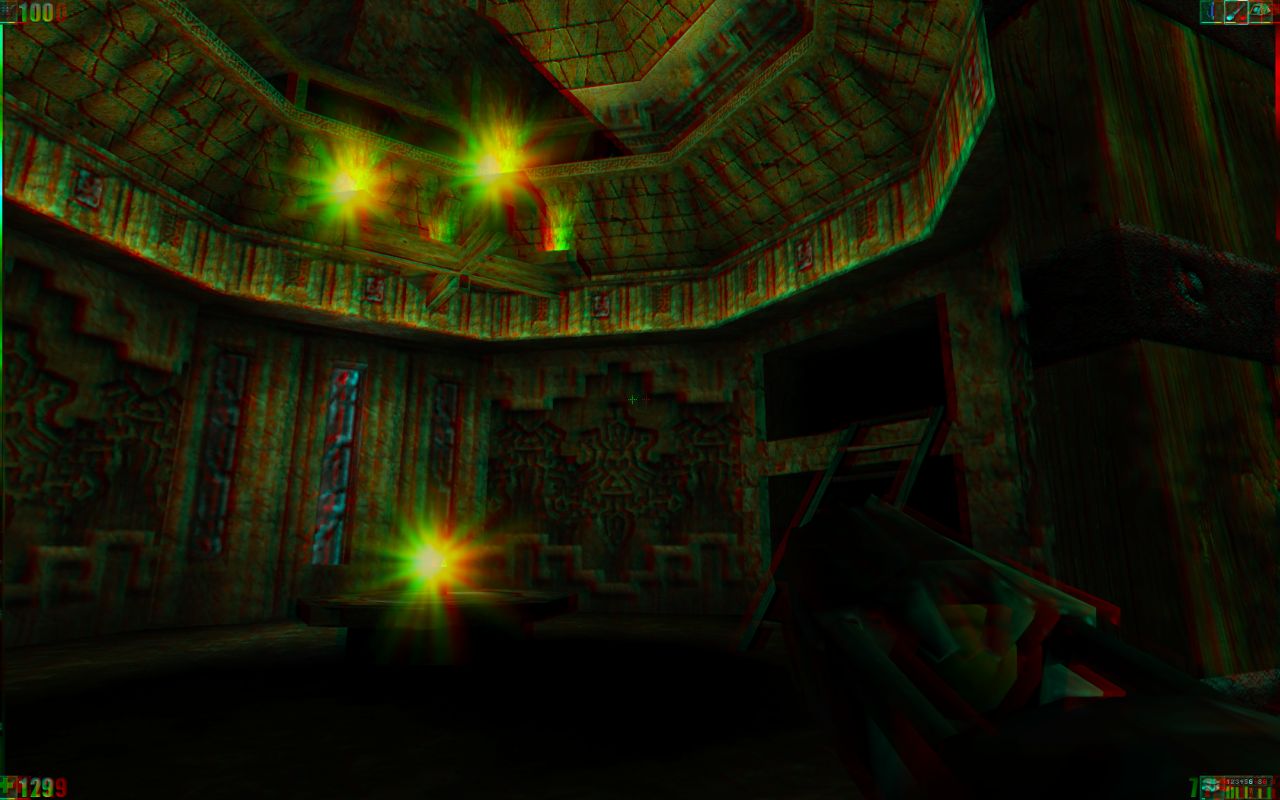
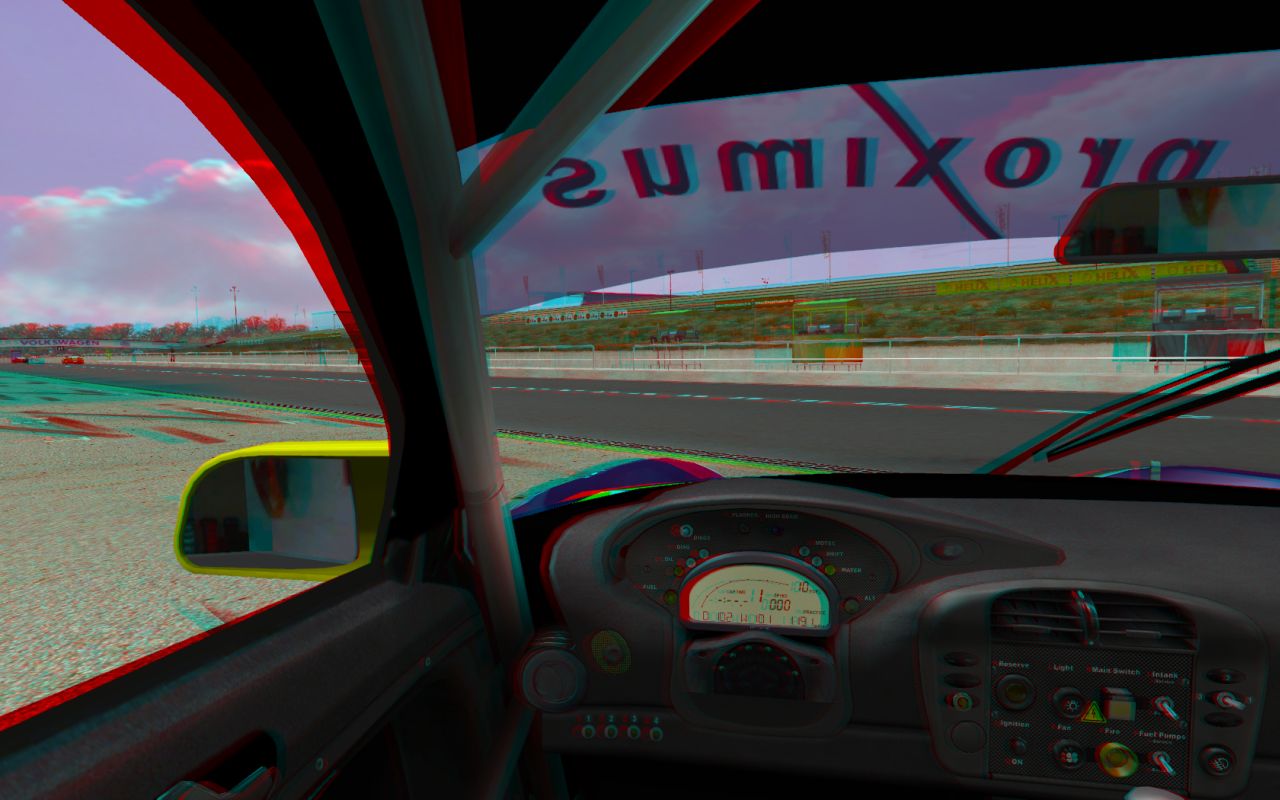
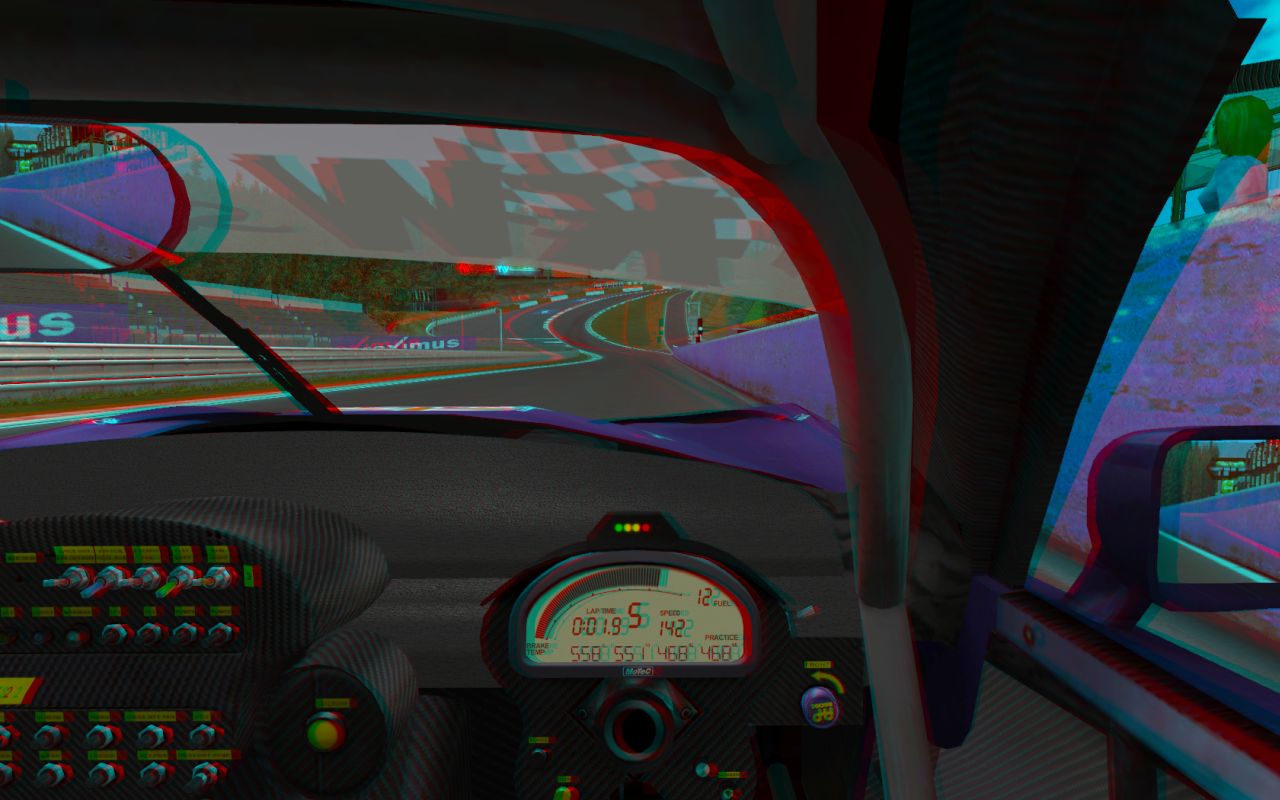
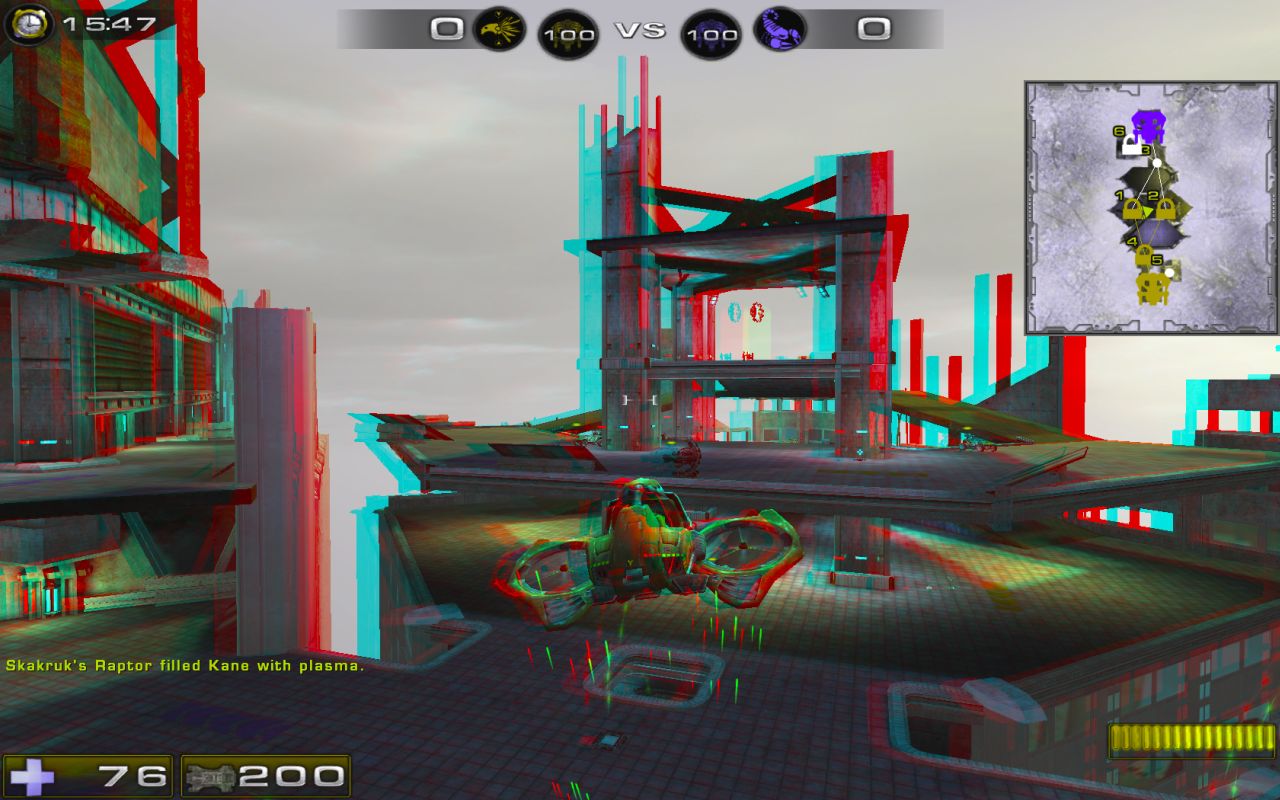
But there is one thing that I didn't mention in that previous journal. I stumbled across a graphics driver known as iZ3D. I think if you say it fast enough it sounds like "I see three dee". What is it? It's a driver that injects itself somewhere in the Direct3D rendering chain and turns that flat perspective into a stereo image. This isn't some 2D processing trickery: it's true-to-life two camera/eye stereo imaging in the 3D environment. And it supports several different formats, such as interlaced, shutter glasses, side-by-side and many others. The bulk of these require the software to be registered (you get a short trial period after installing) but... anaglyph output is free.
How well does it work? You Be The Judge.
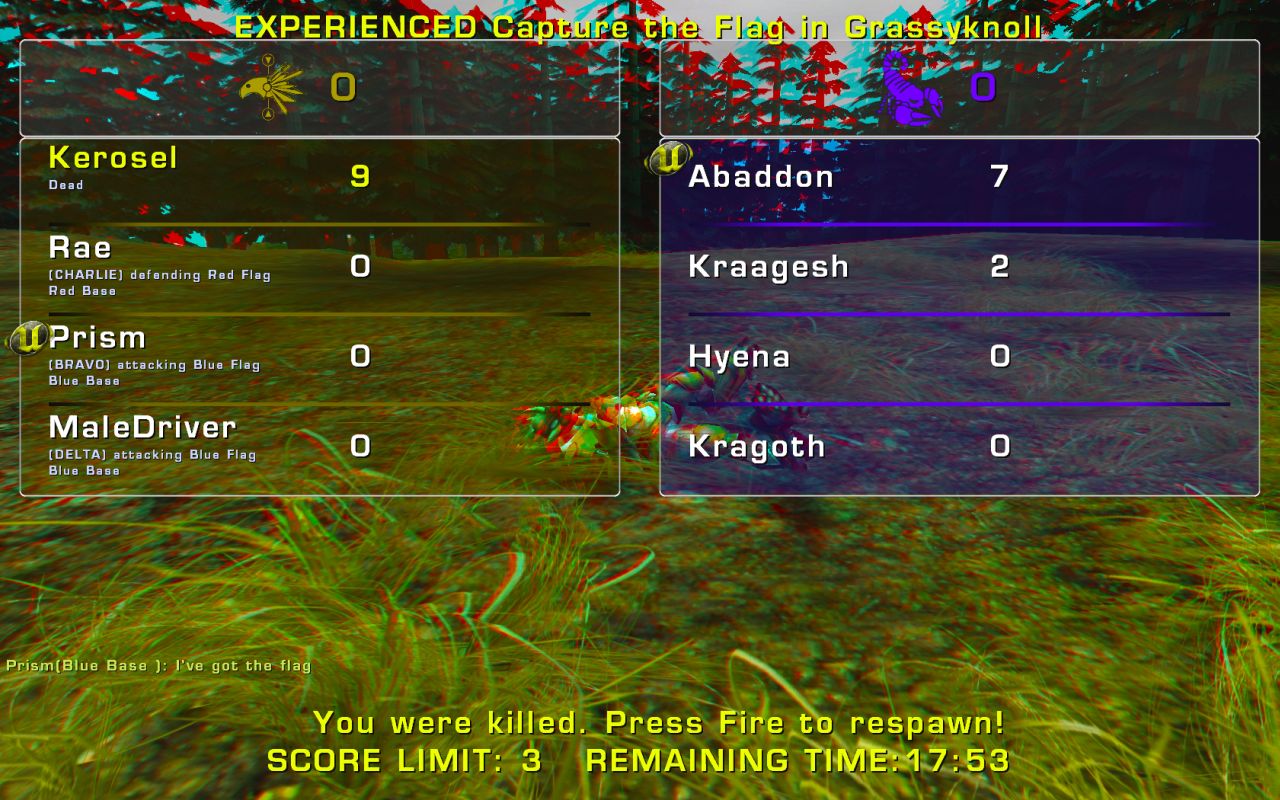
The most stunning is probably UT2k4 with the scoreboard up. The scoreboard is on the monitor's plane, but everything else goes deep behind it. Flipping between glasses-on and glasses-off reveals the big difference between the flat screen and the 3D stereo depth.
Sadly, I'm not sure the drivers are available anymore. I see in searches that iZ3D may have been offering to open source their software for a price... but the official web page is blank. On the other hand, I'm not sure they would work with DirectX10 and above. Or they might not even be necessary: it looks like Windows 8 might have stereo output built right into it.
The drivers aren't perfect... if you try looking in the mirrors of the race cars (especially the second shot) you'll find it impossible to focus. It's because the mirrors are cameras in their own right and then the image is flipped horizontally. iZ3D turns those mirror cameras into stereo images, but then that image is reversed, sending the left side to the right eye and the right side to the left eye. I can't cross my eyes far enough to get it into focus!
One thing iZ3D does have is an optimized Red/Cyan setting. It shifts the natural red color more to a mustardy yellow. Without that optimization, red objects will appear red, which means they only show up in the left eye. That makes for some really odd items, like shift lights that only light up in your left eye...
By the way, if you think red/blue or red/cyan is the only game in town, you might be surprised. There are many variations, including one that gives near-true color registration...
But there is one thing that I didn't mention in that previous journal. I stumbled across a graphics driver known as iZ3D. I think if you say it fast enough it sounds like "I see three dee". What is it? It's a driver that injects itself somewhere in the Direct3D rendering chain and turns that flat perspective into a stereo image. This isn't some 2D processing trickery: it's true-to-life two camera/eye stereo imaging in the 3D environment. And it supports several different formats, such as interlaced, shutter glasses, side-by-side and many others. The bulk of these require the software to be registered (you get a short trial period after installing) but... anaglyph output is free.
How well does it work? You Be The Judge.
The most stunning is probably UT2k4 with the scoreboard up. The scoreboard is on the monitor's plane, but everything else goes deep behind it. Flipping between glasses-on and glasses-off reveals the big difference between the flat screen and the 3D stereo depth.
Sadly, I'm not sure the drivers are available anymore. I see in searches that iZ3D may have been offering to open source their software for a price... but the official web page is blank. On the other hand, I'm not sure they would work with DirectX10 and above. Or they might not even be necessary: it looks like Windows 8 might have stereo output built right into it.
The drivers aren't perfect... if you try looking in the mirrors of the race cars (especially the second shot) you'll find it impossible to focus. It's because the mirrors are cameras in their own right and then the image is flipped horizontally. iZ3D turns those mirror cameras into stereo images, but then that image is reversed, sending the left side to the right eye and the right side to the left eye. I can't cross my eyes far enough to get it into focus!
One thing iZ3D does have is an optimized Red/Cyan setting. It shifts the natural red color more to a mustardy yellow. Without that optimization, red objects will appear red, which means they only show up in the left eye. That makes for some really odd items, like shift lights that only light up in your left eye...
By the way, if you think red/blue or red/cyan is the only game in town, you might be surprised. There are many variations, including one that gives near-true color registration...
The Baddest Hybrid on the Block
General | Posted 8 years agoPrevious to the rules changes for 2014, Formula One cars had KERS, the Kinetic Energy Recovery System. It would capture energy when slowing and braking the car and then give the driver a "push-to-pass" power boost when desired. It was F1's attempt to make the cars more eco-friendly.
But in 2014, the rules took a radical shift and an all-new Power Unit was implemented. KERS was out and the electrical boosting systems were now an integral part of the power unit. F1 had leaped headlong into the hybrid arena.
The core of it is a 1.6 liter turbocharged V6, producing close to 550HP. I don't think I need to tell anybody that squeezing 550HP out of an engine displacement seen in most Honda Civics is a feat of engineering magic in itself. Certainly helped by a turbo, definitely helped by the 15,000 RPM redline, this is the main source of power for driving the race car.
As with the KERS system, there is a kinetic motor/generator unit (MGU-K) that runs in parallel with the engine. Under braking, it generates energy that is stored in the car's storage system, And when the driver wants it, the MGU-K can add up to 160HP to the power unit output. The rules are that the system can store up to 2 megajoules of energy per lap, but can burn off 4 megajoules per lap. It's immediately apparent that a driver is allowed to burn more than they generate, making the use of the kinetic booster a strategic item.
So far, not too different from the KERS system. And not terribly different from the hybrids out on the street. But this is where the new power unit takes a departure from the old.
There is a second MGU, the heat motor/generator unit, or MGU-H. This is attached to the turbocharger shaft and has two functions. The first is as an anti-lag device. As the driver gets off the throttle and the exhaust stream lessens, the MGU-H uses stored energy to keep the turbo spun up. When the driver gets back on the throttle, the turbo is already spooled and ready to deliver full boost. The full power of the engine is always on tap.
But the other function of the MGU-T... it's absolutely brilliant. A supercharger and a turbocharger both compress engine intake air to create a denser air charge, yielding a greater fuel/air mix in each cylinder and more power when that mix is ignited. A supercharger is driven directly by the engine and so some of the engine's power is taken away from it's available output.
A turbo is driven by the exhaust stream, which would ordinarily be vented to the air. That heat and energy still in the exhaust is put to use spinning the turbine. It's "free" energy that wouldn't have been used otherwise. So already that's a plus for efficiency and wringing more energy out of an engine.
The thing is that the exhaust stream can almost always spin the turbo faster than it needs to be spun. There has to be a way to regulate the turbo speed or it will produce too much boost for the engine, or even exceed it's design limits and fail. This job falls to the wastegate, a valve that allows exhaust gases to bypass the turbine section. Depending on how much is diverted, the turbo speed and boost pressure can be regulated. But in the interest of not wasting energy, the wastegate is dumping that exhaust energy overboard without it doing any work.
In a brilliant maneuver, the MGU-H can take the place of the wastegate. When there is an excess of exhaust energy that would spin the turbo faster than needed, the MGU becomes a generator, creating more of a load on the turbine, turning the exhaust energy into electrical energy instead of it being dumped. The MGU-H harvests the energy out of the exhaust stream. And that energy doesn't necessarily go to storage: if desired it can be routed right to the MGU-K. The energy normally wasted in the exhaust is then applied to the rear wheels.
And there you have it: the quest to wring every drop of energy out of an engine has led to 700+HP gas/electric hybrid engines. And is it working? Well in-race refueling has been banned for a number of years now (after several dangerous refueling-related mishaps) and the cars are able to go a full race length on 100kg of fuel (roughly 36 gallons).
90 minutes of hard racing on 36 gallons of fuel? Sounds pretty efficient to me.
When the new power units debuted in 2014, there was a great outcry from the fans. Why? Because the cars didn't sound the same. That spine-tingling scream of the naturally aspirated V8s at 18,000 RPM was practically a trademark of the class. And the new V6s, muzzled by a turbo... didn't quite have the same hair-raising tone. Some fans were even ready to sue the Formula One organization.
But is that such a bad thing? The first thing I noticed was in the pits: you could hear the marshals blowing their whistles, you could hear the tires squealing as the drivers left the pit boxes... you could hear things over the engines. And that's probably better for the fans, better for the workers, and in a world where noise restrictions at racing venues are a very real thing, it could be better for the sport in the long run. Now that we're three years on, I think the outrage has calmed down a bit. Sure we'll miss the V8s, but the V6s have their own charm.
Granted, in my opinion the most electrifying engine note comes from the Mazda 787B and it's 4-rotor engine. But maybe that's because I once had a chance to witness it in person, racing around Laguna Seca. Standing on the hill overlooking turn 9, watching it come out of the Corkscrew with that banshee wail. And even after it was gone from view headed through turn 10, the sound of the engine still echoing off the hills as the driver downshifted for turn 11.
Maybe that's the same feeling F1 fans got from the V8s and their predecessors. And that, I can understand.
But in 2014, the rules took a radical shift and an all-new Power Unit was implemented. KERS was out and the electrical boosting systems were now an integral part of the power unit. F1 had leaped headlong into the hybrid arena.
The core of it is a 1.6 liter turbocharged V6, producing close to 550HP. I don't think I need to tell anybody that squeezing 550HP out of an engine displacement seen in most Honda Civics is a feat of engineering magic in itself. Certainly helped by a turbo, definitely helped by the 15,000 RPM redline, this is the main source of power for driving the race car.
As with the KERS system, there is a kinetic motor/generator unit (MGU-K) that runs in parallel with the engine. Under braking, it generates energy that is stored in the car's storage system, And when the driver wants it, the MGU-K can add up to 160HP to the power unit output. The rules are that the system can store up to 2 megajoules of energy per lap, but can burn off 4 megajoules per lap. It's immediately apparent that a driver is allowed to burn more than they generate, making the use of the kinetic booster a strategic item.
So far, not too different from the KERS system. And not terribly different from the hybrids out on the street. But this is where the new power unit takes a departure from the old.
There is a second MGU, the heat motor/generator unit, or MGU-H. This is attached to the turbocharger shaft and has two functions. The first is as an anti-lag device. As the driver gets off the throttle and the exhaust stream lessens, the MGU-H uses stored energy to keep the turbo spun up. When the driver gets back on the throttle, the turbo is already spooled and ready to deliver full boost. The full power of the engine is always on tap.
But the other function of the MGU-T... it's absolutely brilliant. A supercharger and a turbocharger both compress engine intake air to create a denser air charge, yielding a greater fuel/air mix in each cylinder and more power when that mix is ignited. A supercharger is driven directly by the engine and so some of the engine's power is taken away from it's available output.
A turbo is driven by the exhaust stream, which would ordinarily be vented to the air. That heat and energy still in the exhaust is put to use spinning the turbine. It's "free" energy that wouldn't have been used otherwise. So already that's a plus for efficiency and wringing more energy out of an engine.
The thing is that the exhaust stream can almost always spin the turbo faster than it needs to be spun. There has to be a way to regulate the turbo speed or it will produce too much boost for the engine, or even exceed it's design limits and fail. This job falls to the wastegate, a valve that allows exhaust gases to bypass the turbine section. Depending on how much is diverted, the turbo speed and boost pressure can be regulated. But in the interest of not wasting energy, the wastegate is dumping that exhaust energy overboard without it doing any work.
In a brilliant maneuver, the MGU-H can take the place of the wastegate. When there is an excess of exhaust energy that would spin the turbo faster than needed, the MGU becomes a generator, creating more of a load on the turbine, turning the exhaust energy into electrical energy instead of it being dumped. The MGU-H harvests the energy out of the exhaust stream. And that energy doesn't necessarily go to storage: if desired it can be routed right to the MGU-K. The energy normally wasted in the exhaust is then applied to the rear wheels.
And there you have it: the quest to wring every drop of energy out of an engine has led to 700+HP gas/electric hybrid engines. And is it working? Well in-race refueling has been banned for a number of years now (after several dangerous refueling-related mishaps) and the cars are able to go a full race length on 100kg of fuel (roughly 36 gallons).
90 minutes of hard racing on 36 gallons of fuel? Sounds pretty efficient to me.
When the new power units debuted in 2014, there was a great outcry from the fans. Why? Because the cars didn't sound the same. That spine-tingling scream of the naturally aspirated V8s at 18,000 RPM was practically a trademark of the class. And the new V6s, muzzled by a turbo... didn't quite have the same hair-raising tone. Some fans were even ready to sue the Formula One organization.
But is that such a bad thing? The first thing I noticed was in the pits: you could hear the marshals blowing their whistles, you could hear the tires squealing as the drivers left the pit boxes... you could hear things over the engines. And that's probably better for the fans, better for the workers, and in a world where noise restrictions at racing venues are a very real thing, it could be better for the sport in the long run. Now that we're three years on, I think the outrage has calmed down a bit. Sure we'll miss the V8s, but the V6s have their own charm.
Granted, in my opinion the most electrifying engine note comes from the Mazda 787B and it's 4-rotor engine. But maybe that's because I once had a chance to witness it in person, racing around Laguna Seca. Standing on the hill overlooking turn 9, watching it come out of the Corkscrew with that banshee wail. And even after it was gone from view headed through turn 10, the sound of the engine still echoing off the hills as the driver downshifted for turn 11.
Maybe that's the same feeling F1 fans got from the V8s and their predecessors. And that, I can understand.
The Nerfing of Formula One
General | Posted 8 years agoAnyone who plays MMORPGs knows what "nerfing" is. For those of you who don't, it's when the developers put in new rules or alter weapons and items to tone down combinations that prove to be game-breakingly powerful. These combinations usually aren't made on purpose, rather some enterprising individual finds the magic combination that nobody else considered and proceeds to burn the joint down.
Not surprisingly, the same thing happens in other competitive areas. And one of the most competitive pressure cookers is Formula One racing, where teams will go to great lengths for the slightest of advantage to help eke out a win over the competition.
How far will engineers go? Well, two examples come to mind...
In 2010, McLaren debuted the "F-Duct". It was a system with a small air snorkel mounted on the nose of the car that would scoop up air and vent it into the cockpit to "cool the driver". At least, that's the reason that was given for it. Because if the driver covered up the vent in the cockpit, the air would continue through duct work in the body, down the length of the "dorsal fin" behind the engine cover back to the rear wing where it would blow through a slot in the wing flap element. This air coming out the bottom surface of the flap caused the airflow on the underside to break away and stall the wing.
While it's generally known that a stalled wing doesn't provide lift (or downforce, in this case), the laws of physics dictate that a stalled wing also creates less drag. In fact, stalling out the rear wing could give cars a 3 MPH advantage in a straight line. In practice for the first race of the season, other drivers watched the McLarens "walk away" from them on the straights.
As the season went on, the other teams were forced to come up with their own versions of the F-Duct, but in 2010 the monocoque body of the cars were homologated, meaning no changes could be made to it for the season. McLaren had the advantage that they designed the ducting into their body from the get go. Other teams weren't so lucky and had to come up with "bolt-on" solutions. This also led to less elegant ways for the drivers to control the system, including using their hand so that they only had one hand on the wheel during the high speed sections of tracks. It was thought that if a driver was using their left hand to block a vent and needed to adjust brake bias with their right hand, there could be a point where they had no hands on the wheel.
Concerns about safety led the FIA to outlaw the blown wing at the end of the season, but apparently the liked the general idea. For the next season they would introduce the Drag Reduction System where the wing flap would pivot upward to disrupt airflow, stall the rear wing and give cars a 6 MPH speed advantage in designated zones. It also had the advantage of setting down rules for the use of DRS and making sure it could be used safely.
As a side note, the name "F-Duct" was probably invented by the media, based either on the intake snorkel looking like an "F", or that the snorkel was near the "F" in the "Vodafone" sponsorship on the nose of the car. But Christian Horner of Red Bull probably had the thought that everyone else did when he said, "We call it 'The F-ing Duct'..."
Sometimes it's not a new idea... sometimes it's the combination of old ideas put together that can reap great benefits.
The diffuser is a piece of aerodynamic work under the rear of the car that takes under-car airflow and creates a low-pressure area that helps stick the car to the track surface. And it stands to reason that the faster the airflow through the diffuser, the lower the pressure and the more suction, right? This led to the exhaust-blown diffuser, where the engine's exhaust flow is routed through the diffuser, creating a fast-moving air stream.
But the exhaust-blown diffuser is not new: it was used as far back as 1983. And it wasn't without its problems. Chief among them was when the driver lifted off the throttle, the exhaust gases dramatically decreased and the downforce dried up. It's been described as almost an on/off effect, the downforce disappearing right when it's needed the most going into a corner. Turbocharged engines suffer less from this effect (the exhaust is smoother and more consistent post-turbine) but in 2009 F1 switched up to naturally aspirated V8s.
Enter "off-throttle overrun", a method designed to keep air flowing out the exhaust even when the driver is off the throttle. And it turns out this isn't new technology either: rally racers have been using it as an anti-lag system for decades. When the driver lifts off the throttle, the engine control keeps the throttle open and keeps feeding fuel to the engine. It retards the ignition timing so much that the piston is already traveling down when the fuel in the cylinder is ignited. The burning fuel does almost nothing for pushing on the piston and creating mechanical power, but it still generates all the exhaust that an engine at full-throttle would generate and that is blown out over the diffuser.
While this does the job, it's extremely hard on the engine: all that energy that would be turned into mechanical power stays as heat and engine temps can get excessive. It also takes a bite out of the cars fuel economy given that it's always burning fuel, regardless of how much power is being put to the wheels. And since refueling was banned in F1, fuel economy is a major concern.
For the 2012 season, the FIA banned blown diffusers and put strict regulations on the engine mappings that teams could use. But don't think for a moment it's over, as teams quickly figured out how they could still use the exhaust stream to their advantage, even if they were prohibited from aiming the exhaust down at the diffuser... the quest for wringing every little advantage out of what you've got will never end.
So why would the FIA step in to ban these brilliant technical innovations that the top-notch engineers come up with? After all, if a team's engineers create an advantage that isn't prohibited shouldn't they get the advantage?
Often the teams are running in grey areas of the rules and regulations. The things they do (such as a blown wing) are not explicitly banned, but since actively changeable rear wings are against the rules, and passively flexible rear wing elements are banned... the FIA obviously don't want teams using any kind of rear wing that changes aerodynamically during the course of a race. Which... a blown wing does. The teams are good to the letter of the law, even if they're violating the spirit of it. So they have to continually redefine what is and isn't allowed as teams dream up new things that fit in the gaps.
But mostly I think it's done for a lot of the same reasons it's done in MMORPGs, mainly to try to keep the field competitive. When McLaren comes up with an F-Duct or Red Bull perfects off-throttle blown diffusers, the other big factory-backed teams like Ferrari or Mercedes can spring into action, draw up revised plans, fabricate new pieces and get them on the cars mid-season.
But what about the smaller teams? Teams like Force India or Sauber or Caterham that don't have billions of dollars backing them up? Teams that probably sink their entire season budget into designing, building and running two cars. If some unforeseen innovation springs up mid-season, they can't necessarily afford to redesign and re-fab parts. And if they can't, suddenly they're no longer competitive.
And if halfway through the season a technical innovation causes only four of the ten teams to be able to race for the podium... well what fun is that for the fans?
Not surprisingly, the same thing happens in other competitive areas. And one of the most competitive pressure cookers is Formula One racing, where teams will go to great lengths for the slightest of advantage to help eke out a win over the competition.
How far will engineers go? Well, two examples come to mind...
In 2010, McLaren debuted the "F-Duct". It was a system with a small air snorkel mounted on the nose of the car that would scoop up air and vent it into the cockpit to "cool the driver". At least, that's the reason that was given for it. Because if the driver covered up the vent in the cockpit, the air would continue through duct work in the body, down the length of the "dorsal fin" behind the engine cover back to the rear wing where it would blow through a slot in the wing flap element. This air coming out the bottom surface of the flap caused the airflow on the underside to break away and stall the wing.
While it's generally known that a stalled wing doesn't provide lift (or downforce, in this case), the laws of physics dictate that a stalled wing also creates less drag. In fact, stalling out the rear wing could give cars a 3 MPH advantage in a straight line. In practice for the first race of the season, other drivers watched the McLarens "walk away" from them on the straights.
As the season went on, the other teams were forced to come up with their own versions of the F-Duct, but in 2010 the monocoque body of the cars were homologated, meaning no changes could be made to it for the season. McLaren had the advantage that they designed the ducting into their body from the get go. Other teams weren't so lucky and had to come up with "bolt-on" solutions. This also led to less elegant ways for the drivers to control the system, including using their hand so that they only had one hand on the wheel during the high speed sections of tracks. It was thought that if a driver was using their left hand to block a vent and needed to adjust brake bias with their right hand, there could be a point where they had no hands on the wheel.
Concerns about safety led the FIA to outlaw the blown wing at the end of the season, but apparently the liked the general idea. For the next season they would introduce the Drag Reduction System where the wing flap would pivot upward to disrupt airflow, stall the rear wing and give cars a 6 MPH speed advantage in designated zones. It also had the advantage of setting down rules for the use of DRS and making sure it could be used safely.
As a side note, the name "F-Duct" was probably invented by the media, based either on the intake snorkel looking like an "F", or that the snorkel was near the "F" in the "Vodafone" sponsorship on the nose of the car. But Christian Horner of Red Bull probably had the thought that everyone else did when he said, "We call it 'The F-ing Duct'..."
Sometimes it's not a new idea... sometimes it's the combination of old ideas put together that can reap great benefits.
The diffuser is a piece of aerodynamic work under the rear of the car that takes under-car airflow and creates a low-pressure area that helps stick the car to the track surface. And it stands to reason that the faster the airflow through the diffuser, the lower the pressure and the more suction, right? This led to the exhaust-blown diffuser, where the engine's exhaust flow is routed through the diffuser, creating a fast-moving air stream.
But the exhaust-blown diffuser is not new: it was used as far back as 1983. And it wasn't without its problems. Chief among them was when the driver lifted off the throttle, the exhaust gases dramatically decreased and the downforce dried up. It's been described as almost an on/off effect, the downforce disappearing right when it's needed the most going into a corner. Turbocharged engines suffer less from this effect (the exhaust is smoother and more consistent post-turbine) but in 2009 F1 switched up to naturally aspirated V8s.
Enter "off-throttle overrun", a method designed to keep air flowing out the exhaust even when the driver is off the throttle. And it turns out this isn't new technology either: rally racers have been using it as an anti-lag system for decades. When the driver lifts off the throttle, the engine control keeps the throttle open and keeps feeding fuel to the engine. It retards the ignition timing so much that the piston is already traveling down when the fuel in the cylinder is ignited. The burning fuel does almost nothing for pushing on the piston and creating mechanical power, but it still generates all the exhaust that an engine at full-throttle would generate and that is blown out over the diffuser.
While this does the job, it's extremely hard on the engine: all that energy that would be turned into mechanical power stays as heat and engine temps can get excessive. It also takes a bite out of the cars fuel economy given that it's always burning fuel, regardless of how much power is being put to the wheels. And since refueling was banned in F1, fuel economy is a major concern.
For the 2012 season, the FIA banned blown diffusers and put strict regulations on the engine mappings that teams could use. But don't think for a moment it's over, as teams quickly figured out how they could still use the exhaust stream to their advantage, even if they were prohibited from aiming the exhaust down at the diffuser... the quest for wringing every little advantage out of what you've got will never end.
So why would the FIA step in to ban these brilliant technical innovations that the top-notch engineers come up with? After all, if a team's engineers create an advantage that isn't prohibited shouldn't they get the advantage?
Often the teams are running in grey areas of the rules and regulations. The things they do (such as a blown wing) are not explicitly banned, but since actively changeable rear wings are against the rules, and passively flexible rear wing elements are banned... the FIA obviously don't want teams using any kind of rear wing that changes aerodynamically during the course of a race. Which... a blown wing does. The teams are good to the letter of the law, even if they're violating the spirit of it. So they have to continually redefine what is and isn't allowed as teams dream up new things that fit in the gaps.
But mostly I think it's done for a lot of the same reasons it's done in MMORPGs, mainly to try to keep the field competitive. When McLaren comes up with an F-Duct or Red Bull perfects off-throttle blown diffusers, the other big factory-backed teams like Ferrari or Mercedes can spring into action, draw up revised plans, fabricate new pieces and get them on the cars mid-season.
But what about the smaller teams? Teams like Force India or Sauber or Caterham that don't have billions of dollars backing them up? Teams that probably sink their entire season budget into designing, building and running two cars. If some unforeseen innovation springs up mid-season, they can't necessarily afford to redesign and re-fab parts. And if they can't, suddenly they're no longer competitive.
And if halfway through the season a technical innovation causes only four of the ten teams to be able to race for the podium... well what fun is that for the fans?
Re-Licensing
General | Posted 8 years agoI think everyone understands on a basic level how licensing works. That if you want to use somebody else's creation in your product, you need to get their permission and probably pay them some sort of fee or royalty. It's only fair, right?
Funny thing is that the original licensing agreement often doesn't cover everything that might happen. It's fairly common when a television series is released to DVD, the original music licensing no longer applies and the music needs to be re-licensed for the DVD release. And sometimes the studio in charge of the release opts to not re-license the music. I figure most of the time it's not something noticeable: generic free (or lower-cost) incidental music probably works just fine. And of course there's a whole industry of "sound alike" music out there for when you want something similar but don't want to fork out for the real thing.
In the case of the series Mission Hill it was a huge blow. Episodes of Mission Hill featured several songs in each episode by well-known artists. When it came to the DVD release, the studio didn't re-license any of the music. A huge loss, but for the most part not terminal Except for one episode that ends with the cast standing in the apartment, singing "Everybody Hurts" by R.E.M. Since the song rights weren't secured, it left the cast singing the lyrics with sort of a matching music track, but it certainly wasn't "Everybody Hurts".
This also happens in video games when they're re-released. I've found out that the re-release of Homeworld no longer has the Yes song of the same name for the final credit roll. Licensing reasons. And a shame, because that was one of the things that drew me to it. Of course all the people who have told me what a great game it is... that's a big factor too. But when you consider that Yes wrote the song specifically for the game, it seems like kind of a letdown that it couldn't be included in the re-release.
And it's not limited to music, either. The re-release of GTR2 that you can get on Steam... is missing the Ferrari and Porsche vehicles. Which strikes me as funny, since fully 70% of the NGT field is Porsche GT3s of one sort or another (and another 15% are probably Ferrari 360 Modenas). Perhaps Ferrari and Porsche wanted too much for their cars to appear in the game. Maybe whoever owns the rights to GTR2 didn't care to pay again. Whatever the reason, they aren't there. Although that doesn't mean it isn't a fairly easy process to put them back in... but it can't be officially sold with them included.
Funny thing is that the original licensing agreement often doesn't cover everything that might happen. It's fairly common when a television series is released to DVD, the original music licensing no longer applies and the music needs to be re-licensed for the DVD release. And sometimes the studio in charge of the release opts to not re-license the music. I figure most of the time it's not something noticeable: generic free (or lower-cost) incidental music probably works just fine. And of course there's a whole industry of "sound alike" music out there for when you want something similar but don't want to fork out for the real thing.
In the case of the series Mission Hill it was a huge blow. Episodes of Mission Hill featured several songs in each episode by well-known artists. When it came to the DVD release, the studio didn't re-license any of the music. A huge loss, but for the most part not terminal Except for one episode that ends with the cast standing in the apartment, singing "Everybody Hurts" by R.E.M. Since the song rights weren't secured, it left the cast singing the lyrics with sort of a matching music track, but it certainly wasn't "Everybody Hurts".
This also happens in video games when they're re-released. I've found out that the re-release of Homeworld no longer has the Yes song of the same name for the final credit roll. Licensing reasons. And a shame, because that was one of the things that drew me to it. Of course all the people who have told me what a great game it is... that's a big factor too. But when you consider that Yes wrote the song specifically for the game, it seems like kind of a letdown that it couldn't be included in the re-release.
And it's not limited to music, either. The re-release of GTR2 that you can get on Steam... is missing the Ferrari and Porsche vehicles. Which strikes me as funny, since fully 70% of the NGT field is Porsche GT3s of one sort or another (and another 15% are probably Ferrari 360 Modenas). Perhaps Ferrari and Porsche wanted too much for their cars to appear in the game. Maybe whoever owns the rights to GTR2 didn't care to pay again. Whatever the reason, they aren't there. Although that doesn't mean it isn't a fairly easy process to put them back in... but it can't be officially sold with them included.
A Decade Later and Still In Love
General | Posted 8 years ago"Think of it more in terms of being a... a long term companion, rather than a... fiery one-night stand."
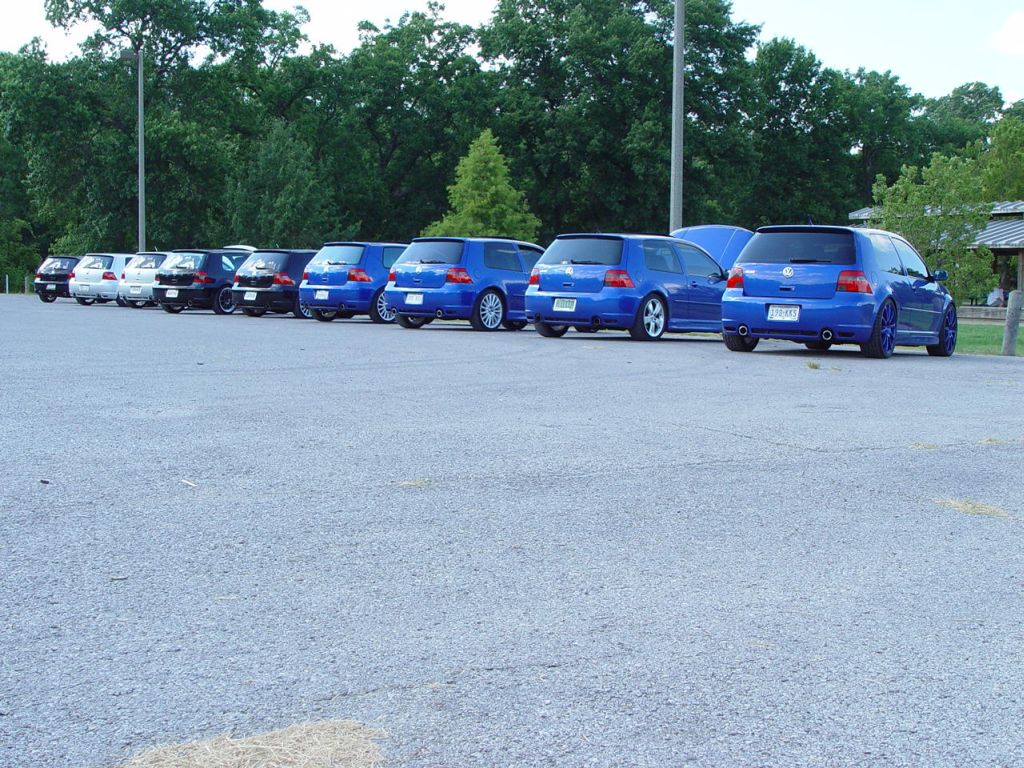
It's hard to believe that a little over 10 years ago, I grabbed my backpack, headed out the door and walked a half-mile to the local CarMax to sign the final paperwork on a used 2004 Volkswagen R32. It had been quite the courtship,,, finding her on the CarMax website and having her shipped in from Texas. I went down and took a test drive and then found out it was decision time: if I didn't buy it right then, others would get a shot... and the vultures were already circling. I swallowed my anxiety and said yes.
Best. Decision. Ever.
That first night, I drove off the lot and up into the northern Valley, parking at a convenience store just to take it all in and get to know her better. It hadn't even been five minutes before a red GTI pulled up alongside and two guys I had never met before got out. They had seen the R and wanted a closer look. We talked shop for a little bit before parting ways,. I can't remember if I drove Little Tujunga Canyon that night... it probably doesn't matter. The world was sparkly and new and amazing.
Looking back, it's been quite the decade. At least three SoCal R32 gatherings. The trip to Oklahoma for a more centralized meet. Too many track days at Buttonwillow, Streets of Willow Springs, Horse Thief Canyon, California Speedway, Hallett Motorsport Park in Oklahoma and even a day at Laguna Seca. At least three trips to Las Vegas for Wustefest (one of those a collaborative driving experience between and I), Multiple trips between SoCal and Oregon before finally moving here. Turning 100,000 miles on the way to Family Camp (and pulling over to take pictures). And now, hundreds of miles of highways through forests and mountains, along the coastline, through canyons... it never gets old!
I've loved that quote from Jeremy Clarkson ever since I first heard it and it's funny to think that after ten years it might actually be true. My R32 has been a long term companion, my daily driver who I'm always happy to see, who makes my heart beat quick every time I hear her voice. After ten years and over 110,000 miles that I've put on her, the love is as strong as ever. She's not the car she used to be... she creaks, has scratches here and there. Her bumper doesn't fit quite as well as before, her rims are curbed and she has that big dent in the hatch. But she's still my baby.
Others might buy a hot car and have a whirlwind affair for a few years before the excitement wears off and they trade it in for the newer, hotter model. Somehow that didn't happen in this case. Maybe some of that is the rarity of the R32 in the United States, but I like to think it's a grown-up sports car for the mature boy-racer. The kind that is equally at home on the track as in the parking lot of your accounting job. The kind that can lure you in when you want the excitement, but is content to chill with you and be mellow as you both mature. The perfect long-term life companion.
Here's to another 10 years of driving bliss.
One of my friends up here once said the R32 is not a sports car because (for one) it has too many seats. Coming from someone whose fun car is a Miata, I can see what they're saying. And you know, they're right. The R32 is not a sports car. What it is, is a Grand Tourer. It's a performance car, but not to the point of sacrificing the nice things. So it's got the sport suspension, big wheels, big engine... but also the bolstered leather seats, fat steering wheel, power accessories and premium sound. It doesn't perform like a flat out sports car... but it won't make you pay for it when you take a cross-country road trip.
Something tells me that Grand Tourers make better long term companions.
- Jeremy ClarksonIt's hard to believe that a little over 10 years ago, I grabbed my backpack, headed out the door and walked a half-mile to the local CarMax to sign the final paperwork on a used 2004 Volkswagen R32. It had been quite the courtship,,, finding her on the CarMax website and having her shipped in from Texas. I went down and took a test drive and then found out it was decision time: if I didn't buy it right then, others would get a shot... and the vultures were already circling. I swallowed my anxiety and said yes.
Best. Decision. Ever.
That first night, I drove off the lot and up into the northern Valley, parking at a convenience store just to take it all in and get to know her better. It hadn't even been five minutes before a red GTI pulled up alongside and two guys I had never met before got out. They had seen the R and wanted a closer look. We talked shop for a little bit before parting ways,. I can't remember if I drove Little Tujunga Canyon that night... it probably doesn't matter. The world was sparkly and new and amazing.
Looking back, it's been quite the decade. At least three SoCal R32 gatherings. The trip to Oklahoma for a more centralized meet. Too many track days at Buttonwillow, Streets of Willow Springs, Horse Thief Canyon, California Speedway, Hallett Motorsport Park in Oklahoma and even a day at Laguna Seca. At least three trips to Las Vegas for Wustefest (one of those a collaborative driving experience between
 and I), Multiple trips between SoCal and Oregon before finally moving here. Turning 100,000 miles on the way to Family Camp (and pulling over to take pictures). And now, hundreds of miles of highways through forests and mountains, along the coastline, through canyons... it never gets old!
I've loved that quote from Jeremy Clarkson ever since I first heard it and it's funny to think that after ten years it might actually be true. My R32 has been a long term companion, my daily driver who I'm always happy to see, who makes my heart beat quick every time I hear her voice. After ten years and over 110,000 miles that I've put on her, the love is as strong as ever. She's not the car she used to be... she creaks, has scratches here and there. Her bumper doesn't fit quite as well as before, her rims are curbed and she has that big dent in the hatch. But she's still my baby.
Others might buy a hot car and have a whirlwind affair for a few years before the excitement wears off and they trade it in for the newer, hotter model. Somehow that didn't happen in this case. Maybe some of that is the rarity of the R32 in the United States, but I like to think it's a grown-up sports car for the mature boy-racer. The kind that is equally at home on the track as in the parking lot of your accounting job. The kind that can lure you in when you want the excitement, but is content to chill with you and be mellow as you both mature. The perfect long-term life companion.
Here's to another 10 years of driving bliss.
One of my friends up here once said the R32 is not a sports car because (for one) it has too many seats. Coming from someone whose fun car is a Miata, I can see what they're saying. And you know, they're right. The R32 is not a sports car. What it is, is a Grand Tourer. It's a performance car, but not to the point of sacrificing the nice things. So it's got the sport suspension, big wheels, big engine... but also the bolstered leather seats, fat steering wheel, power accessories and premium sound. It doesn't perform like a flat out sports car... but it won't make you pay for it when you take a cross-country road trip.
Something tells me that Grand Tourers make better long term companions.
Pinball Machine Reflexes
General | Posted 9 years agoWe all remember our high-school biology classes where we learned about reflexes in the body, right? If not, a reflex is essentially a short-circuit in the spinal cord. For example if you put your hand down on a hot burner, in the time it would take for the pain sensation to get to the brain, the brain to process it and send a message back to move your hand, considerable damage could already be done. Instead the severe pain message reaches the spinal cord and triggers an immediate response back to muscles to MOVE! A message is also sent to the brain to let it know what happened, but the actual movement is completely involuntary.
(Granted this isn't always good... one time when working on electronics at a cramped desk, I nudged my soldering iron with my knuckle. The reflex spasm bumped my hand against the iron again causing another burn. I've heard stories of people re-cutting themselves on sharp knives for the same reason)
Would you believe that a similar mechanic was employed in some pinball tables? When microprocessors first landed in pinball tables, they were fairly slow. Fast enough to flash lights and update score displays, but if you wanted the microprocessor to fire a pop-bumper or kicker when the ball hit it, by the time the processor had processed the trigger and fired the solenoid, the ball would have moved out of range.
The solution to this was to create something a lot like a reflex. The trigger closure for a pop bumper would directly trigger the solenoid to fire the bumper, while at the same time sending a signal to the microprocessor so lights could flash and scores could be updated. But the action of triggering the bumper was completely outside of the microprocessor's purview.
That sounds a lot like that pain reflex going on without the brain's direct involvement.
(Granted this isn't always good... one time when working on electronics at a cramped desk, I nudged my soldering iron with my knuckle. The reflex spasm bumped my hand against the iron again causing another burn. I've heard stories of people re-cutting themselves on sharp knives for the same reason)
Would you believe that a similar mechanic was employed in some pinball tables? When microprocessors first landed in pinball tables, they were fairly slow. Fast enough to flash lights and update score displays, but if you wanted the microprocessor to fire a pop-bumper or kicker when the ball hit it, by the time the processor had processed the trigger and fired the solenoid, the ball would have moved out of range.
The solution to this was to create something a lot like a reflex. The trigger closure for a pop bumper would directly trigger the solenoid to fire the bumper, while at the same time sending a signal to the microprocessor so lights could flash and scores could be updated. But the action of triggering the bumper was completely outside of the microprocessor's purview.
That sounds a lot like that pain reflex going on without the brain's direct involvement.
Another Road Trip
General | Posted 9 years agoDo you remember that long trip along the western gulf coast? Jumping in the car in Brownsville at the Tex-Mex border turnaround? Fading memories of pulling out of Ricardo with the dusk falling fast, six hours to Louisiana and black coffee going cold. Making it to Lake Jackson for dream time. Remember being somewhere out of Beaumont at 3am? Or watching the lights of Baton Rouge pass by? And then alone again with the dawn coming up...
What a trip that was...
What a trip that was...
The Ultimate Road Trip
General | Posted 9 years agoWe left for Frisco in your Rambler,
The radiator running dry.
I've never been much of a gambler
,
and had a preference to fly.
You said "Forget about the airline,
let's take the car and save the fare."
We blew a gasket on the Grapevine
,
And eighty dollars on repairs...A Modern Christmas Carol
General | Posted 9 years agoWe come to pay homage to the golden one.
We share and bear the message of your newborn son.
We follow paths of falling stars.
In and out of mangers, other bars.
Opportunity knocked you up I guess.
Gave you your little baby's success.
You've got potential, you have the gift.
You have the chance to heal a million rifts.
We've been sent to sing a lullaby for you.
We've been sent to sing a lullaby...Hybrid Symphonies
General | Posted 9 years agoIt's no secret I like Hybrid's album "Wide Angle". Get a breakbeat duo to team up with the Russian Federal Orchestra and the results are pretty amazing. I mean, sure... "strings" are a pretty stock synth pad these days, but when it's played by real strings... violins and violas and cellos all playing in unison (and backed by the brass section), it's so much more expansive and expressive than even the best sampler can manage.
"Wide Angle" is solid from start to finish... it plays like a movie soundtrack, complete with opening credits and a final song to fit an end credit roll. And it never really stops... there's always some sort of segue from track to track, making it an album to be experienced and enjoyed as a whole. The climax of the whole thing is "Finished Symphony", a 10-minute exercise in what happens when electronica meets with classical symphony, they shake hands and get down to work.
What I didn't know until recently is that "Finished Symphony" is really a remix of sorts... from Hybrid's earlier tune "Symphony". The two tunes parallel each other at every turn, but "Symphony" is a little more dance club, a little more breakbeat, swinging its glowsticks in wide arcs and using orchestra samples while "Finished Symphony" performs it's movie soundtrack at the theater with a live orchestra backing it up.
Two of a kind, walking side-by-side, each doing it their own way.
The opening credits to "Wide Angle" is a rather nice bit of music... something to welcome the listener in and let them settle for the journey that's about to take place. And if you think the end of that cut sounds strange... remember what I said about how almost every track in the album segues into the next. Perhaps you should give the whole thing a listen.
Finally, I have to give credit where credit is due: all this started because of the video game SSX. "Finished Symphony" was used in the untracked snowboarding stage and while I'm not sure I ever heard the music while in the game, later when I would get an unofficial rip of the music from it I would find "Finished Symphony" mesmerizing. It put Hybrid on the map for me and pretty much guaranteed I would pick up a copy of "Wide Angle".
"Wide Angle" is solid from start to finish... it plays like a movie soundtrack, complete with opening credits and a final song to fit an end credit roll. And it never really stops... there's always some sort of segue from track to track, making it an album to be experienced and enjoyed as a whole. The climax of the whole thing is "Finished Symphony", a 10-minute exercise in what happens when electronica meets with classical symphony, they shake hands and get down to work.
What I didn't know until recently is that "Finished Symphony" is really a remix of sorts... from Hybrid's earlier tune "Symphony". The two tunes parallel each other at every turn, but "Symphony" is a little more dance club, a little more breakbeat, swinging its glowsticks in wide arcs and using orchestra samples while "Finished Symphony" performs it's movie soundtrack at the theater with a live orchestra backing it up.
Two of a kind, walking side-by-side, each doing it their own way.
The opening credits to "Wide Angle" is a rather nice bit of music... something to welcome the listener in and let them settle for the journey that's about to take place. And if you think the end of that cut sounds strange... remember what I said about how almost every track in the album segues into the next. Perhaps you should give the whole thing a listen.
Finally, I have to give credit where credit is due: all this started because of the video game SSX. "Finished Symphony" was used in the untracked snowboarding stage and while I'm not sure I ever heard the music while in the game, later when I would get an unofficial rip of the music from it I would find "Finished Symphony" mesmerizing. It put Hybrid on the map for me and pretty much guaranteed I would pick up a copy of "Wide Angle".
At the end
General | Posted 9 years agoThe night is late the day is young
And my head spins the final song
I'll do anythin' she says
There's somethin' new around the bend
I'm beginnin' at the end
At the end's where I begin
Sense has gone we're on our way
Just another drink away
Stood behind the waterfall
At the end is where we meet
The dawn is runnin' down the street
But they can never catch us now
There's somethin' new around the bend
I'm beginnin' at the end
At the end's where I begin
The night is late the day is young
My head spins the final song
I'll do anythin' she says
You know it's been a while since I saw you...Most Peculiar...
General | Posted 9 years agoHe died last Saturday.
He turned on the gas and he went to sleep
With the windows closed so he'd never wake up
To his silent world and his tiny room;
And Mrs. Riordan says he has a brother somewhere...
...who should be notified soon.
And all the people said, "What a shame that he's dead,
But wasn't he a most peculiar man?"Growing Flowers in the Desert
General | Posted 9 years agoSo take that look out of here, it doesn't fit you.
Because it's happened doesn't mean you've been discarded.
Pull up your head off the floor, come up screaming!
Cry out for everything you ever might have wanted!
I thought that pain and truth were things that really mattered
But you can't stay here with every single hope you had shattered...User Space
General | Posted 9 years agoI've been seeing a growing trend toward critical system applications running in user space on servers. And frankly I find this very disturbing.
Applications that run in the server's kernel space are better known as services (for the Windows group) or daemons (for the Linux bunch). These are programs that the kernel starts on its own, usually during boot-up and they run in the background, independent of any user being logged in. Applications that run in user space are tied to a particular user and when that user logs out of the system, those applications are generally shut down.
Knowing that fact, why would anybody design a system where critical applications that must be up and running for your service to function are started in user space, only after a user has logged in? And if that user is ever logged out, the entire system will stop functioning.
A prime example is our CGS graphics overlay box for our on-air signal. It lets us put up news crawls or weather alerts on top of the current program. First, a user must be logged in to the system and the control application must be started before the box will even pass video through it. If that application ever crashes (and it does), it stops passing video. Which is a problem, since it's designed to be in-line with the station's on-air signal. What happens if there's a power failure? The system isn't set to automatically log in when it comes up, so someone has to go to the box and log in before video can once again flow through it.
"Ha!" you say, "Rank amateurs! No big company would ever put critical services in user space!"
I wish you were right.
Imagine Communications (formerly the broadcast engineering side of Harris) has a Media Delivery System where all it's critical elements are running in user space. One of them is kind enough to minimize to the system tray, but the other must be alive and running on the task bar at all times or shows do not get delivered. When using remote desktop to get into the system, one must remember to close the remote session rather than log out of the machine.
And the Associated Press' Essential News Production System (ENPS) has several applications that all work together... all in user space. The system installers made it very clear that we should leave the ENPS user logged in at all times to the server because if they are logged off, the entire newsroom production system will stop working. Both their master and backup servers are this way. How is this in any way acceptable?
I have a message for all the up-and-coming programmers out there: If your system will not work without a process running at all times, that process should be a service or a daemon that is independent of a user logged into the server. It may not be as easy as creating a service or daemon, but it will save a lot more headaches for your users in the long run.
Applications that run in the server's kernel space are better known as services (for the Windows group) or daemons (for the Linux bunch). These are programs that the kernel starts on its own, usually during boot-up and they run in the background, independent of any user being logged in. Applications that run in user space are tied to a particular user and when that user logs out of the system, those applications are generally shut down.
Knowing that fact, why would anybody design a system where critical applications that must be up and running for your service to function are started in user space, only after a user has logged in? And if that user is ever logged out, the entire system will stop functioning.
A prime example is our CGS graphics overlay box for our on-air signal. It lets us put up news crawls or weather alerts on top of the current program. First, a user must be logged in to the system and the control application must be started before the box will even pass video through it. If that application ever crashes (and it does), it stops passing video. Which is a problem, since it's designed to be in-line with the station's on-air signal. What happens if there's a power failure? The system isn't set to automatically log in when it comes up, so someone has to go to the box and log in before video can once again flow through it.
"Ha!" you say, "Rank amateurs! No big company would ever put critical services in user space!"
I wish you were right.
Imagine Communications (formerly the broadcast engineering side of Harris) has a Media Delivery System where all it's critical elements are running in user space. One of them is kind enough to minimize to the system tray, but the other must be alive and running on the task bar at all times or shows do not get delivered. When using remote desktop to get into the system, one must remember to close the remote session rather than log out of the machine.
And the Associated Press' Essential News Production System (ENPS) has several applications that all work together... all in user space. The system installers made it very clear that we should leave the ENPS user logged in at all times to the server because if they are logged off, the entire newsroom production system will stop working. Both their master and backup servers are this way. How is this in any way acceptable?
I have a message for all the up-and-coming programmers out there: If your system will not work without a process running at all times, that process should be a service or a daemon that is independent of a user logged into the server. It may not be as easy as creating a service or daemon, but it will save a lot more headaches for your users in the long run.
Shorting Out the Market
General | Posted 9 years agoIt's pretty easy to understand how to make money on a stock when the value goes up. You buy low, sell high and profit follows. But did you know there's a way to make money when a stock loses value? It's called "Selling Short" and at first glance it sounds like magic. The stock value goes down, but you make money from that? How on earth does that work? Once you understand it, it makes perfect sense.
Say you want to short WidgetTech because you think they didn't do so well this year and when they announce that at their annual report, the stock will take a hit. Of course you don't know any of that for sure, because that would be insider trading and that's a whole other legal kettle of fish. Right now WidgetTech is trading at $50 a share and you want to short 10 shares. You find a broker willing to write up the deal and what they do is pay you the money up front in exchange for you giving them the shares later. They give you $500 and you owe them 10 shares of WidgetTech sometime in the future. Simple.
WidgetTech releases their annual report and sure enough, earnings aren't as good as projected. The stock takes a hit and slumps to $40 a share. At this point, you can buy 10 shares of WidgetTech for $40 a share and give those shares back to the broker. They originally paid you $500 and you spent $400 buying the shares to give back to them. $100 profit!
But wait... let's say WidgetTech gives their annual report and earnings are a little less than projected but they've got a hot new widget in the works that's generating serious buzz! The stock value rachets up to $75 a share! Uh oh, now you could be looking at paying $750 to buy the shares to give back to the broker. $250 loss! You are allowed to keep holding on to your shorted shares in the hopes that the value will sink back down but if the value rises too much and the broker gets antsy about your ability to keep your end of the deal, they might call in their makers and require you to pay up. Similarly they probably won't let you hold off for years before giving back the shares.
Abd that's all there is to it. No magic, but more like a delayed delivery on shares that were purchased. Theoretically with the right combination of standard stock buys and shorts, you could make money no matter which way the market swings.
Say you want to short WidgetTech because you think they didn't do so well this year and when they announce that at their annual report, the stock will take a hit. Of course you don't know any of that for sure, because that would be insider trading and that's a whole other legal kettle of fish. Right now WidgetTech is trading at $50 a share and you want to short 10 shares. You find a broker willing to write up the deal and what they do is pay you the money up front in exchange for you giving them the shares later. They give you $500 and you owe them 10 shares of WidgetTech sometime in the future. Simple.
WidgetTech releases their annual report and sure enough, earnings aren't as good as projected. The stock takes a hit and slumps to $40 a share. At this point, you can buy 10 shares of WidgetTech for $40 a share and give those shares back to the broker. They originally paid you $500 and you spent $400 buying the shares to give back to them. $100 profit!
But wait... let's say WidgetTech gives their annual report and earnings are a little less than projected but they've got a hot new widget in the works that's generating serious buzz! The stock value rachets up to $75 a share! Uh oh, now you could be looking at paying $750 to buy the shares to give back to the broker. $250 loss! You are allowed to keep holding on to your shorted shares in the hopes that the value will sink back down but if the value rises too much and the broker gets antsy about your ability to keep your end of the deal, they might call in their makers and require you to pay up. Similarly they probably won't let you hold off for years before giving back the shares.
Abd that's all there is to it. No magic, but more like a delayed delivery on shares that were purchased. Theoretically with the right combination of standard stock buys and shorts, you could make money no matter which way the market swings.
Media Hype!
General | Posted 9 years agoBLDG 64/IRT
9:20 A.M._ "This was the scene just moments ago at Miami International Airport when a Sunstar Airlines jet burst into flames, after its left starboard engine exploded without warning, showering the crowded runway with a hail of deadly shrapnel."
_ "Aw, blow me!" Kenny Burne shouted. A half-dozen engineers were crowded around the TV set, blocking Casey's view as she came into the room.
_ "Miraculously, none of the two hundred and seventy passengers on board were injured. The N-22 Norton widebody was revving for takeoff when passengers noticed clouds of black smoke coming from the engine. Seconds later, the plane was rocked by an explosion as the left starboard engine literally blew to pieces, and was quickly engulfed in flames."
_ The screen didn't show that, it just showed an N-22 aircraft, seen from a distance, with dense black smoke gushing from beneath the wing.
_ "Left starboard engine," Burne snarled. "As opposed to the right starboard engine, you silly twit?"
_ The TV now showed close-ups of passengers milling around the terminal. There were quick cuts. A young boy of seven or eight said, "All the people got excited, because of the smoke." Then they cut to a teenage girl who shook her head, tossing her hair over her shoulder, and said, "It was rully, rully scary. I just saw the smoke and, like, I was rully scared." The interviewer said, "What were your thoughts, when you heard the explosion?" "I was rully scared," the girl said. "Did you think it was a bomb?" she was asked. "Absolutely," she said. "A terrorist bomb."
_ Kenny Burne spun on his heel, throwing his hands in the air. "Do you believe this shit? They're asking kids what they thought. This is the news. 'What did you think?' 'Golly, I swallowed my popsicle.'" He snorted. "Airplanes that kill -- and the travelers who love them!"
_ On the screen, the TV program now showed an elderly woman who said, "Yes, I thought I was going to die. Of course, you have to think that." Then a middle-aged man: "My wife and I prayed. Our who family knelt down on the runway and thanked the Lord." "Were you frightened?" the interviewer asked. "We thought we were going to die," the man said. "The cabin was filled with smoke -- it's a miracle we escaped with our lives."
_ Burne was yelling again: "You asshole! In a car you would have died. In a nightclub you would have died. But not in a Norton widebody! We designed it so you'd escape with your miserable fucking life!"
_ "Calm down," Casey said. "I want to hear this." She was listening intently, waiting to see how far they'd take the story.
_ A strikingly beautiful Hispanic woman in a beige Armani suit stood facing the camera, holding up a microphone: "While passengers now appear to be recovering from their ordeal, their fate was far from certain earlier this afternoon, when a Norton widebody blew up on the runway, orange flames shooting high in the sky..."
_ The TV again showed the earlier telephoto shot of the plane on the runway, with smoke billowing from under the wing. It looked about as dangerous as a doused campfire.
_ "Wait a minute, wait a minute!" Kenny said. "A Norton widebody exploded? A Sunstar piece-of-shit engine exploded." He pointed to the screen image. "That's a goddamn rotor burst, and the blade fragments broke through the cowling which is just what I told them would happen!"
_ Casey said, "You told them?"
_ "Hell yes," Kenny said. "I know all about this. Sunstar bought six engines from AeroCivicas last year. I was the Norton consultant on the deal. I borescoped the engines and found a shitload of damage -- blade notch breakouts and vane cracks. So I told Sunstar to reject them." Kenny was waving his hands. "But why pass up a bargain?" he said. "Sunstar rebuilt them instead. During teardown, we found a lot of corrosion, so the paper on the overseas overhauls was probably faked. I told them again: Junk 'em. But Sunstar put them on the planes. So now the rotor blows -- big fucking surprise -- and the fragments cut into the wing, so that nonflammable hydraulic fluid is smoking. It ain't on fire because the fluid won't burn. And it's our fault?"
_ He spun, pointing back at the screen.
_ "...seriously frightening all two hundred and seventy passengers on board. Fortunately, there were no injuries..."
_ "That's right," Burne said. "No penetration of the fuse, lady. No injury to anybody. The wing absorbed it -- our wing!"
_ "...and we are waiting to speak to officials from the airline about this frightening tragedy. More later. Back to you, Ed."
_ The camera cut back to the newsroom, where a sleek anchorman said, "Thank you, Alicia, for that up-to-the-minute report on the shocking explosion at Miami Airport. We'll have more details as they emerge. Now back to our regularly scheduled program."
_ Casey sighed, relieved.
_ "I can't believe this horseshit!" Kenny Burne shouted. He turned and stomped out of the room, banging the door behind him.
_ "What's his problem?" Richman said.
_ "For once, I'd say he's justified, " Casey said. "The fact is, if there's an engine problem, it's not Norton's fault."
_ "What do you mean? He said he was the consultant --"
_ "Look," Casey said. "You have to understand: We build airframes. We don't build engines and we don't repair them. We have nothing to do with engines."
_ "Nothing? I hardly think --"
_ "Our engines are supplied by other companies -- GE, Pratt and Whitney, Rolls-Royce. But reporters never understand that distinction."
_ Richman looked skeptical. "It seems like a fine point..."
_ "It's nothing of the sort. if your electricity goes out, do you call the gas company? If your tires blow, do you blame the car maker?"
_ "Or course not," Richman said, "but it's still your airplane -- engines and all."
_ "No it's not," Casey said. "We build the plane, and then install the brand of engine the customer selects. Just the way you can put any one of several brands of tires on your car. But if Michelin makes a batch of bad tires, and they blow out, that's not Ford's fault. If you let your tires go bald and get in an accident, that's not Ford's fault. And it's exactly the same with us."
_ Richman was still looking unconvinced.
_ "All we can do," Casey said, "is certify that our planes fly safely with the engines we install. But we can't force carriers to maintain those engines properly over the life of the aircraft. That's not our job -- and understanding that is fundamental to knowing what actually occurred. The fact is, the reporter got the story backward."
_ "Backward? Why?"
_ "That aircraft had a rotor burst," Casey said. "Fan blades broke off the rotor disk and the cowling around the engine didn't contain the fragments. The engine blew because it wasn't correctly maintained. It should never have happened. But our wing absorbed the flying fragments, protecting passengers in the cabin. So the real meaning of this event is that Norton aircraft are so well built that they protected two hundred and seventy passengers from a bad engine. We're actually heroes -- but Norton stock will fall tomorrow. And some of the public may be afraid to fly on a Norton aircraft. Is that an appropriate response to what actually happened? No. But it's an appropriate response to what's being reported. That's frustrating for people here."
_ "Well," Richman said, "at least they didn't mention TransPacific."
_ Casey nodded. That had been her first concern, the reason she had rushed across the parking lot to the TV set. She wanted to know if the news reports would link the Miami rotor burst to the TPA in-flight incident the day before. That hadn't happened -- at least not yet. But sooner or later, it would.
_ "We'll start getting calls now," she said. "The cat is out of the bag."
-- from "Airframe", by Michael CrichtonThe way the media has been acting the last few days over American 383, you'd think nobody had ever seen an uncontained engine failure on a passenger jet before. I saw a headline on World News that was something like "Are Passenger Jets Safe?" So a jet has its engine go up in a beautiful fire with lots of smoke, nobody died, hardly anyone was injured... and they're asking if passenger jets are safe? How many hundreds of thousands of jets took off and flew without incident that day alone? How many millions of engine spool-ups occur every day without incident? And they're asking if air travel is safe?
(Goodness, I think I'm channeling a little bit of Kenny Burne there)
No, it looked good. It made beautiful pictures on TV, like the uncontained engine failure of Speedbird 2276 in 2015 that left the whole side of the aircraft scorched black. Beautiful pictures!
You want to talk uncontained engine failures? Just read about the granddaddy of them all: United 232. When I say it's a textbook case, I'm not kidding: we studied it in ATC school. And for some real disasters? Look up LOT 7 and LOT 5055.
Tis the Season
General | Posted 9 years agoWhy doesn't the debate moderator for the Presidential Debates have a "toast" button? I'd watch that!
For some reason I just can't get enough of that commercial. I think it's something about the way Chocolatey Caramel yelps when the slot opens up under him. That and "Come to Puppy"!
It's all part of the "Pop The Vote" campaign that's going on: the comeback stories, candidate gaffes, illegal actions, inappropriate situations and of course... lots and lots of scandal!
Jesus... it's just like the real thing!
For some reason I just can't get enough of that commercial. I think it's something about the way Chocolatey Caramel yelps when the slot opens up under him. That and "Come to Puppy"!
It's all part of the "Pop The Vote" campaign that's going on: the comeback stories, candidate gaffes, illegal actions, inappropriate situations and of course... lots and lots of scandal!
Jesus... it's just like the real thing!