FA+
FA+ Shop
Shop
RF Writing Panels I will be On
General | Posted 14 years agoIf you're going to Rainfurrest, I will be conducting some writing panels! The full list is thus:
Friday
4-5pm
Writing Workshop 101
6-7pm
Description and Narration
8-9pm
Adding Furry to your Everything
10pm
Writing Erotic Fiction
Saturday
10am
Writing Realistic Dialogue
Noon
Mistakes in Writing
So if you'll be at RF, I expect to see you there. If not, well then you miss out on my pearls of wisdom; stay tuned to my journals for condensed versions of my brilliance. ;)
Friday
4-5pm
Writing Workshop 101
6-7pm
Description and Narration
8-9pm
Adding Furry to your Everything
10pm
Writing Erotic Fiction
Saturday
10am
Writing Realistic Dialogue
Noon
Mistakes in Writing
So if you'll be at RF, I expect to see you there. If not, well then you miss out on my pearls of wisdom; stay tuned to my journals for condensed versions of my brilliance. ;)
Need a Room for Rainfurrest?
General | Posted 14 years agoHey I'll be at Rainfurrest, and I have a room Thursday-Sunday. Any takers?
How to fuck with your characters: CONFLICT AHOY
General | Posted 14 years agoDo you want my writing advice in my gallery?
General | Posted 14 years agoSo, I have posted various writing advice in my journal. I've not done so lately (although I plan to rectify that).
However I've received some rumblings from a few friends that they would like me to put my advice/opinions in my Gallery, so that they can Favorite them, thus having them easy to reference.
So, this is a general poll of my watchers: would you guys like that? You're the one watching me, do you want my ramblings to pop up on your submissions page, rather than your Journals page? Do you think my comments are worth bookmarking? :)
However I've received some rumblings from a few friends that they would like me to put my advice/opinions in my Gallery, so that they can Favorite them, thus having them easy to reference.
So, this is a general poll of my watchers: would you guys like that? You're the one watching me, do you want my ramblings to pop up on your submissions page, rather than your Journals page? Do you think my comments are worth bookmarking? :)
How Animal are your Furries
General | Posted 14 years agoIt's a common concern in fandom writing to make sure that your anthro characters are not "humans in a fur suit". That they behave with some animal characteristics, etc, or at least that you pepper your prose in such a way that their anthropoomorphic nature stands out enough.
But one element of that, as far as your reader may be concerned, is the physical features of your furry's body.
For instance, do the anthros have human head-hair like so (NSFW) or are their heads bare like so?
For some, the presence of hair is too human, and is out of place/doesn't make sense. For others, the hair helps with telling gender of characters and is aesthetically pleasing.
The same can be said for things like "Do your characters wear shoes?" "Do they wear underwear?" "Are the legs plantigrade, or digitigrade?" (I.e. can they only walk upright or is the leg designed so that they could go on all fours without issue). If you're writing erotica, "How animalistic is the genitalia?" There's even the issue of "hands vs paws" - now, I honestly always considered the two interchangeable (what's the difference?) but some do not, and the use of the words can have a distinct impression.
This is up to the author. Bare in mind though that until you state otherwise, readers will assume based on their own mental images/preferences for anthros. And you can't know what your reader will prefer, but it's best to be aware of these issues when you begin to write.
For myself, I like my anthro's body very human-like. Shoes, underwear, plantigrade feet head-hair, The first two are practical/realistic reasons: anthros have to deal with things like hot asphalt, broken glass, or any number of things that could threaten their feet, and soft pads just aren't going to cut it. Underwear has its practical uses. But for me, all of them have an aesthetic preference, I consider them more attractive for various reasons, and if for instance there's no head hair, it feels as though something is Missing.
But one element of that, as far as your reader may be concerned, is the physical features of your furry's body.
For instance, do the anthros have human head-hair like so (NSFW) or are their heads bare like so?
For some, the presence of hair is too human, and is out of place/doesn't make sense. For others, the hair helps with telling gender of characters and is aesthetically pleasing.
The same can be said for things like "Do your characters wear shoes?" "Do they wear underwear?" "Are the legs plantigrade, or digitigrade?" (I.e. can they only walk upright or is the leg designed so that they could go on all fours without issue). If you're writing erotica, "How animalistic is the genitalia?" There's even the issue of "hands vs paws" - now, I honestly always considered the two interchangeable (what's the difference?) but some do not, and the use of the words can have a distinct impression.
This is up to the author. Bare in mind though that until you state otherwise, readers will assume based on their own mental images/preferences for anthros. And you can't know what your reader will prefer, but it's best to be aware of these issues when you begin to write.
For myself, I like my anthro's body very human-like. Shoes, underwear, plantigrade feet head-hair, The first two are practical/realistic reasons: anthros have to deal with things like hot asphalt, broken glass, or any number of things that could threaten their feet, and soft pads just aren't going to cut it. Underwear has its practical uses. But for me, all of them have an aesthetic preference, I consider them more attractive for various reasons, and if for instance there's no head hair, it feels as though something is Missing.
Book Review: Beautiful World
General | Posted 14 years agoBeautiful World by Kristina Tracer is a near-future sci-fi erotic suspense novel.
Here, a company has created Irokai, a virtual-reality world that's a cross between the Matrix and Second Life. It's very reminiscent of Snow Crash's metaverse, except that Irokai is self-contained system; if you want to access it, you have to go to one of the company's buildings and hook up. While in the real world everyone is a human, for some reason in Irokai everyone is an anthropomorphic animal. Also inside Irokai, there are AI programs who self-develop - they aren't programmed so much as grown, so they operate on an independent level, unaware of their code.
The story follows Johnathan, an artist who is in love with one of the AI programs inside Irokai. He has gotten a job with the company to design a new area in-world. There is a process that allows Johnathan to actually be permanently uploaded into the Irokai database - his body dies but his personality, memories, etc are uploaded into Irokai, making him a permanent resident. This way John can live with his love.
Yet all is not well in the land of Irokai. Because this is a private company running the show, everything costs money. Want to teleport instead of walk? That's a charge. Want to design a mod for your avatar? That's a charge. Want to eat something? That's a charge. Included in the charges are things like the Residents of Irokai (those AI programs and the people who have uploaded themselves) have to pay rent in order to be kept online. If they don't, they are just backed up and turned off. This is causing some issues of civil rights, of being taxed to live, and there's a revolution afoot.
Once the big events get underway, the story takes off. When the other shoe drops, it's like a hole blown in an airplane, sucking you out under its power. I felt a real "Uh oh" when we see what's really going on, and the final stretch had a solid urgency that left me turning the pages as quickly as I could.
One thing about the novel is that like many other books in the Fandom (Out of Position, Shadow of the Father, Thousand Leaves), each chapter is from the perspective of one of our cast of characters. We see from the perspective of every relevant character to our plot.
As far as the writing is concerned, the author does a good job with her prose. I never had a problem, I saw no real errors, and everything that is described is evocative and visible without too much detail spent on it. The author's demonstration of the world is nice. It feels like another world, and there is continual consistency throughout. Furthermore, the manner that Irokai's parent company milks customers for every dime feels very realistic.
A pleasant surprise to me was that actual transsexual issues came up. This is one of the first novels that I've seen that even bothers to acknowledge TG, much less have a compelling character with those issues.
Initially I had thought that Beautiful World was a straight novel, but I was surprised when there was an M/M/F scene later in the book.
Most of the faults with the novel are minor. We spend four chapters (out of a 200 book) dedicated to the subplot of John uploading himself into the world. That's a lot of book real estate for a subplot that doesn't feel that tense. The sex scenes are brief but unnecessary - the novel would have lost nothing had the author just chosen to fade to black instead. Certain scenes (the two between John and Adam) come off as... is there a literary version of "overacting"? They come off as chewing the scenery. But these are the only scenes that seem this way. Finally, the issue comes with the final scene of the novel, where we learn the Villain's true motivation for what occurs, and when we learn his motivation, reflecting back on his past actions seem to show a lack of consistency. Or rather a, "If that's what the villain wanted, then why did he do x in this scene, not Y?" Also the reaction to this revelation is somewhat out of left field - there were no warning signs for it.
The real disappointment of the novel is its brevity. I wanted to know more about the world. For instance, John uploads himself into Irokai, leaving his body behind. What happens to the body? What about John's parents - what do they think of this decision? Also in Irokai, even the programs/AI desire food and sleep. Why? A novel has much more space to explore the world of the story, a little more time to get into the lives of those involved, and I wish the author had taken advantage of that space.
The novel's brevity also hampers its plot structure. The first half of the book is really devoted to introducing us to the characters, the world, as well as getting us familiar with the plot's underlying situation. Once all the pieces are out on the board, events get underway and then escalate a little too fast. Had there been more of a lead-up, with increased intensity, the big events and the crunch time of the novel would have had a bigger payoff.
Thus the book feels a tad underfed and bony.
The Kindle version is $5. It's well worth that price - I liked the book, it's a nice read and the flaws don't outweigh the overall positive weight.
Here, a company has created Irokai, a virtual-reality world that's a cross between the Matrix and Second Life. It's very reminiscent of Snow Crash's metaverse, except that Irokai is self-contained system; if you want to access it, you have to go to one of the company's buildings and hook up. While in the real world everyone is a human, for some reason in Irokai everyone is an anthropomorphic animal. Also inside Irokai, there are AI programs who self-develop - they aren't programmed so much as grown, so they operate on an independent level, unaware of their code.
The story follows Johnathan, an artist who is in love with one of the AI programs inside Irokai. He has gotten a job with the company to design a new area in-world. There is a process that allows Johnathan to actually be permanently uploaded into the Irokai database - his body dies but his personality, memories, etc are uploaded into Irokai, making him a permanent resident. This way John can live with his love.
Yet all is not well in the land of Irokai. Because this is a private company running the show, everything costs money. Want to teleport instead of walk? That's a charge. Want to design a mod for your avatar? That's a charge. Want to eat something? That's a charge. Included in the charges are things like the Residents of Irokai (those AI programs and the people who have uploaded themselves) have to pay rent in order to be kept online. If they don't, they are just backed up and turned off. This is causing some issues of civil rights, of being taxed to live, and there's a revolution afoot.
Once the big events get underway, the story takes off. When the other shoe drops, it's like a hole blown in an airplane, sucking you out under its power. I felt a real "Uh oh" when we see what's really going on, and the final stretch had a solid urgency that left me turning the pages as quickly as I could.
One thing about the novel is that like many other books in the Fandom (Out of Position, Shadow of the Father, Thousand Leaves), each chapter is from the perspective of one of our cast of characters. We see from the perspective of every relevant character to our plot.
As far as the writing is concerned, the author does a good job with her prose. I never had a problem, I saw no real errors, and everything that is described is evocative and visible without too much detail spent on it. The author's demonstration of the world is nice. It feels like another world, and there is continual consistency throughout. Furthermore, the manner that Irokai's parent company milks customers for every dime feels very realistic.
A pleasant surprise to me was that actual transsexual issues came up. This is one of the first novels that I've seen that even bothers to acknowledge TG, much less have a compelling character with those issues.
Initially I had thought that Beautiful World was a straight novel, but I was surprised when there was an M/M/F scene later in the book.
Most of the faults with the novel are minor. We spend four chapters (out of a 200 book) dedicated to the subplot of John uploading himself into the world. That's a lot of book real estate for a subplot that doesn't feel that tense. The sex scenes are brief but unnecessary - the novel would have lost nothing had the author just chosen to fade to black instead. Certain scenes (the two between John and Adam) come off as... is there a literary version of "overacting"? They come off as chewing the scenery. But these are the only scenes that seem this way. Finally, the issue comes with the final scene of the novel, where we learn the Villain's true motivation for what occurs, and when we learn his motivation, reflecting back on his past actions seem to show a lack of consistency. Or rather a, "If that's what the villain wanted, then why did he do x in this scene, not Y?" Also the reaction to this revelation is somewhat out of left field - there were no warning signs for it.
The real disappointment of the novel is its brevity. I wanted to know more about the world. For instance, John uploads himself into Irokai, leaving his body behind. What happens to the body? What about John's parents - what do they think of this decision? Also in Irokai, even the programs/AI desire food and sleep. Why? A novel has much more space to explore the world of the story, a little more time to get into the lives of those involved, and I wish the author had taken advantage of that space.
The novel's brevity also hampers its plot structure. The first half of the book is really devoted to introducing us to the characters, the world, as well as getting us familiar with the plot's underlying situation. Once all the pieces are out on the board, events get underway and then escalate a little too fast. Had there been more of a lead-up, with increased intensity, the big events and the crunch time of the novel would have had a bigger payoff.
Thus the book feels a tad underfed and bony.
The Kindle version is $5. It's well worth that price - I liked the book, it's a nice read and the flaws don't outweigh the overall positive weight.
Debating
General | Posted 14 years agoI just discovered that travel and hotel expenses for FurFright would come out to be $300.
Granted, the only reason I would go would be to conduct the writing track. Last year I was the writing track - two panels. But the turnout for the first wasn't great (granted, it was 10am). I don't recall the turnout for the second, albeit that it was bigger.
I want to moderate several panels at Rainfurrest, but since RF is pretty much FurryWritingCon, I have the feeling I'll have lots of competition. Not to mention that there are several panels I wish to run, but that RF's writing track looks PACKED. I'd have little time to run what I want, in addition to sitting on or just being an audience member for the others.
Also FF is one month after RF, and RF I suspect is going to eat my moneys something awful. Bah.
On the plus side, I have a story coming out in an anthology scheduled for release at FurFright.
Granted, the only reason I would go would be to conduct the writing track. Last year I was the writing track - two panels. But the turnout for the first wasn't great (granted, it was 10am). I don't recall the turnout for the second, albeit that it was bigger.
I want to moderate several panels at Rainfurrest, but since RF is pretty much FurryWritingCon, I have the feeling I'll have lots of competition. Not to mention that there are several panels I wish to run, but that RF's writing track looks PACKED. I'd have little time to run what I want, in addition to sitting on or just being an audience member for the others.
Also FF is one month after RF, and RF I suspect is going to eat my moneys something awful. Bah.
On the plus side, I have a story coming out in an anthology scheduled for release at FurFright.
Want a free book?
General | Posted 14 years agoI just finished Beautiful Worlds, a novel by Kristina Tracer.
While I plan to write a review, I want to once more offer to do my "pay it forward" with a furry novel.
I offer to mail this book to the first interested party, free. The catch: once you finish it, you either post a review of it (preferably both in your journal and on FurPlanet's site), or you have to offer the book to someone else with the same choice.
While I plan to write a review, I want to once more offer to do my "pay it forward" with a furry novel.
I offer to mail this book to the first interested party, free. The catch: once you finish it, you either post a review of it (preferably both in your journal and on FurPlanet's site), or you have to offer the book to someone else with the same choice.
Have good handwriting? Want to make a few bucks?
General | Posted 14 years agoHey out there, FA land.
I want to write a letter to someone, but I have poor penmanship. I'd like to pass someone a few dollars to transcribe the letter into legible handwriting, and mail it for me. It's nothing weird or anything, just a letter to a famous person and as they say, hand-written things are more likely to be read than printed things.
I want to write a letter to someone, but I have poor penmanship. I'd like to pass someone a few dollars to transcribe the letter into legible handwriting, and mail it for me. It's nothing weird or anything, just a letter to a famous person and as they say, hand-written things are more likely to be read than printed things.
Being an Editor is Hard
General | Posted 14 years agoAmong the difficulties of editing an anthology (or really, just someone's work in general), there's one I'm finding and I am not sure how to address it. See, when you edit, you're pointing out issues with the piece. You're also making suggestions on how to improve.
But the question I'm finding is, where does "here's a problem, and a way you can improve" end, and "here is my preferred style and how I'd like to read this/here is how I'd write this out". I am not sure if it's me telling the author how to write their story to suit my particular tastes. The line between that and general critique is very vague from where I stand right now.
But the question I'm finding is, where does "here's a problem, and a way you can improve" end, and "here is my preferred style and how I'd like to read this/here is how I'd write this out". I am not sure if it's me telling the author how to write their story to suit my particular tastes. The line between that and general critique is very vague from where I stand right now.
I gots an Icon now, Bitches
General | Posted 14 years agoPublishing Secret
General | Posted 14 years agoWould you like to know a secret to getting something published?
Lean in close now.
Use your old stories.
Seriously, look at Kyell gold for a second. He posted Waterways online, then turned that into a book. He wrote several Argaea stories, then turns around and puts them into Weasels Presents. Several of his stories that he put into Heat and other places, he turned into "League of Canines" book.
Or take myself. Handcuffs and Lace was several stories I posted online - then several years later, I just edit them and publish them. Last week, I sold one story I had already written - "Last Caress of Victoria Jones" - and sold it to a non-furry press. In 3 years, I get the rights back to that story, and I can re-sell it. But more importantly, that was a story I posted what, two years ago?
Granted many places outside the furry fandom (and most big name places) ARE NOT COOL with you posting stories online; that's considered "first printing". However, in the Fandom it's how things often go.
This isn't a suggestion to write nothing new. By far you have to make a lot more than what you already have. Not to mention that you need to polish up if not change things of those old stories to make them more publishable. But your old stuff can serve you, as you work on new material.
Lean in close now.
Use your old stories.
Seriously, look at Kyell gold for a second. He posted Waterways online, then turned that into a book. He wrote several Argaea stories, then turns around and puts them into Weasels Presents. Several of his stories that he put into Heat and other places, he turned into "League of Canines" book.
Or take myself. Handcuffs and Lace was several stories I posted online - then several years later, I just edit them and publish them. Last week, I sold one story I had already written - "Last Caress of Victoria Jones" - and sold it to a non-furry press. In 3 years, I get the rights back to that story, and I can re-sell it. But more importantly, that was a story I posted what, two years ago?
Granted many places outside the furry fandom (and most big name places) ARE NOT COOL with you posting stories online; that's considered "first printing". However, in the Fandom it's how things often go.
This isn't a suggestion to write nothing new. By far you have to make a lot more than what you already have. Not to mention that you need to polish up if not change things of those old stories to make them more publishable. But your old stuff can serve you, as you work on new material.
Woo!
General | Posted 14 years agoI sold two short stories to an internet-based anthology! Melange Books looks to do ebooks and printing through Lulu.
I sent in two stories - the first chapter of a book I need to write, and actually "The Last Caress of Victoria Jones", I repurposed the latter to be human instead of furry.
Although this raises an issue for me.
So far, even with my books through FurPlanet, I've used the name Rechan. However when I start getting mainstream stuff published, what do I do for an author name? I can't just keep using Rechan; authors don't have single names, like Madonna. However, I would like to reference my furry stuff. I don't want to distance myself from it (or rather, I'd still like to take credit).
Now, I could make my pen name "Ray Chan", but if I ever go to an author signing or get my picture in the back of a book, people will be confused that I'm not Asian.
I sent in two stories - the first chapter of a book I need to write, and actually "The Last Caress of Victoria Jones", I repurposed the latter to be human instead of furry.
Although this raises an issue for me.
So far, even with my books through FurPlanet, I've used the name Rechan. However when I start getting mainstream stuff published, what do I do for an author name? I can't just keep using Rechan; authors don't have single names, like Madonna. However, I would like to reference my furry stuff. I don't want to distance myself from it (or rather, I'd still like to take credit).
Now, I could make my pen name "Ray Chan", but if I ever go to an author signing or get my picture in the back of a book, people will be confused that I'm not Asian.
A dream come true
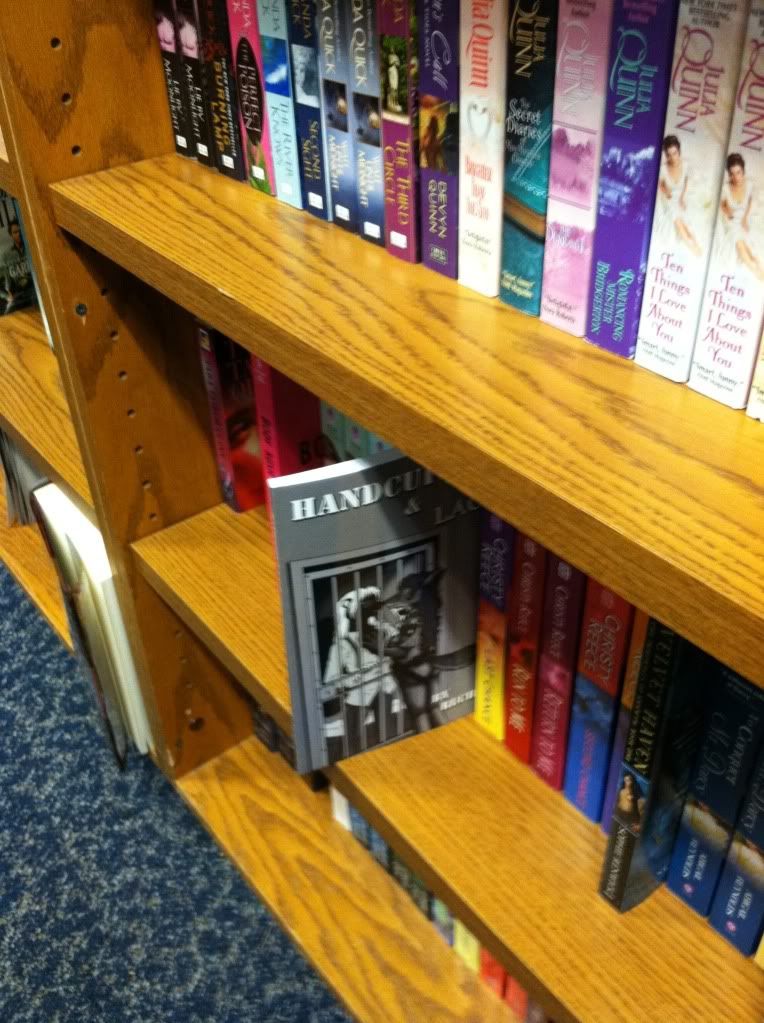
General | Posted 14 years agoSince the age of 13, I have had a dream. One day I wanted something I had written to be on a book shelf in a book store. It would be a recognition that I had "made it", that something I had made was Right There for everyone to see and buy and I was good enough to be there in the first place. It was Proof.
It's real now.
This is legit, not me sneaking my book into a store. The manager of a Borders store in Connecticut is passionate about furry books, and along with several others he ordered and put mine out on the shelves.
I'm crying right now. I can't express how awesome this makes me feel.
Thank you so much, Shadowlord8. If anyone out there lives in Connecticut, go by his store and buy stuff.
It's real now.
This is legit, not me sneaking my book into a store. The manager of a Borders store in Connecticut is passionate about furry books, and along with several others he ordered and put mine out on the shelves.
I'm crying right now. I can't express how awesome this makes me feel.
Thank you so much, Shadowlord8. If anyone out there lives in Connecticut, go by his store and buy stuff.
I'm on Kindle!
General | Posted 14 years agoAnd you can get me here!
Muglh
General | Posted 14 years agoI can't seem to be productive unless it's the last minute and I have a deadline baring down on me like an onrushing train.
Otherwise I get nothing done.
Otherwise I get nothing done.
Porn Publishing PSA
General | Posted 14 years agoThere are some things that publishers, be they in or outside the fandom, will not touch with a ten foot pole.
One of those is any erotica involving a character who is under the age of 18.
In some countries it's considered child porn and actually Illegal. In others, it's just too controversial and too close for comfort.
I don't want to have an argument on whether it's OK or not to write about minors and sex. I happen to think it depends on the circumstances of the story, but that's not the issue here. The issue is that as a policy, publishers will not print it.
So if you're going to write it, your only option is to post it online.
This is for your information.
One of those is any erotica involving a character who is under the age of 18.
In some countries it's considered child porn and actually Illegal. In others, it's just too controversial and too close for comfort.
I don't want to have an argument on whether it's OK or not to write about minors and sex. I happen to think it depends on the circumstances of the story, but that's not the issue here. The issue is that as a policy, publishers will not print it.
So if you're going to write it, your only option is to post it online.
This is for your information.
Do you like Knotcast?
General | Posted 14 years agoThen purchase a copy of my book, help FurPlanet.
>:)
>:)
Literary Broken Ribs
General | Posted 14 years agoIt's been said that an outline is a skeleton. The story is the flesh and organs on those bones, but the outline, the plot line is what holds it up.
I have been having trouble putting the meat on the bones of two novels I'm kicking around. I went to my creative writing teacher and he suggested I write out the outlines and show him.
I did so.
And he looked at one and said, "Yeah this plot's been done a hundred times. You seem to have nailed yourself into a box, and the plot itself I see everything coming together before it happens. The stakes need to be higher. It needs a new twist, or go somewhere different."
Now, the stuff he's talking about is not the concept, it's not the beginning and ending, but really it's the conflict. The antagonists and how it goes by the numbers.
He asked me, "Would any publisher put this out, given the already-done story?" Now, I personally know I can get the story published. Getting a book published in the Fandom is not hard, the task is getting it written. So if I know I can get it published, the question is do I work on making it a better story, or do I pass along the same thing?
I want to make a better story. So now the ribs are broken in my outline and I am not sure what to put in there now. :P
On the upside, he was very enthusiastic about the second project I showed him. This one has even less of a midsection, but there's a hundred ways I could take it, because the world is new.
I have been having trouble putting the meat on the bones of two novels I'm kicking around. I went to my creative writing teacher and he suggested I write out the outlines and show him.
I did so.
And he looked at one and said, "Yeah this plot's been done a hundred times. You seem to have nailed yourself into a box, and the plot itself I see everything coming together before it happens. The stakes need to be higher. It needs a new twist, or go somewhere different."
Now, the stuff he's talking about is not the concept, it's not the beginning and ending, but really it's the conflict. The antagonists and how it goes by the numbers.
He asked me, "Would any publisher put this out, given the already-done story?" Now, I personally know I can get the story published. Getting a book published in the Fandom is not hard, the task is getting it written. So if I know I can get it published, the question is do I work on making it a better story, or do I pass along the same thing?
I want to make a better story. So now the ribs are broken in my outline and I am not sure what to put in there now. :P
On the upside, he was very enthusiastic about the second project I showed him. This one has even less of a midsection, but there's a hundred ways I could take it, because the world is new.
Amusements in Editing
General | Posted 14 years agoThis goes back to some of the things I've said in this journal before, about watching your language when dealing with anthro stories.
So, I'm reading through one of the stories that were submitted to the anthology.
In it, there's a line, "Yeah, it really makes her fuck like an animal."
My immediate thought is, "She's a furry; that's the point."
So, I'm reading through one of the stories that were submitted to the anthology.
In it, there's a line, "Yeah, it really makes her fuck like an animal."
My immediate thought is, "She's a furry; that's the point."
The Ninja Nuns of Pope Rasputin
General | Posted 14 years agoIt's solid writing advice to believe that the first page, the first few paragraphs, the first line of your story is the most important, the thing that will get your reader's attention and keep them reading.
But in truth, the first thing your reader encounters with your story is not the first page.
It's the Title.
Judging a book by its cover may not be advisable, but it's also not advisable to have a cover that doesn't give an idea of what your book is about and doesn't grab the viewer.
The same holds true for your title. The Title of a movie or a book has made me stop and look to see what it's about. A bland title gets passed over. A good title can leap out and say "Hey, read me!"
Which one of the following would you more likely read? Clouds, Jessie's Vacation, Blood and Silk, An Evening Out, or Grenades for Grandma?
Furthermore, your title can give your audience a good idea what it's about. Cowboys and Aliens, Fatal Attraction, and Pirates of the Caribbean gives me a much stronger idea of what I'm getting compared to Up, The Notebook or Hall Pass.
Sure, titles that make sense once you've experienced the piece, that have a serious significance to it are all well and good. You don't need to be completely sensational. But you also shouldn't neglect considering these things. It's story marketing. Especially when readers are so finicky, distracted, and unlikely to read your story, you want to use everything you can to get your story in front of their eyeballs.
But in truth, the first thing your reader encounters with your story is not the first page.
It's the Title.
Judging a book by its cover may not be advisable, but it's also not advisable to have a cover that doesn't give an idea of what your book is about and doesn't grab the viewer.
The same holds true for your title. The Title of a movie or a book has made me stop and look to see what it's about. A bland title gets passed over. A good title can leap out and say "Hey, read me!"
Which one of the following would you more likely read? Clouds, Jessie's Vacation, Blood and Silk, An Evening Out, or Grenades for Grandma?
Furthermore, your title can give your audience a good idea what it's about. Cowboys and Aliens, Fatal Attraction, and Pirates of the Caribbean gives me a much stronger idea of what I'm getting compared to Up, The Notebook or Hall Pass.
Sure, titles that make sense once you've experienced the piece, that have a serious significance to it are all well and good. You don't need to be completely sensational. But you also shouldn't neglect considering these things. It's story marketing. Especially when readers are so finicky, distracted, and unlikely to read your story, you want to use everything you can to get your story in front of their eyeballs.
Research need not be homework
General | Posted 15 years agoResearch is a bit of a bugaboo; it comes up enough when discussing writing. It can be seen as a real roadblock to getting you writing. You may feel like you have to do all kinds of research before you start.
Well, I have something on that.
First of all, research is something that basically informs you the author, you digest that, and offer it in lean exposition. You use it to create atmosphere. But all of these things need not be done in your first draft. That's right. You can write your story, then do your research. If something's wrong in your draft, you can then go back and change it according ot research.
However, if you wait til later, you may not do it. So I have another suggestion.
First, write about something you enjoy. This way the research is enjoyable because it's on a topic that interests you.
Secondly, don't just look for concrete Real Life info. Wikipedia, first hand accounts, text books, documentaries or calling people on the phone aren't the only sources of research. I suggest reading fiction and watching movies relating to your topic. Many authors before you have done their own research and it will show in their books. Understand they may be inaccurate or change things to fit their own story, but it's still a source of info. If not direct, it at least gets you in the mindset.
Third, remember that research can be useful for more than one thing. I plan on writing a book where people create makeshift weapons a lot, as the tech level is Steampunkish. People need to be able to design non-Gunpowder weapons in an urban environment. Not to mention boobytraps. This has led me to look up info on spy weaponry and tools.
Conveniently, I had an idea for a spy novel yesterday. So the stuff I've started looking up about the first topic helps the second, and potentially vice versa. In the first book there's a con artist, and so I've been gathering materials on cons, and this will help me with a short story I also plan to write elsewhere. And so on.
Research can be enjoyable and useful. It need not be a chore.
Well, I have something on that.
First of all, research is something that basically informs you the author, you digest that, and offer it in lean exposition. You use it to create atmosphere. But all of these things need not be done in your first draft. That's right. You can write your story, then do your research. If something's wrong in your draft, you can then go back and change it according ot research.
However, if you wait til later, you may not do it. So I have another suggestion.
First, write about something you enjoy. This way the research is enjoyable because it's on a topic that interests you.
Secondly, don't just look for concrete Real Life info. Wikipedia, first hand accounts, text books, documentaries or calling people on the phone aren't the only sources of research. I suggest reading fiction and watching movies relating to your topic. Many authors before you have done their own research and it will show in their books. Understand they may be inaccurate or change things to fit their own story, but it's still a source of info. If not direct, it at least gets you in the mindset.
Third, remember that research can be useful for more than one thing. I plan on writing a book where people create makeshift weapons a lot, as the tech level is Steampunkish. People need to be able to design non-Gunpowder weapons in an urban environment. Not to mention boobytraps. This has led me to look up info on spy weaponry and tools.
Conveniently, I had an idea for a spy novel yesterday. So the stuff I've started looking up about the first topic helps the second, and potentially vice versa. In the first book there's a con artist, and so I've been gathering materials on cons, and this will help me with a short story I also plan to write elsewhere. And so on.
Research can be enjoyable and useful. It need not be a chore.
Ursa Majors - Damnit
General | Posted 15 years agoI was not nominated. Damn it.
But I'm still voting. Credit where credit is due. Are you?
http://www.ursamajorawards.org/voting2010/
But I'm still voting. Credit where credit is due. Are you?
http://www.ursamajorawards.org/voting2010/
Characters and Real People are not alike
General | Posted 15 years agoThere's a saying that goes: Reality is stranger than fiction, because fiction has to make sense. Something which is a great coincidence in real life would get you dirty looks from readers; they can believe the impossible, but are irritated by the improbable. Real life is rarely as neat and tidy as fiction, where problems at the beginning are at least mostly resolved in the end. The story also typically has things which only relate to the story in them - you don't see the characters going to the bathroom, paying their bills, or digging in their garden because these things are boring and unrelated to the story. Fiction only focuses on the interesting parts, and let's face it, 90% of life is not interesting.
The trick with the above, then, is to make fiction appear realistic, close enough to real life to fake it.
The same holds true for characters.
You want a character to have struggles which normal people have. You want them to have traits, beliefs, behaviors which real people do. You want them to feel real. But they don't act like real people, and if they did, it will hurt your story. Why?
Real people are hard to understand. Human psychology is that a person's Beliefs have no impact on their own behavior. This creates inconsistency. Furthermore, we do things that don't even make sense to ourselves; smart people do really stupid things. Our moods and emotions and actions change with the moment or the day. We alter our rules and perceptions to benefit us, we assume we are better than we are. Most people are complex too, with many interests and experiences that make them who they are.
Real people are also less interesting. The job of a policeman or spy is mostly paperwork and waiting around, then a bit of excitement. Compare how many times a policeman may fire his weapon compared to a cop in a movie. The same holds true for people's lives. They may have a bit of excitement, but it's not fascinating. They may be interesting, but it's not that compelling. Rare few are as intriguing as characters we talk about today.
Meanwhile, a fictional character is easy to understand. When you understand who they are as a character, their behavior is always consistent with that. If a fictional character does something inconsistent with what we understand about them, it's seen as a literary no-no unless there's a damn good reason for it. Because everything they do can be explained. These characters can be summed up with a few words; their concept and identity are simpler than their real-life counterpart. The contradictions, the interests, the personality traits and experiences are stripped, dumbed down, and refined.
That refining is important. Because characters are also more than real people. Your action star is more badass, more bold and dangerous than any real life counterpart. Your cop is more clever, more sleuthy, more full of grit than any normal man has a right to be. To paraphrase an author on this topic, even your most boring and unremarkable character is more exceptionally normal and unremarkable than your Average Joe; it's his defining characteristic. Characters have more fights, more sex, are more interesting and do more than real people ever could.
Not only are characters simpler, but their lives and conflicts are simpler. Mostly because of the demands of a story - James Bond struggling with his mother's terminal illness and his Bingo addiction makes for a less thrilling Bond film. We don't need those distractions, as after a point they add nothing to the story or character.
Why? Part of it is because, as previously said, it's easier to understand. But the other issue is that it's more enjoyable and entertaining to read about. We read about things which we are not, which we wish we could be. Again, even if we want to read about "slice of life" characters dealing with the issues we do, those characters are personifications of those things, standing out more starkly as representatives, and thus need to embody those things. That requires a sharper focus of their being.
Of course there's the distinction between over-the-top and realistic. Over the top though is its own genre, where the reader or viewer doesn't care so much about sympathetic characters, they suspend their disbelief for the entertainment value. But what about realism?
That goes back to the notion of believable fiction being real-like. You want your characters to feel real and believable. To do this, you don't copy real people like I've illustrated above, you provide a consistent, understandable, well-defined character who has one or two issues that real people deal with. If you do that, then the audience will be able to truly sympathize and believe everything they experience, even if the characters never have to deal with diarrhea or save the world while fretting about their mortgage payments.
The trick with the above, then, is to make fiction appear realistic, close enough to real life to fake it.
The same holds true for characters.
You want a character to have struggles which normal people have. You want them to have traits, beliefs, behaviors which real people do. You want them to feel real. But they don't act like real people, and if they did, it will hurt your story. Why?
Real people are hard to understand. Human psychology is that a person's Beliefs have no impact on their own behavior. This creates inconsistency. Furthermore, we do things that don't even make sense to ourselves; smart people do really stupid things. Our moods and emotions and actions change with the moment or the day. We alter our rules and perceptions to benefit us, we assume we are better than we are. Most people are complex too, with many interests and experiences that make them who they are.
Real people are also less interesting. The job of a policeman or spy is mostly paperwork and waiting around, then a bit of excitement. Compare how many times a policeman may fire his weapon compared to a cop in a movie. The same holds true for people's lives. They may have a bit of excitement, but it's not fascinating. They may be interesting, but it's not that compelling. Rare few are as intriguing as characters we talk about today.
Meanwhile, a fictional character is easy to understand. When you understand who they are as a character, their behavior is always consistent with that. If a fictional character does something inconsistent with what we understand about them, it's seen as a literary no-no unless there's a damn good reason for it. Because everything they do can be explained. These characters can be summed up with a few words; their concept and identity are simpler than their real-life counterpart. The contradictions, the interests, the personality traits and experiences are stripped, dumbed down, and refined.
That refining is important. Because characters are also more than real people. Your action star is more badass, more bold and dangerous than any real life counterpart. Your cop is more clever, more sleuthy, more full of grit than any normal man has a right to be. To paraphrase an author on this topic, even your most boring and unremarkable character is more exceptionally normal and unremarkable than your Average Joe; it's his defining characteristic. Characters have more fights, more sex, are more interesting and do more than real people ever could.
Not only are characters simpler, but their lives and conflicts are simpler. Mostly because of the demands of a story - James Bond struggling with his mother's terminal illness and his Bingo addiction makes for a less thrilling Bond film. We don't need those distractions, as after a point they add nothing to the story or character.
Why? Part of it is because, as previously said, it's easier to understand. But the other issue is that it's more enjoyable and entertaining to read about. We read about things which we are not, which we wish we could be. Again, even if we want to read about "slice of life" characters dealing with the issues we do, those characters are personifications of those things, standing out more starkly as representatives, and thus need to embody those things. That requires a sharper focus of their being.
Of course there's the distinction between over-the-top and realistic. Over the top though is its own genre, where the reader or viewer doesn't care so much about sympathetic characters, they suspend their disbelief for the entertainment value. But what about realism?
That goes back to the notion of believable fiction being real-like. You want your characters to feel real and believable. To do this, you don't copy real people like I've illustrated above, you provide a consistent, understandable, well-defined character who has one or two issues that real people deal with. If you do that, then the audience will be able to truly sympathize and believe everything they experience, even if the characters never have to deal with diarrhea or save the world while fretting about their mortgage payments.
Plot: Frustrate your Readers
General | Posted 15 years agoIn an earlier journal, I suggested that one method with conflict is to frustrate your readers. Presenting information to the reader that the characters don't know and thus causes conflict over, can be a very useful device in making your readers turn pages, wanting the issue resolved.
This same trick can be done with plot. A few weeks ago I finished Dog On It, a book narrated from the perspective of a private eye's dog.
Half way through the book, we see the answer to the mystery through the dog's eyes. However, because the dog cannot communicate this information to anyone, the rest of the book is spent with the private eye, his owner, poking around trying to figure out what we the reader already know.
This is a source of frustration. We know what's going on. We perk up each time the character of the PI finds something related. We wince every time he fails to find leads. We want to yell at him. We wait anxiously for him to put 2 and 2 together and ride to the rescue.
The trick here is providing some important information to the reader, and then not letting the characters know. In Conflict this could be a trap. But in a mystery it could be the solution. It could be the whereabouts of Great Aunt Agatha's jewelry, which would solve the financial woes of our main characters if only they'd look under the floorboards in the bathroom. It could be the monster's one weakness. Or the location of the unconscious body of the main character's love interest as he desperately searches for her.
Another example of this is a book that follows two stories. The last two books of the Lord of the Rings is a good example - it follows Strider, Legolas and Gimli, hits a cliffhanger or point of interest, and switches to Sam and Frodo. It goes to a cliffhanger or point of interest, of wanting to know "What happens next!" and goes back to the first group. This is not, per se, giving us plot information, but frustrating our reader with plot. Yet what one could do is provide information to the reader in Story One that is pertinent to Story Two, but that the characters cannot communicate this significance.
A useful device, but one that requires some real finesse. If you drag it out too long, you'll frustrate your readers.
This same trick can be done with plot. A few weeks ago I finished Dog On It, a book narrated from the perspective of a private eye's dog.
Half way through the book, we see the answer to the mystery through the dog's eyes. However, because the dog cannot communicate this information to anyone, the rest of the book is spent with the private eye, his owner, poking around trying to figure out what we the reader already know.
This is a source of frustration. We know what's going on. We perk up each time the character of the PI finds something related. We wince every time he fails to find leads. We want to yell at him. We wait anxiously for him to put 2 and 2 together and ride to the rescue.
The trick here is providing some important information to the reader, and then not letting the characters know. In Conflict this could be a trap. But in a mystery it could be the solution. It could be the whereabouts of Great Aunt Agatha's jewelry, which would solve the financial woes of our main characters if only they'd look under the floorboards in the bathroom. It could be the monster's one weakness. Or the location of the unconscious body of the main character's love interest as he desperately searches for her.
Another example of this is a book that follows two stories. The last two books of the Lord of the Rings is a good example - it follows Strider, Legolas and Gimli, hits a cliffhanger or point of interest, and switches to Sam and Frodo. It goes to a cliffhanger or point of interest, of wanting to know "What happens next!" and goes back to the first group. This is not, per se, giving us plot information, but frustrating our reader with plot. Yet what one could do is provide information to the reader in Story One that is pertinent to Story Two, but that the characters cannot communicate this significance.
A useful device, but one that requires some real finesse. If you drag it out too long, you'll frustrate your readers.