
 FA+
FA+ Shop
Shop
5770
Views
Views
31
Favorites
Favorites
Category
All / Tutorials
Species Unspecified / Any
Size 1024 x 791
File Size 306.5 kB
Report this content
★
More from RimeFox


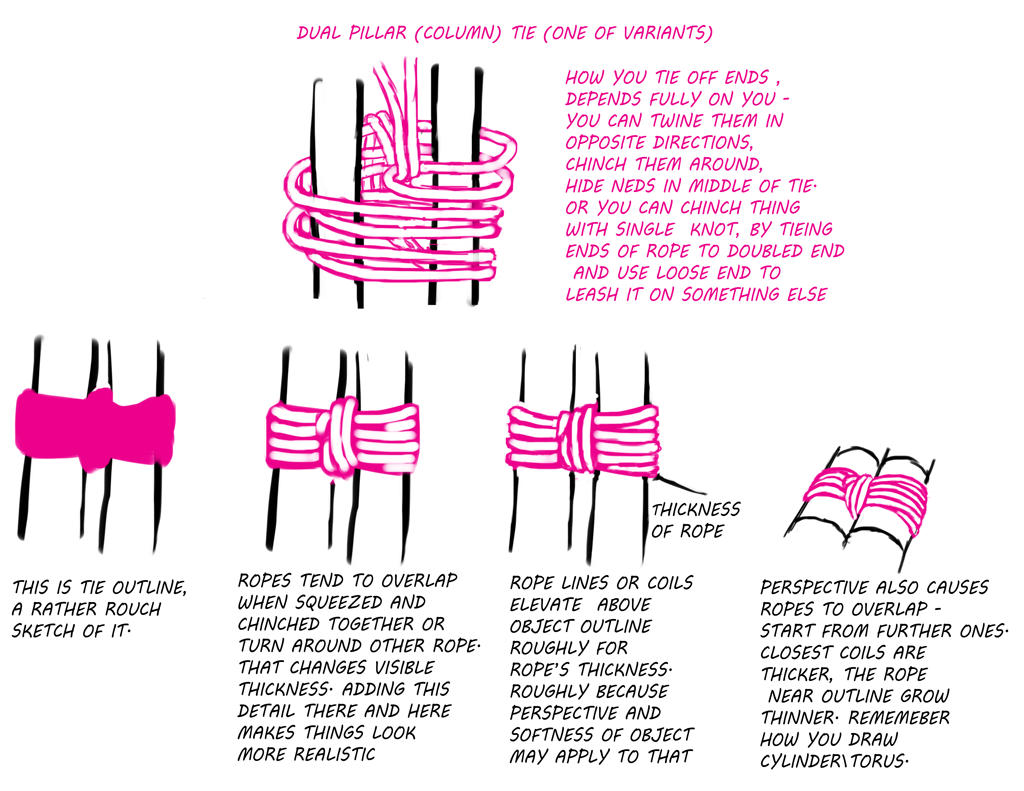

Tutorial: How to draw dual column tie
One of most basic elements - you often see it used to tie two oblong objects - or two limbs - together.
By the way, soft objects when tied or supended by numerous coils of rope tend to form concave outlineof rope coils - and convex outline of object itslf, bulging around theat belt. Hard elements - for example, front side human shin, foot, or some wooden pillar cause convex outline of rope coils.
It's just one of variants possible - for example it's shown here: http://www.tranniesintrouble.com/how_to_ties.htm
Other variant is extension of single column tie (otherwise sometimes called as clove hitch, shibari cuff, etc - http://www.furaffinity.net/view/11699335/ ) and shown here: http://www.youtube.com/watch?v=iJssecnWFvg
By the way, soft objects when tied or supended by numerous coils of rope tend to form concave outlineof rope coils - and convex outline of object itslf, bulging around theat belt. Hard elements - for example, front side human shin, foot, or some wooden pillar cause convex outline of rope coils.
It's just one of variants possible - for example it's shown here: http://www.tranniesintrouble.com/how_to_ties.htm
Other variant is extension of single column tie (otherwise sometimes called as clove hitch, shibari cuff, etc - http://www.furaffinity.net/view/11699335/ ) and shown here: http://www.youtube.com/watch?v=iJssecnWFvg
Category All / Tutorials
Species Unspecified / Any
Size 1024 x 791px
File Size 306.5 kB

Comments