
 FA+
FA+ Shop
Shop


1044 submissions


The sun only began to rose in the sky, the fog is still gripped to the rivers beds when the morning tranquillity is cut by a muffled explosion followed by a slight whistling. The environment is no longer bathed in this beautiful orangey light produced by the rising sun but is now aggressed by an artificial white light. The attention caught by the noises, Roland sees the little light ball falling down slowly to the ground as it sparkles, followed by a smoke trail. Immediately, he turns his head to his left to look at his flight commander who, as he equally saw the flare raising in the sky, raise his hand and make turn his wrist, it's the sign to start the engines. After he has put on his flight helmet, he hurried to activate the commands to start the engine, located on the left panel of the dashboard. Slowly, the propeller began to turn before to be launched at high speeds in the roaring of the Hispano-Suiza 12Y-31 which spits on the both sides of the fuselage a whitish smoke. As the engines are already warm, the leader raise his right forearm before to launch it forward and to stop it at the parallel of the ground, it's the sign to launch the engine at full throttle. The flaps down, the radiator equally down, Roland's hand grasps the throttle lever and begin to pull it slowly backward, the engine takes its turns, the propeller goes faster and faster, the grass, under the fuselage and behind the fighter, lies flat under the propeller blast which equally raises a slight dust cloud. Finally, the engine reaches enough power to make the little fighter wheels move and, as and when the throttle lever moves back, the aeroplane takes more and more speed on the grass of the former racecourse, the stick slightly pushed forward, the tail skid bounces a bit on the ground before to finally raise, few seconds later, the stick is pulled slowly as the two legs of the undercarriage leave any contact with the ground in order to let the aeroplane join its leader in the airs. A manipulation on the landing gear command and the two green light bulbs, located on the right part of the lower central panel of the dashboard, switch off to let two other light bulb, red, this time, switching on informing the pilot that the undercarriage is up and locked in the wings as the belly antenna has been deployed. Once in the airs, the Adjudant's hand sneaks in his back in order to catch and make slide the canopy to close it. Immediately after they took off, the both Morane-Saulnier are entering in a formation, taking the most altitude they can by turning over the airfield. Suddenly, the voice of the Sergeant Tourneux, mechanic and ground radio operator, informs the pilots of their mission, a formation of German twin-engined aircrafts has been seen at around 6000m near the front line.
Going straight toward the enemy while taking climbing, the Flying Officer giving his instructions; they will fly at around 7000m in order to be able to swoop on the enemy and then to not be much exposed to the bombers machine guns. The radio announces that two other patrols of the III/I are about to take off to help them, hearing the indicatives used, Roland knows that the both flight leaders are excellent pilots, the first one is his friend and usual leader, the Adjudant Gagnaire, from the 1st Flight, and a pilot of the 2nd Flight, the Flying Officer Leenhardt.
Pretty quickly, the both Morane arrive at a visual range from the large German twin-engined bombers formation, the French are only at 6500m but they have no more time left, Flying Officer Marche asks to his wingman to get ready, at his commands, the both fighters will have to dive to attack the bombers in boom and zoom. Roland releases the stick as he lowers the switches of the weapons security, loads them as he wishes that the machine guns aren't frozen, and makes sure that the ammo metre is well adjusted and than raises the radiator. And then, as they are approaching, flying 500m higher, the German bombers formation, Roland keeps an eye on his leader who turns back to him showing a thumb lowered, it's the signal, the right paw on the stick, the index finger on the trigger behind the stick and the thumb ready to go push the button on the top of the stick which fires the 20mm canon and the left hand on the throttle lever, he only waits for an action of his leader who suddenly passes in inverted flight before to push on the stick, diving toward the large formation. Roland, in order to follow his leader, puts the hand in his pocket* before to noses up, throwing the stick on the left and once on the back, taking the throttle lever back to its most forward position before to pull at his turn on the stick, the sky passes under the engine hood while the yellow of the fields and the green of the forest are replacing it. Above his head, the stubby bombers are growing more and more, the Flying Officer Marche's Morane, swooping on the formation massive of two dozens of aircrafts, begins to spit short bursts of fire, the bullets cartridges evacuating the aeroplane by the lower surface of the wings. Now, taking care of his own trajectory, the fennec chooses one of the bombers, try to get it in the middle of his metallic sight and then pushes a bit on the stick, anticipating the deflection of his bullets, presses the machine guns trigger, letting go short bursts of only 6 to 10 bullets which run in direction of the enemy. The bombers located at the head of the formation already begin to fire at him but he keeps his head cool, it's more a suppression fire than an accurate one, he then sees some sparkles on his prey, he continues to approach dangerously of the bomber and, as he's only at around 50m from it, fires of all his weapons before to pass under it. He waits a handful of seconds before to push with his leg against the firestop surface in order to push with as much power as he can have on the stick, placing back the throttle lever at the most backward position, he's squashed in the bottom of his seat by the centrifugal force.
Looking once again above his head, he sees the result of his first attack; the right wing of the Heinkel has some wide open holes which let flowing an important white trail behind it, the left fuel tanks shredded, as Roland knows that the bomber will not be able to run much longer before to run out of fuel, he decides, to be more effective, to change of prey, he chooses the neighbour of his previous prey. Then, as his MS.406 is launched at nearly 500 km/h, he noses up completely his aircraft, aiming his new prey, he waits and when he judges that he his well placed, he presses the button to fire the Hispano-Suiza 20mm canon, the craft is shaken, the two first shells passes in front of the left engine but the five following shells don't miss and hit directly the left engine nacelle. Not willing to get in the sight of the machine gunners when he will be out of speed, Roland pushes the stick before he even overtake his enemy, skimming another bomber at the top of his looping, looking through the glassed roof of the cockpit, he glimpses the German pilot and navigator staring at him and even if the oxygen mask and the goggles are hiding their faces, he nearly can read the fear from what he saw quickly. And as he's diving back to the ground, Roland sees a large black trail leaking from the left engine of his second prey but he also notices that the left nacelle is ripped open and that the leg of the undercarriage is hanging pitifully. And soon, the same nacelle leaks flames which begin to lick the metal of the wing, the flames are growing bigger and bigger, and now, as the nacelle is drowned in the flames, a little metal plate is torn off the underside of the bomber and a little black silhouette falls from the opening, quickly followed by three others and then it's on the top of the front part that another panel is removed to let another silhouette leave the dying aircraft which now dives to the ground.
Suddenly, as he sees his leader at a hundred of metres from him, approximately at the same level, Roland notices that their both aircrafts are surrounded by smoke trails, raising the muzzle, he sees several pale blue aircrafts firing at them as they're diving, he only is able to yell in his laryngophone "Messers!", he barely saw them that the black crossed fighters were already under them, letting some impacts of 7.92mm in the wing of the Flying Officer and in the fuselage of the Adjudant. Abandoning the bombers, the both French fighters dive to engage the fight with the enemy fighters composed of 7 Messerschmitt Bf-109, the Flying Officer Marche, as he notices a group of three 109 beginning a chandelle dives straight to them and when they arrive at a comfortable fire range, he opens the fire on their flight leader, the German fighter, mortally wounded, lets a long and thick black smoke, continuing his ascension, he stalls and dives straight to the ground, letting Marche chasing one of his wingmen. Bulard, for his part, his alone and faces a group of four 109s which chase him rather than he chases them. Seeing the situation of his wingman, Marche abandon his prey and hurries up in the six o'clock of the first of the Bulard's pursuer and shoots with his 20mm canon in the right wing of the 109, the Morane crosses like an arrow the formation which splits at the passage of the French fighter while the damaged Messerschmitt shakes a bit before to have its wing torn off as the spar gives way, turning on itself as it's going down, letting the rest of the aircraft diving in a spin, the pilot, with a lot of luck, succeeds in getting away from the deadly trap in the one he was sat and manages to open his parachute. Roland, getting closer to his leader engaged in a pursuit with another 109, notices, unfortunately to late, one of the aircrafts carrying the black crosses diving in direction of the Morane, unable to prevent the attack, he tries to warn his chief by radio but too late, the 406 is already in the middle of few dozens of little blue comets and, reached by a shell in the fuel tank, located between the engine and the cockpit, explodes, disappears in a fire ball before to exit of it, in a deadly spin, eat into the flames... No parachute will ever get away from the carcass. The aeroplane will crash, few moments later, in the courtyard of a farm of the commune of Anizy-le-Château, in northern France.
Carried by the anger, Roland launches himself in the pursuit of his leader's murderer without paying attention to the other fighters. The hunted aircraft, ignoring his situation noses up and begins a large turn when he sees the MS.406, heading toward him from his six, too late to act, a burst of several shells are flying in his direction but only two of them hit, the first one hits the engine while the second enter in the fuselage, just behind the cockpit, penetrating in the fuel tank which, as the other Morane did few seconds earlier, blows up as it's set afire, the fuselage, cut in two parts, will, as the one of the 406, never let any parachutes escaping from its loins.
Suddenly, the last Morane is hit at its turn by bullets in its fuselage as two 109s are chasing him, it's then that smoke trails appear around of them and that the Messerschmitt spilt to face their new opponents, in the sky appear the 6 Morane-Saulnier 406 which took off a bit later after Marche and Bulard, 4 of them have the markings of the "Canards"(Ducks) and only two have the markings of the "Renards"(Foxes).
"La Bulle, you return home, we take care of the others." Announces a deformed voice in the radio, he confirms the order and leave the fight before to take the heading of the airfield from where he took off earlier this morning and lands there gently.
After he has parked his aeroplane and has cut his engine, he notices a crowd coming for him, all the pilots who didn't took off, including the 2 Polish officers who have lost one of their mate 3 days earlier, and the mechanics who, without any news of the fight and seeing one of theirs coming back in a quite bad shape, come to get news. Feeling the unease of the fennec, they don't insist much but one of the mechanics can't wait any longer and asks the situation of his pilot, the Lieutenant Paul Marche. Lowering the head, Roland announces of a muffled voice "The Flying Officer will not come back, this time..." He was flying the Morane-Saulnier 406 n°730, coded 7, normally assigned to the Adjudant Edgar Gagnaire, but as the Flying Officer Marche's aircraft was too seriously damaged the eve, he was obliged to use another aircraft, for him, the luck haven't knocks twice...
The announce froze the atmosphere, the Lieutenant Marche was one of the oldest pilots of the GC III/I, born in 1902, he was flying in the French Air Force since 1922 and was the commander of the 1st Flight "Renards", fromer SPA 84, and the Squadron Leader's lieutenant, after the departure of the Flying Lieutenant Pompe at the end of the month of April 1940.
As the time flies, news aren't coming from the fighters gone in mission, everyone is nervous, as he stills in his flight suit, the leather helmet under the arm and the parachute in the back, Roland is ready to take off again if he receives the command to do so. And then, suddenly, the radio announces something, two aircrafts are coming back, the first one, the red insignia of the "Renards" on the sides and the aircraft in a really bad shape, lands very badly but is till on its undercarriage as it stops and cuts the engine on the runway, in the cockpit, the Sergeant Pralon is bathing in his blood, severely wounded, he still have managed to get his aircraft back to its airfield. The second one, carrying a white duck on its sides and as much damaged, lands in a better way and parks at the edge of the forest, the pilot, Flight Sergeant Pinochetti, exits of it, still trembling from the experience he just had in the air but has no serious wounds. Few minutes later, the 4 others Morane are back to their airfield, the Flying Officer Tony Leenhardt, the Adjudant Edgar Gagnaire and the both Sergeant Kléber Doublet and Albert Durand each recorded an individual victory against a 109.
Finally, on the 7 Messerschmitt and the 8 Morane-Saulnier engaged, only 1 Messerschmitt will return to its base while the French fighters have only lost one aircraft and its pilot and two aircrafts severely damaged with one pilot gravely wounded. After the death of the Flying Officer Paul Marche, the Flying Officer Tony Leenhardt has been declared commander of the 1st Flight "Renards".
*: to put the hand in one's pocket is a phrase used in France which is no longer used, it means to go full throttle, it's explained by the fact that the throttle levers in France were inverted compared to German, British, American, Russian or Japanese as well as nowadays aircrafts. It created some problems to the Free French pilots when they had to fly on foreign aircrafts and it was common to see a French pilot placing the throttle lever fully frontward instead of backward as a reflex, happily, mechanics always kept an eye on the pilot's actions and many accidents were avoided.
Please, take note that this short story, written over this message, isn't historically accurate and even if it's inspired by real-life events, to wit the activity of the Groupe de Chasse III/I on 19th May 1940, and has the same results, the facts didn't happened like described here as it was written in a single evening and without detailed researches on what happened this day, it was just written in order to stick with the image above. Plus, even if 95% of the character presented there existed, I did not described them, in their characters, as they really were, the only fictional character presented there is the Adjudant Roland Bulard.
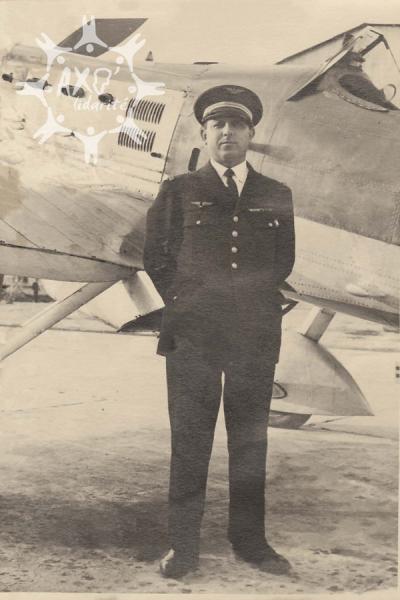
In the facts, the GC III/I sent, between 6 and 7 am, a double patrol (6 aircrafts) with another double patrol from the GC II/2 to intercept some He-111 bombers in a bombing mission on French bombers squadrons but they fell against three dozens of Messerschmitt Bf-109 and Bf-110, the 109s were part of the 5/JG.27, four victories were recorded by Edgar Gagnaire, Kléber Doublet, Tony Leenhardt and Albert Durand. Another mission was led in the afternoon, several aircrafts from the GC III/I took off at 4.50pm to intercept another bombers formation and also faced 109s, those ones were part of the Jagdgeschwader 2 "Richthofen", two 109s were shot down by the Lt. Marche before the latter was shot down by the Hauptmann Bernhardt Mielke from the 3/JG.2. Reached by a shell in the fuel tank, the aircraft crashed in a farm at Anizy-le-Château and the pilot was buried near of the crash site until 1941 when his remains were transferred to the national necropolis of Vauxaillon. In the 2010s, the association Axo'lidarité found back the family of the Lt.Marche and built a monument on the place where his aircraft crashed, the inauguration was made with the son of the Lieutenant Paul Marche.
As for the three Polish officers mentioned in the short story, they were the Lt. Kazimierz Bursztyn, the Lt. Wladyslaw Chciuk and the S/lt. Wladyslaw Gnys, the pilot who was said shot down was the Lt.Chciuk who, after his aircraft was severely damaged had to crash land on 16th May 1940, because of his approximate French and of his strong foreign accent, he escaped at the last moment to the death by shooting and find back his squadron 5 days after he was shot down but was again shot down on 21st May 1940, the day after or the same that he returned to his squadron but will, once again, return to his comrades using a bicycle found in an abandoned village. Kazimierz Bursztyn, was the leader of the Polish flight within the SPA 84 until he was missing in action and declared more than probably killed on 25th May 1940. Wladislaw Gnys, whose the aircraft was coded II, was the wingman of the Lt. Brusztyn until his death, Gnys was famous for being the first allied pilot to shot down a German aircraft, back in September 1939, during the Poland Campaign, he joined the RAF after the Battle of France as a pilot of the n°302 sqn (Polish) RAF, then of the n°309 and n°316 sqn before to become the Squadron Leader of the n°317 sqn on 25th August 1944 but on 27th August 1944, Gnys was shot down by the Flak over Rouen, France, and had to crash land, captured and wounded by German soldiers, he escaped few days later from the POW hospital, he passed away in 2000. Wladyslaw Chciuk, after the Battle of France, joined the n°308 sqn "City of Krakow" and was shot down on 24th July 1941 after he shot down a German officer, suffering of several burns, he baled out and was taken as POW, the pilot he shot down would also have survived to the crash and visited Chciuk at the Oflag IV/B of Warburg, passing by the Oflag X/C of Luebeck he then was transferred to the Stalag Luft III in Zagan from where he had to flee with the German soldiers the soviet advance and was freed by the British forces.
This drawing represent Roland Bulard just back from a mission as he still has his flight suit and his parachute though he already released himself from the radio system, behind him, his aircraft, a Morane-Saulnier 406, has the markings of the SPA 84, 1ère Escadrille (1st Flight) of the GC III/I nicknamed "Renards", and his motto; "Vaincre ou Mourir" (Vanquish or Die).
I've made a video a while ago from the video game IL-2 Sturmovik 1946 about the Battle of France and I think I could share it there as it sticks well to the both pieces I present here:
Ps: I really should stop to try to color things...
Going straight toward the enemy while taking climbing, the Flying Officer giving his instructions; they will fly at around 7000m in order to be able to swoop on the enemy and then to not be much exposed to the bombers machine guns. The radio announces that two other patrols of the III/I are about to take off to help them, hearing the indicatives used, Roland knows that the both flight leaders are excellent pilots, the first one is his friend and usual leader, the Adjudant Gagnaire, from the 1st Flight, and a pilot of the 2nd Flight, the Flying Officer Leenhardt.
Pretty quickly, the both Morane arrive at a visual range from the large German twin-engined bombers formation, the French are only at 6500m but they have no more time left, Flying Officer Marche asks to his wingman to get ready, at his commands, the both fighters will have to dive to attack the bombers in boom and zoom. Roland releases the stick as he lowers the switches of the weapons security, loads them as he wishes that the machine guns aren't frozen, and makes sure that the ammo metre is well adjusted and than raises the radiator. And then, as they are approaching, flying 500m higher, the German bombers formation, Roland keeps an eye on his leader who turns back to him showing a thumb lowered, it's the signal, the right paw on the stick, the index finger on the trigger behind the stick and the thumb ready to go push the button on the top of the stick which fires the 20mm canon and the left hand on the throttle lever, he only waits for an action of his leader who suddenly passes in inverted flight before to push on the stick, diving toward the large formation. Roland, in order to follow his leader, puts the hand in his pocket* before to noses up, throwing the stick on the left and once on the back, taking the throttle lever back to its most forward position before to pull at his turn on the stick, the sky passes under the engine hood while the yellow of the fields and the green of the forest are replacing it. Above his head, the stubby bombers are growing more and more, the Flying Officer Marche's Morane, swooping on the formation massive of two dozens of aircrafts, begins to spit short bursts of fire, the bullets cartridges evacuating the aeroplane by the lower surface of the wings. Now, taking care of his own trajectory, the fennec chooses one of the bombers, try to get it in the middle of his metallic sight and then pushes a bit on the stick, anticipating the deflection of his bullets, presses the machine guns trigger, letting go short bursts of only 6 to 10 bullets which run in direction of the enemy. The bombers located at the head of the formation already begin to fire at him but he keeps his head cool, it's more a suppression fire than an accurate one, he then sees some sparkles on his prey, he continues to approach dangerously of the bomber and, as he's only at around 50m from it, fires of all his weapons before to pass under it. He waits a handful of seconds before to push with his leg against the firestop surface in order to push with as much power as he can have on the stick, placing back the throttle lever at the most backward position, he's squashed in the bottom of his seat by the centrifugal force.
Looking once again above his head, he sees the result of his first attack; the right wing of the Heinkel has some wide open holes which let flowing an important white trail behind it, the left fuel tanks shredded, as Roland knows that the bomber will not be able to run much longer before to run out of fuel, he decides, to be more effective, to change of prey, he chooses the neighbour of his previous prey. Then, as his MS.406 is launched at nearly 500 km/h, he noses up completely his aircraft, aiming his new prey, he waits and when he judges that he his well placed, he presses the button to fire the Hispano-Suiza 20mm canon, the craft is shaken, the two first shells passes in front of the left engine but the five following shells don't miss and hit directly the left engine nacelle. Not willing to get in the sight of the machine gunners when he will be out of speed, Roland pushes the stick before he even overtake his enemy, skimming another bomber at the top of his looping, looking through the glassed roof of the cockpit, he glimpses the German pilot and navigator staring at him and even if the oxygen mask and the goggles are hiding their faces, he nearly can read the fear from what he saw quickly. And as he's diving back to the ground, Roland sees a large black trail leaking from the left engine of his second prey but he also notices that the left nacelle is ripped open and that the leg of the undercarriage is hanging pitifully. And soon, the same nacelle leaks flames which begin to lick the metal of the wing, the flames are growing bigger and bigger, and now, as the nacelle is drowned in the flames, a little metal plate is torn off the underside of the bomber and a little black silhouette falls from the opening, quickly followed by three others and then it's on the top of the front part that another panel is removed to let another silhouette leave the dying aircraft which now dives to the ground.
Suddenly, as he sees his leader at a hundred of metres from him, approximately at the same level, Roland notices that their both aircrafts are surrounded by smoke trails, raising the muzzle, he sees several pale blue aircrafts firing at them as they're diving, he only is able to yell in his laryngophone "Messers!", he barely saw them that the black crossed fighters were already under them, letting some impacts of 7.92mm in the wing of the Flying Officer and in the fuselage of the Adjudant. Abandoning the bombers, the both French fighters dive to engage the fight with the enemy fighters composed of 7 Messerschmitt Bf-109, the Flying Officer Marche, as he notices a group of three 109 beginning a chandelle dives straight to them and when they arrive at a comfortable fire range, he opens the fire on their flight leader, the German fighter, mortally wounded, lets a long and thick black smoke, continuing his ascension, he stalls and dives straight to the ground, letting Marche chasing one of his wingmen. Bulard, for his part, his alone and faces a group of four 109s which chase him rather than he chases them. Seeing the situation of his wingman, Marche abandon his prey and hurries up in the six o'clock of the first of the Bulard's pursuer and shoots with his 20mm canon in the right wing of the 109, the Morane crosses like an arrow the formation which splits at the passage of the French fighter while the damaged Messerschmitt shakes a bit before to have its wing torn off as the spar gives way, turning on itself as it's going down, letting the rest of the aircraft diving in a spin, the pilot, with a lot of luck, succeeds in getting away from the deadly trap in the one he was sat and manages to open his parachute. Roland, getting closer to his leader engaged in a pursuit with another 109, notices, unfortunately to late, one of the aircrafts carrying the black crosses diving in direction of the Morane, unable to prevent the attack, he tries to warn his chief by radio but too late, the 406 is already in the middle of few dozens of little blue comets and, reached by a shell in the fuel tank, located between the engine and the cockpit, explodes, disappears in a fire ball before to exit of it, in a deadly spin, eat into the flames... No parachute will ever get away from the carcass. The aeroplane will crash, few moments later, in the courtyard of a farm of the commune of Anizy-le-Château, in northern France.
Carried by the anger, Roland launches himself in the pursuit of his leader's murderer without paying attention to the other fighters. The hunted aircraft, ignoring his situation noses up and begins a large turn when he sees the MS.406, heading toward him from his six, too late to act, a burst of several shells are flying in his direction but only two of them hit, the first one hits the engine while the second enter in the fuselage, just behind the cockpit, penetrating in the fuel tank which, as the other Morane did few seconds earlier, blows up as it's set afire, the fuselage, cut in two parts, will, as the one of the 406, never let any parachutes escaping from its loins.
Suddenly, the last Morane is hit at its turn by bullets in its fuselage as two 109s are chasing him, it's then that smoke trails appear around of them and that the Messerschmitt spilt to face their new opponents, in the sky appear the 6 Morane-Saulnier 406 which took off a bit later after Marche and Bulard, 4 of them have the markings of the "Canards"(Ducks) and only two have the markings of the "Renards"(Foxes).
"La Bulle, you return home, we take care of the others." Announces a deformed voice in the radio, he confirms the order and leave the fight before to take the heading of the airfield from where he took off earlier this morning and lands there gently.
After he has parked his aeroplane and has cut his engine, he notices a crowd coming for him, all the pilots who didn't took off, including the 2 Polish officers who have lost one of their mate 3 days earlier, and the mechanics who, without any news of the fight and seeing one of theirs coming back in a quite bad shape, come to get news. Feeling the unease of the fennec, they don't insist much but one of the mechanics can't wait any longer and asks the situation of his pilot, the Lieutenant Paul Marche. Lowering the head, Roland announces of a muffled voice "The Flying Officer will not come back, this time..." He was flying the Morane-Saulnier 406 n°730, coded 7, normally assigned to the Adjudant Edgar Gagnaire, but as the Flying Officer Marche's aircraft was too seriously damaged the eve, he was obliged to use another aircraft, for him, the luck haven't knocks twice...
The announce froze the atmosphere, the Lieutenant Marche was one of the oldest pilots of the GC III/I, born in 1902, he was flying in the French Air Force since 1922 and was the commander of the 1st Flight "Renards", fromer SPA 84, and the Squadron Leader's lieutenant, after the departure of the Flying Lieutenant Pompe at the end of the month of April 1940.
As the time flies, news aren't coming from the fighters gone in mission, everyone is nervous, as he stills in his flight suit, the leather helmet under the arm and the parachute in the back, Roland is ready to take off again if he receives the command to do so. And then, suddenly, the radio announces something, two aircrafts are coming back, the first one, the red insignia of the "Renards" on the sides and the aircraft in a really bad shape, lands very badly but is till on its undercarriage as it stops and cuts the engine on the runway, in the cockpit, the Sergeant Pralon is bathing in his blood, severely wounded, he still have managed to get his aircraft back to its airfield. The second one, carrying a white duck on its sides and as much damaged, lands in a better way and parks at the edge of the forest, the pilot, Flight Sergeant Pinochetti, exits of it, still trembling from the experience he just had in the air but has no serious wounds. Few minutes later, the 4 others Morane are back to their airfield, the Flying Officer Tony Leenhardt, the Adjudant Edgar Gagnaire and the both Sergeant Kléber Doublet and Albert Durand each recorded an individual victory against a 109.
Finally, on the 7 Messerschmitt and the 8 Morane-Saulnier engaged, only 1 Messerschmitt will return to its base while the French fighters have only lost one aircraft and its pilot and two aircrafts severely damaged with one pilot gravely wounded. After the death of the Flying Officer Paul Marche, the Flying Officer Tony Leenhardt has been declared commander of the 1st Flight "Renards".
*: to put the hand in one's pocket is a phrase used in France which is no longer used, it means to go full throttle, it's explained by the fact that the throttle levers in France were inverted compared to German, British, American, Russian or Japanese as well as nowadays aircrafts. It created some problems to the Free French pilots when they had to fly on foreign aircrafts and it was common to see a French pilot placing the throttle lever fully frontward instead of backward as a reflex, happily, mechanics always kept an eye on the pilot's actions and many accidents were avoided.
Please, take note that this short story, written over this message, isn't historically accurate and even if it's inspired by real-life events, to wit the activity of the Groupe de Chasse III/I on 19th May 1940, and has the same results, the facts didn't happened like described here as it was written in a single evening and without detailed researches on what happened this day, it was just written in order to stick with the image above. Plus, even if 95% of the character presented there existed, I did not described them, in their characters, as they really were, the only fictional character presented there is the Adjudant Roland Bulard.
In the facts, the GC III/I sent, between 6 and 7 am, a double patrol (6 aircrafts) with another double patrol from the GC II/2 to intercept some He-111 bombers in a bombing mission on French bombers squadrons but they fell against three dozens of Messerschmitt Bf-109 and Bf-110, the 109s were part of the 5/JG.27, four victories were recorded by Edgar Gagnaire, Kléber Doublet, Tony Leenhardt and Albert Durand. Another mission was led in the afternoon, several aircrafts from the GC III/I took off at 4.50pm to intercept another bombers formation and also faced 109s, those ones were part of the Jagdgeschwader 2 "Richthofen", two 109s were shot down by the Lt. Marche before the latter was shot down by the Hauptmann Bernhardt Mielke from the 3/JG.2. Reached by a shell in the fuel tank, the aircraft crashed in a farm at Anizy-le-Château and the pilot was buried near of the crash site until 1941 when his remains were transferred to the national necropolis of Vauxaillon. In the 2010s, the association Axo'lidarité found back the family of the Lt.Marche and built a monument on the place where his aircraft crashed, the inauguration was made with the son of the Lieutenant Paul Marche.
As for the three Polish officers mentioned in the short story, they were the Lt. Kazimierz Bursztyn, the Lt. Wladyslaw Chciuk and the S/lt. Wladyslaw Gnys, the pilot who was said shot down was the Lt.Chciuk who, after his aircraft was severely damaged had to crash land on 16th May 1940, because of his approximate French and of his strong foreign accent, he escaped at the last moment to the death by shooting and find back his squadron 5 days after he was shot down but was again shot down on 21st May 1940, the day after or the same that he returned to his squadron but will, once again, return to his comrades using a bicycle found in an abandoned village. Kazimierz Bursztyn, was the leader of the Polish flight within the SPA 84 until he was missing in action and declared more than probably killed on 25th May 1940. Wladislaw Gnys, whose the aircraft was coded II, was the wingman of the Lt. Brusztyn until his death, Gnys was famous for being the first allied pilot to shot down a German aircraft, back in September 1939, during the Poland Campaign, he joined the RAF after the Battle of France as a pilot of the n°302 sqn (Polish) RAF, then of the n°309 and n°316 sqn before to become the Squadron Leader of the n°317 sqn on 25th August 1944 but on 27th August 1944, Gnys was shot down by the Flak over Rouen, France, and had to crash land, captured and wounded by German soldiers, he escaped few days later from the POW hospital, he passed away in 2000. Wladyslaw Chciuk, after the Battle of France, joined the n°308 sqn "City of Krakow" and was shot down on 24th July 1941 after he shot down a German officer, suffering of several burns, he baled out and was taken as POW, the pilot he shot down would also have survived to the crash and visited Chciuk at the Oflag IV/B of Warburg, passing by the Oflag X/C of Luebeck he then was transferred to the Stalag Luft III in Zagan from where he had to flee with the German soldiers the soviet advance and was freed by the British forces.
This drawing represent Roland Bulard just back from a mission as he still has his flight suit and his parachute though he already released himself from the radio system, behind him, his aircraft, a Morane-Saulnier 406, has the markings of the SPA 84, 1ère Escadrille (1st Flight) of the GC III/I nicknamed "Renards", and his motto; "Vaincre ou Mourir" (Vanquish or Die).
I've made a video a while ago from the video game IL-2 Sturmovik 1946 about the Battle of France and I think I could share it there as it sticks well to the both pieces I present here:
https://www.youtube.com/watch?v=j3aFrr5gPcgPs: I really should stop to try to color things...
Category Artwork (Traditional) / General Furry Art
Species Fennec
Size 1092 x 1280px
File Size 2.05 MB
Listed in Folders


Though I did not considered that there were enough text to be posted as a story in itslef I have to admit that I did not thought either that I would pass my night on it :p
And thank you very much for taking the time of reading it (even if there probably are some typos) as well as for the fave!
And thank you very much for taking the time of reading it (even if there probably are some typos) as well as for the fave!

I really liked reading your story tonight. Having played a few years worth of combat flight simulators when I was young a lot of mental pictures and emotion came back. Was the 406 equipped with self-sealing fuel tanks? I suppose it wouldn't matter if the tank gets hit with a 20mm, but I am still curious. Brave men were these who took to the skies in battle.
Thank you very much, Lucky!
But no, the MS.406 wasn't equipped with self-sealing fuel tank, the aircraft is of 1934 and had only one fuel tank placed between the engine and the cockpit (wasn't much dangerous than the only fuel tank of the 109 placed behind and under the pilot seat) but it was equipped, and it was really rare on fighters at this time, of a fuel damping system in case of crash landing though it also made them more delicate as the fuel vapours are explosive on the contrary of the fuel itself which is just flammable. But yes, as you said, even with a self-sealed tank, a 20mm shell, mostly a if it's fired by the MG FF of a Bf-109E (and I don't even speak about a Minengeschoß shell which is destructive as hell), would penetrate it and make the result described and just as information, a 20mm explosive shell (or at least those used on DeHavilland Vampire in the 50s-60s) explodes just by touching a leaf and can launch schrapnels in a radius of 20 to 30 metres, so imagine the effect on a barely protected fuel tank as the 406 had...
But no, the MS.406 wasn't equipped with self-sealing fuel tank, the aircraft is of 1934 and had only one fuel tank placed between the engine and the cockpit (wasn't much dangerous than the only fuel tank of the 109 placed behind and under the pilot seat) but it was equipped, and it was really rare on fighters at this time, of a fuel damping system in case of crash landing though it also made them more delicate as the fuel vapours are explosive on the contrary of the fuel itself which is just flammable. But yes, as you said, even with a self-sealed tank, a 20mm shell, mostly a if it's fired by the MG FF of a Bf-109E (and I don't even speak about a Minengeschoß shell which is destructive as hell), would penetrate it and make the result described and just as information, a 20mm explosive shell (or at least those used on DeHavilland Vampire in the 50s-60s) explodes just by touching a leaf and can launch schrapnels in a radius of 20 to 30 metres, so imagine the effect on a barely protected fuel tank as the 406 had...
I cackled a bit when you mentioned the BF 109 fuel tank. Talk about a hairy ride! It's good the 406 at least had the crash dampening protective system for the fuel tank.
On a side note, I had no idea the 20mm had a shrapnel radius of 20 to 30 meters! It's a wonder that more B24's didn't crash from getting torn up by cannon fire. I imagine the small 406 just about disassembles when hit by a string of those rounds.
I thought it was interesting that the 406 pilots in your story used the climbing and diving attacks against the bombers. I think the 109's worked that way on allied bombers as well given that the 109 is fast but doesn't have the maneuverability of some of the other fighters in the same theater of action. It seems rational that diving and climbing reduces your exposure time to the bomber's defensive arms, but is vulnerability increased at the top of the climb from decreased speed?
On a side note, I had no idea the 20mm had a shrapnel radius of 20 to 30 meters! It's a wonder that more B24's didn't crash from getting torn up by cannon fire. I imagine the small 406 just about disassembles when hit by a string of those rounds.
I thought it was interesting that the 406 pilots in your story used the climbing and diving attacks against the bombers. I think the 109's worked that way on allied bombers as well given that the 109 is fast but doesn't have the maneuverability of some of the other fighters in the same theater of action. It seems rational that diving and climbing reduces your exposure time to the bomber's defensive arms, but is vulnerability increased at the top of the climb from decreased speed?
Heh, the 109 fuel tank is probably one of the only thing from this aircraft that I'm wondering what the engineers where thinking about when they placed it there. Though, in reality I know exactly why it's there, the Dailmer-Benz engine of the 109s was very powerful and then was consuming a lot of fuel, already it's range was criticiesed with the enormous fuel tank it had so replacing it with wing fuel tanks wouldn't have made the things better for it and there wouldn't have enough space to place it because of the air cooling system already present there and it would have been impossible to place it behind the engine, like with the MS.406.
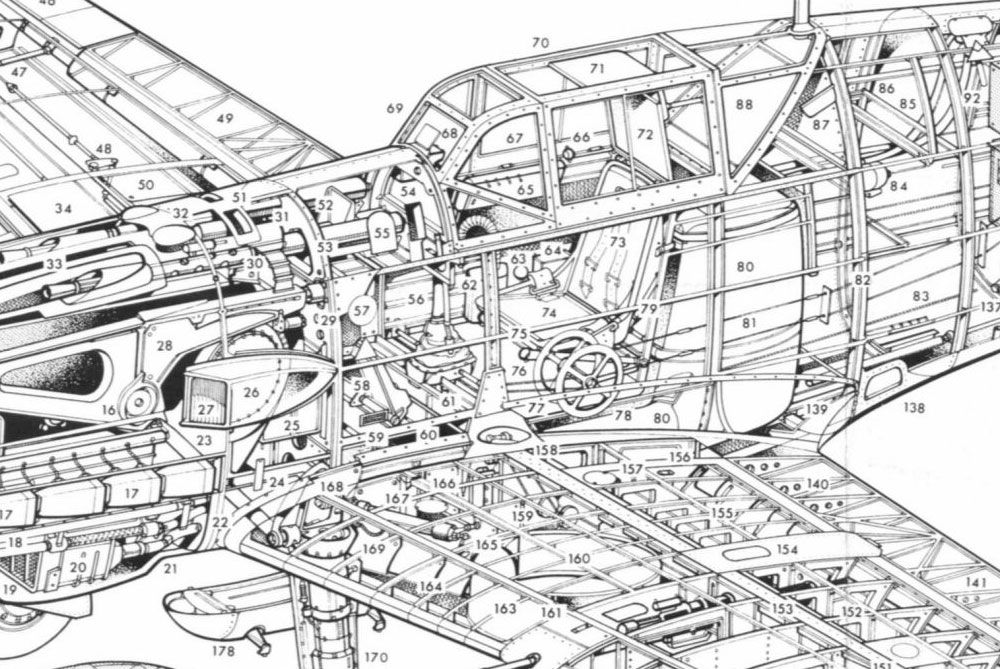
On a side note about the 109 tank, I've found a 109 cutaway view very detailed where you can see the fuel tank as the part n°80: http://i843.photobucket.com/albums/.....2.jpg~original
The 20mm was the favourite calibre of many around the world, it has fast cadency and was extremly effective. When the Ki-61 Hien of the Imperial Japanese Army Air Force received their first 20mm Mauser MG 151/20 canons, it has been glorified as it could with only three well placed shells shot down a B-24, imagine what the Kyushu J7W and its 4 30mm canons coulde have done if it would have entered in service before the end of the war! But the MS.406, in spite of the apparence it gives, was a very solid fighter and could put up with heavy damages, as an exemple, on 17th May 1940, the pilots of the GC III/1 were asked to intercept a formation of 7 Ju-87 Stuka and of 10 Heinkel 111 escorted by a great amount of Bf-109 and of Bf-110, none from the French squadron have been shot down but one of the pilot, Castillon (I can't figure out his grade), had his aircraft extremely damaged, at a point that he used the term, which would be written as well in Squadron log book, "Colander" to describe his aircraft. But Battle of France pilot had the chance to not face the Bf-109E-4 which was the first variant of 109 which received the Minengeschoß shells, otherwise I think losses would have been higher than around 430 pilots killed...
As for the Boom and Zoom strategy, it was indeed very used by German pilots to attack allied bomber formations but as you said, the Bf-109 is fast with its engine of 1 475 hp for the G-2 variant (and an around 1 200 hp for an E variant as used during Battle of France) and an aerodynamic cooling system but the MS.406 wasn't a fast fighter because of its only 860 hp engine and of its not at all aerodynamical air cooling system which, once fully deployed, was creating a high resistance. So, when the 109 could reach the 600 km/h, the Morane had a maximum speed of 490 km/h, just 10 km/h more than the H-75/P-36, when German bombers had a maximum speed of 410 km/h for the slower as the Do-17s. And if I'm not sure that the climb with the 109 had the same effect as it could have a climb rate of 25 m/s for the very last variants with a 2 000 hp engine but which was, in counterpart, also heavier of around 1 Ton compared to the E variants but the climb rate was quite similar with around 20 m/s for an early variant when the 406 was an horrible climber with a climb rate of around 9 m/s so it would lost all its speed quite quickly and, if we suppose that the pilots dove until being out of range from the belly gunners of the bombers, if he tries to attack by climbing, they would be at their stalling speed, if we suppose that the engines are just out from factories and that the aircraft wasn't reached (at least yet) by any bullet, just a bit above the bombers, in their full firing range, and your not without knowing that more a taget is slow, less correction you have to take in order to counter the deflection then, it's easier to be accurate than we you try to shoot a fast target. After, why I wrote about ballistic is only theoric and it may be wrong as I never had to shoot anything moving in real life, but it's what I learned from what I learned by reading, studying physics and, not the most accurate things but it still counts, from the experience in video games. :p
On a side note about the 109 tank, I've found a 109 cutaway view very detailed where you can see the fuel tank as the part n°80: http://i843.photobucket.com/albums/.....2.jpg~original
The 20mm was the favourite calibre of many around the world, it has fast cadency and was extremly effective. When the Ki-61 Hien of the Imperial Japanese Army Air Force received their first 20mm Mauser MG 151/20 canons, it has been glorified as it could with only three well placed shells shot down a B-24, imagine what the Kyushu J7W and its 4 30mm canons coulde have done if it would have entered in service before the end of the war! But the MS.406, in spite of the apparence it gives, was a very solid fighter and could put up with heavy damages, as an exemple, on 17th May 1940, the pilots of the GC III/1 were asked to intercept a formation of 7 Ju-87 Stuka and of 10 Heinkel 111 escorted by a great amount of Bf-109 and of Bf-110, none from the French squadron have been shot down but one of the pilot, Castillon (I can't figure out his grade), had his aircraft extremely damaged, at a point that he used the term, which would be written as well in Squadron log book, "Colander" to describe his aircraft. But Battle of France pilot had the chance to not face the Bf-109E-4 which was the first variant of 109 which received the Minengeschoß shells, otherwise I think losses would have been higher than around 430 pilots killed...
As for the Boom and Zoom strategy, it was indeed very used by German pilots to attack allied bomber formations but as you said, the Bf-109 is fast with its engine of 1 475 hp for the G-2 variant (and an around 1 200 hp for an E variant as used during Battle of France) and an aerodynamic cooling system but the MS.406 wasn't a fast fighter because of its only 860 hp engine and of its not at all aerodynamical air cooling system which, once fully deployed, was creating a high resistance. So, when the 109 could reach the 600 km/h, the Morane had a maximum speed of 490 km/h, just 10 km/h more than the H-75/P-36, when German bombers had a maximum speed of 410 km/h for the slower as the Do-17s. And if I'm not sure that the climb with the 109 had the same effect as it could have a climb rate of 25 m/s for the very last variants with a 2 000 hp engine but which was, in counterpart, also heavier of around 1 Ton compared to the E variants but the climb rate was quite similar with around 20 m/s for an early variant when the 406 was an horrible climber with a climb rate of around 9 m/s so it would lost all its speed quite quickly and, if we suppose that the pilots dove until being out of range from the belly gunners of the bombers, if he tries to attack by climbing, they would be at their stalling speed, if we suppose that the engines are just out from factories and that the aircraft wasn't reached (at least yet) by any bullet, just a bit above the bombers, in their full firing range, and your not without knowing that more a taget is slow, less correction you have to take in order to counter the deflection then, it's easier to be accurate than we you try to shoot a fast target. After, why I wrote about ballistic is only theoric and it may be wrong as I never had to shoot anything moving in real life, but it's what I learned from what I learned by reading, studying physics and, not the most accurate things but it still counts, from the experience in video games. :p
The exploding gasoline must have doubled as an 'ejection charge' for leaving the aircraft in emergencies! :U Having seen a BF109 up close it makes sense that the engine would use fuel a bit like a battle tank on land. I still wish I could fly one just for the thrill of the raw speed it has. Then again, if the HE100 made inroads and became a fighter, it could have been really fast as well.
I can't imagine the wing loading that the 109 would have had with wing tanks. xD The poor airframe would have been permanently bent in a serious high-G dogfight yes? Also, thank you so much for sharing the cutaway! I really like those kinds of drawings. :3
;-; I had no idea that the Japanese were using that MG 151. Ack! That's a rather wonderful weapon in the right hands as you've described. Are there any KI-61's that have survived in museums or private collections?
For what the 406 is, I think 490km/h is a pretty acceptable Vmax. :D Could a variable pitch propeller help nurse the climb rate up? I don't know much about thrust at high angles of climb, but I would think a lower pitch would have allowed a slow steady climb once some energy bled off. What you have mentioned about correcting for target speed appears to be true. In general, fast targets moving at an angle perpendicular to you would need the most correction in terms of shooting out far ahead of the enemy. Slower targets or targets moving in line with you would need the least correction.
I have shot one of those clay pigeon things that the shotguns pellets shatter, but beyond the theory I can not tell you how I shot the pigeon. It came out of the wrong trap "house" where the pigeons are launched and I just instinctively shouldered the shotgun and fired ahead of the clay. The clay exploded into smaller fragments. If anything, it was a lucky application of theory. :U
I can't imagine the wing loading that the 109 would have had with wing tanks. xD The poor airframe would have been permanently bent in a serious high-G dogfight yes? Also, thank you so much for sharing the cutaway! I really like those kinds of drawings. :3
;-; I had no idea that the Japanese were using that MG 151. Ack! That's a rather wonderful weapon in the right hands as you've described. Are there any KI-61's that have survived in museums or private collections?
For what the 406 is, I think 490km/h is a pretty acceptable Vmax. :D Could a variable pitch propeller help nurse the climb rate up? I don't know much about thrust at high angles of climb, but I would think a lower pitch would have allowed a slow steady climb once some energy bled off. What you have mentioned about correcting for target speed appears to be true. In general, fast targets moving at an angle perpendicular to you would need the most correction in terms of shooting out far ahead of the enemy. Slower targets or targets moving in line with you would need the least correction.
I have shot one of those clay pigeon things that the shotguns pellets shatter, but beyond the theory I can not tell you how I shot the pigeon. It came out of the wrong trap "house" where the pigeons are launched and I just instinctively shouldered the shotgun and fired ahead of the clay. The clay exploded into smaller fragments. If anything, it was a lucky application of theory. :U

And that how, kids, the first ejection seat was invented, though the man on the seat probably never landed in one part... :p
I can't say I had once the luck to see a 109 engine running of my own eyes and I base my suppositions on videos and on what I've heard or read, knowing that the 109E-3 had a range of only 660 km while it has a fuel tank a bit more than twice bigger than the one of the 406 which had a range between 800 and 900 km.
And yes, if the Bf-109 fuel tanks were in the wings, it probably would only have attacked in boom and zoom with a light nose up, it would have been way less performant than the FW-190.
Well, most of the japanese armement were copy of European or American material, the Arisaka Type 99 was greatly inspired by the Mauser Karabiner K.98, I think that the Nambu Type 100 was inspired by the MP.18, the 13.2mm machine guns Type 3 and Type 93 were respectively a Browning M2 and a Hotchkiss Modèle 1929, the 7.7mm aircraft machine gun Type 97 was a Vickers Class E as the light machine gun Type 97 was inspired by the Czech ZB vz.26, the Ho-103/5/3 were all based on the Browning M1921though it used HS.404 ammunitions and the 20mm canon Type 99 was inspired of the German Oerlikon FF. Plus, German and Japanese submarines were meeting in the Indian ocean and were exchanging plans and weapons, I've heard (but don't remember if it's true or not) that German, by this mean, would have transfer all their plans and advancement on their project for a nuclear weapon as they felt that Germany couldn't resist any longer but it was too late. But imagine what could have happened if Japan get those plans (and the ressources to build one of those bombs) before the war's end, they would totally have the means to drop it over a city like San Francisco by the mean of a reduced atomic bomb of 800kg placed under the fuselage of a M6A1 Seiran embarked on board of a Class I-400 aircraft-carrier submarine, though it wouldn't have done the damages of the Hiroshima and Nagasaki bombings but it would have create a complete panic in the US, I think...
As for the Ki-61, it apparently remains only three exemples which are owned nowadays and probably more in the jungle, the first and only completly restored for the moment is the c/n 5017 exposed in the Tokko Heiwa Kaikan Museum in Chiran, Japan, it's called the Peace museum or the Kamikaze museum as Chiran was one of the main formation and departure bases for kamikaze pilots during WWII, a second one, without serial number found, is in course of restoration at the Fantasy of Flight museum in Florida as another is also in course of restoration in Wangaratta, Australia, before to be send, once airworthy, to the Military Aviation Museum of Virginia Beach and it would have three others, one at the National (Air?) Museum in Australia, another at the Museum of Flying in Santa Monica and the last one would be in Indonesia but I've no more information on it...
I think that the 406 already had a variable pitch, though I don't find the command on my cockpit representations, I will only be able to confirm you that in few days, the time fpr me to receive my MS.406 bible. :p (Edit: Finally, I just received it and I can confirm; the Chauvière propeller of the MS.406 had a variable pitch.)
And 490 km/ was not enough as to reach this speed it had to get the radiator up, the problem is that at full throttle and with the radiator up, the HS-12Y-31 could only last few minutes before to overheat, the MB-152 had the same problem, which made it lost one of its main advantages, its speed as it could have reached the 510 km/h, it should have been of the fastest French fighter but in spite of having a radial engine, it was overheating when reaching the 480 km/h and was becoming too hard to control, its finished version, the MB-157, developped in 1939, was wonderful, it had a maximum speed of 710 km/h with an engin of around 1 600hp, it was faster than a P-51D and was climbing at 8 000m in only 11 minutes, which makes that it climbed 1 000m in 1 minute and 12 seconds.
After, at an altitude of 6 000 m, the propeller pitch is higher than at low level as the air is less dense, your propeller would just shuffle a minimum air quantity if it was at a low pitch, that can be dangerous for the engine and, anyway, your aircraft wouldn't have reached this altitude as there wouldn't be enough air to propel the aircraft that high. But otherwise, I don't know if a propeller pitch would help to increase the climb rate in high angle climbing...
I can't say I had once the luck to see a 109 engine running of my own eyes and I base my suppositions on videos and on what I've heard or read, knowing that the 109E-3 had a range of only 660 km while it has a fuel tank a bit more than twice bigger than the one of the 406 which had a range between 800 and 900 km.
And yes, if the Bf-109 fuel tanks were in the wings, it probably would only have attacked in boom and zoom with a light nose up, it would have been way less performant than the FW-190.
Well, most of the japanese armement were copy of European or American material, the Arisaka Type 99 was greatly inspired by the Mauser Karabiner K.98, I think that the Nambu Type 100 was inspired by the MP.18, the 13.2mm machine guns Type 3 and Type 93 were respectively a Browning M2 and a Hotchkiss Modèle 1929, the 7.7mm aircraft machine gun Type 97 was a Vickers Class E as the light machine gun Type 97 was inspired by the Czech ZB vz.26, the Ho-103/5/3 were all based on the Browning M1921though it used HS.404 ammunitions and the 20mm canon Type 99 was inspired of the German Oerlikon FF. Plus, German and Japanese submarines were meeting in the Indian ocean and were exchanging plans and weapons, I've heard (but don't remember if it's true or not) that German, by this mean, would have transfer all their plans and advancement on their project for a nuclear weapon as they felt that Germany couldn't resist any longer but it was too late. But imagine what could have happened if Japan get those plans (and the ressources to build one of those bombs) before the war's end, they would totally have the means to drop it over a city like San Francisco by the mean of a reduced atomic bomb of 800kg placed under the fuselage of a M6A1 Seiran embarked on board of a Class I-400 aircraft-carrier submarine, though it wouldn't have done the damages of the Hiroshima and Nagasaki bombings but it would have create a complete panic in the US, I think...
As for the Ki-61, it apparently remains only three exemples which are owned nowadays and probably more in the jungle, the first and only completly restored for the moment is the c/n 5017 exposed in the Tokko Heiwa Kaikan Museum in Chiran, Japan, it's called the Peace museum or the Kamikaze museum as Chiran was one of the main formation and departure bases for kamikaze pilots during WWII, a second one, without serial number found, is in course of restoration at the Fantasy of Flight museum in Florida as another is also in course of restoration in Wangaratta, Australia, before to be send, once airworthy, to the Military Aviation Museum of Virginia Beach and it would have three others, one at the National (Air?) Museum in Australia, another at the Museum of Flying in Santa Monica and the last one would be in Indonesia but I've no more information on it...
I think that the 406 already had a variable pitch, though I don't find the command on my cockpit representations, I will only be able to confirm you that in few days, the time fpr me to receive my MS.406 bible. :p (Edit: Finally, I just received it and I can confirm; the Chauvière propeller of the MS.406 had a variable pitch.)
And 490 km/ was not enough as to reach this speed it had to get the radiator up, the problem is that at full throttle and with the radiator up, the HS-12Y-31 could only last few minutes before to overheat, the MB-152 had the same problem, which made it lost one of its main advantages, its speed as it could have reached the 510 km/h, it should have been of the fastest French fighter but in spite of having a radial engine, it was overheating when reaching the 480 km/h and was becoming too hard to control, its finished version, the MB-157, developped in 1939, was wonderful, it had a maximum speed of 710 km/h with an engin of around 1 600hp, it was faster than a P-51D and was climbing at 8 000m in only 11 minutes, which makes that it climbed 1 000m in 1 minute and 12 seconds.
After, at an altitude of 6 000 m, the propeller pitch is higher than at low level as the air is less dense, your propeller would just shuffle a minimum air quantity if it was at a low pitch, that can be dangerous for the engine and, anyway, your aircraft wouldn't have reached this altitude as there wouldn't be enough air to propel the aircraft that high. But otherwise, I don't know if a propeller pitch would help to increase the climb rate in high angle climbing...
I learn so much from you.
Thanks for mentioning about the air density at altitude. I had forgotten about that when considering the propeller thrust! As for the possible Japanese atom bomb, the scientists there would have undoubtedly perfected the art if given enough years. I imagine under the strain of nuclear threat the Americans would churn out some very strange yet effective aircraft based on Luftwaffe 1946 designs that were still on the table (as well as pressing into service a few things that had been captured).
Thanks for mentioning about the air density at altitude. I had forgotten about that when considering the propeller thrust! As for the possible Japanese atom bomb, the scientists there would have undoubtedly perfected the art if given enough years. I imagine under the strain of nuclear threat the Americans would churn out some very strange yet effective aircraft based on Luftwaffe 1946 designs that were still on the table (as well as pressing into service a few things that had been captured).

Comments