
 FA+
FA+ Shop
Shop
1020
Views
Views
3
Favorites
Favorites
Category
Artwork (Digital) / Miscellaneous
Species Human
Size 1280 x 1011
File Size 123.6 kB
Report this content
More from B9TRIBECA




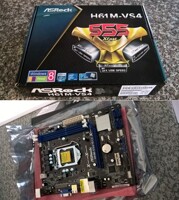
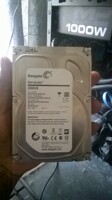


Well.....I made a complete 360 degrees after watching a series of Ryzen Benchmarks today. Intel all the sudden seems to be a better proposition.
Lets face it, Intel, although expensive, make pretty damn good CPU's and they're pretty much the best all rounder when it comes to graphics work and gaming and the i7 7700K seems to be a worthy replacement for my ageing i7 2600K since it is a little more than 6 years old now. (heck the i7 7700K is now a lot cheaper than my i7 2600K when it was brand new!! O.o)
Credit where it is due, I applaud AMD (really I do) for shaking up the market and bringing healthy competition as well as it has forced Intel to lower their prices, which is a very good thing for us the consumer.
Lets face it, Intel, although expensive, make pretty damn good CPU's and they're pretty much the best all rounder when it comes to graphics work and gaming and the i7 7700K seems to be a worthy replacement for my ageing i7 2600K since it is a little more than 6 years old now. (heck the i7 7700K is now a lot cheaper than my i7 2600K when it was brand new!! O.o)
Credit where it is due, I applaud AMD (really I do) for shaking up the market and bringing healthy competition as well as it has forced Intel to lower their prices, which is a very good thing for us the consumer.
Category Artwork (Digital) / Miscellaneous
Species Human
Size 1280 x 1011px
File Size 123.6 kB

Thant may be but if Ryzen had the integrated graphics like Intel it would have stood a chance against Intel. I'd rather prefer an all rounder CPU like intel i7 7700K wihch will cater to my tasks for digital drawing and gameing as well. it will be a worthy replacement for my ageing 2600K which has been a reliable CPU for 6 years now, I reckon the performance difference will be a lot greater too if i make the upgrade.

I know, but I have a little theory that Intel's integrated graphics doesn't completely switch off but rather re-route its processing power to aid the CPU's other functions in operating the system, maybe that is why Intel chips perform better than Ryzen in certain benchmarks as they (Ryzen) do not have integrated graphics in their CPU's.
Don't take my word for it but it may seem to be a logical explanation behind Ryzen's poor performance in some of the benchmarks.
Don't take my word for it but it may seem to be a logical explanation behind Ryzen's poor performance in some of the benchmarks.

Its not that simple to reuse the GPU part to speed up the CPU, nor is it that simple for the integrated GPU to help the external GPU like some sort of SLI. The only reasonable use for the GPU core is perhaps accelerated video decoding.
The reason that Intel is faster in some tests while AMD is faster in others has to do with how the CPU core shares its processing logic within itself. Each core is made up of various blocks of logic that do certain tasks. A lot of the time the CPU instruction that is executing right now does not use the blocks that the next instruction needs to execute and as such the two instructions can be executed in sort of parallel. This means the core could be working on executing multiple instructions, but then a branch instruction is executed while the cpu is already working on executing instructions after the branch. Since the branch makes the program jump to a different part means the instructions after the branch must not execute so it has to quickly scrap the work done on them and reallocate those resources to something else. This wastes clock cycles so they also give CPUs branch prediction logic that tries its best to foresee that a branch will divert program flow and makes the CPU start preparing in advance to execute those instructions instead. This branch prediction only gets it right some of the time. This brings even more variability since Intels branch prediction algorithms might be better at predicting branches in one game/app/benchmark while AMDs branch prediction might get more branches right in another app. On top of that is also the cache that also tries to be inteligent and load in stuff from RAM before the CPU needs the data so it doesn't need to wait for it, again Intels cache might work better on certain apps. Then various memory bandwidths inside the CPU might be different so one CPU might have a faster L2 cache while the other has a faster L3 cache, this makes apps that fit in to small amounts of memory run faster on the faster L2 cache. The list goes on and on and can get really complicated.
Short story is that the internal architecture simply happens to work better when executing certain programs.
Oh and by the way the older FX series from AMD had a bigger reason why it was faster than intel in some tasks but much slower in others. Those CPUs shared one floating point unit between two cores. This means that a 8 core CPU only had 4 floating point units inside. Those units use up a lot of silicon surface area so AMD could save cost by doing this. But on the down side applications that did a lot of floating point math would slow down a lot due to the cores needing to wait on each other to get access to the busy floating point units. Because Intel did not do this meant that those particular apps ran faster. I don't know anything about the internal architecture of Ryzen so i have no idea if they still do something like that.
The reason that Intel is faster in some tests while AMD is faster in others has to do with how the CPU core shares its processing logic within itself. Each core is made up of various blocks of logic that do certain tasks. A lot of the time the CPU instruction that is executing right now does not use the blocks that the next instruction needs to execute and as such the two instructions can be executed in sort of parallel. This means the core could be working on executing multiple instructions, but then a branch instruction is executed while the cpu is already working on executing instructions after the branch. Since the branch makes the program jump to a different part means the instructions after the branch must not execute so it has to quickly scrap the work done on them and reallocate those resources to something else. This wastes clock cycles so they also give CPUs branch prediction logic that tries its best to foresee that a branch will divert program flow and makes the CPU start preparing in advance to execute those instructions instead. This branch prediction only gets it right some of the time. This brings even more variability since Intels branch prediction algorithms might be better at predicting branches in one game/app/benchmark while AMDs branch prediction might get more branches right in another app. On top of that is also the cache that also tries to be inteligent and load in stuff from RAM before the CPU needs the data so it doesn't need to wait for it, again Intels cache might work better on certain apps. Then various memory bandwidths inside the CPU might be different so one CPU might have a faster L2 cache while the other has a faster L3 cache, this makes apps that fit in to small amounts of memory run faster on the faster L2 cache. The list goes on and on and can get really complicated.
Short story is that the internal architecture simply happens to work better when executing certain programs.
Oh and by the way the older FX series from AMD had a bigger reason why it was faster than intel in some tasks but much slower in others. Those CPUs shared one floating point unit between two cores. This means that a 8 core CPU only had 4 floating point units inside. Those units use up a lot of silicon surface area so AMD could save cost by doing this. But on the down side applications that did a lot of floating point math would slow down a lot due to the cores needing to wait on each other to get access to the busy floating point units. Because Intel did not do this meant that those particular apps ran faster. I don't know anything about the internal architecture of Ryzen so i have no idea if they still do something like that.

I think AMD will still have the upper hand none the less their pricing means they can compete in a way intel can't, Intel has to lower their prices or people are going to start looking at the processor from the viewpoint of : "Yeah nice and all ... but this one is almost as good and is half the price."

The thing I see is: Intel 7700k and AMD 1700x have the same single-threaded performance, BUT the AMD 1700x has twice the number of cores of the Intel 7700k, while using less power (a surprise, on the AMD side). If you definitely don't need the integrated graphics part of the Intel chip, I really think AMD has the best solution here. And, don't forget the AMD FineWine technology lol!
Well that's mostly because Intel quickly lowered there prices as Ryzen launched to make sure they stay competitive in price per performance (Before they basically had a monopoly and could ask any price they wanted). So even if you don't want a Ryzen CPU you can still be exited since it means you can now get Intel CPUs cheaper.



Ryzen is smart move because as time goes on it will perform better and better due to optimization and here is an awesome video showing it's performance.
https://www.youtube.com/watch?v=8-mMBbWHrwM
Now keep in mind, new architecture. no optimization yet, it just came out and is performing this well. It also kills the 7700 in workstation situation especially 3d rendering.
https://www.youtube.com/watch?v=8-mMBbWHrwM
Now keep in mind, new architecture. no optimization yet, it just came out and is performing this well. It also kills the 7700 in workstation situation especially 3d rendering.

Comments