
 FA+
FA+ Shop
Shop
704
Views
Views
5
Favorites
Favorites
Category
Current Events / All
Species Avian (Other)
Size 300 x 236
File Size 48.7 kB
Report this content
★
More from Uluri



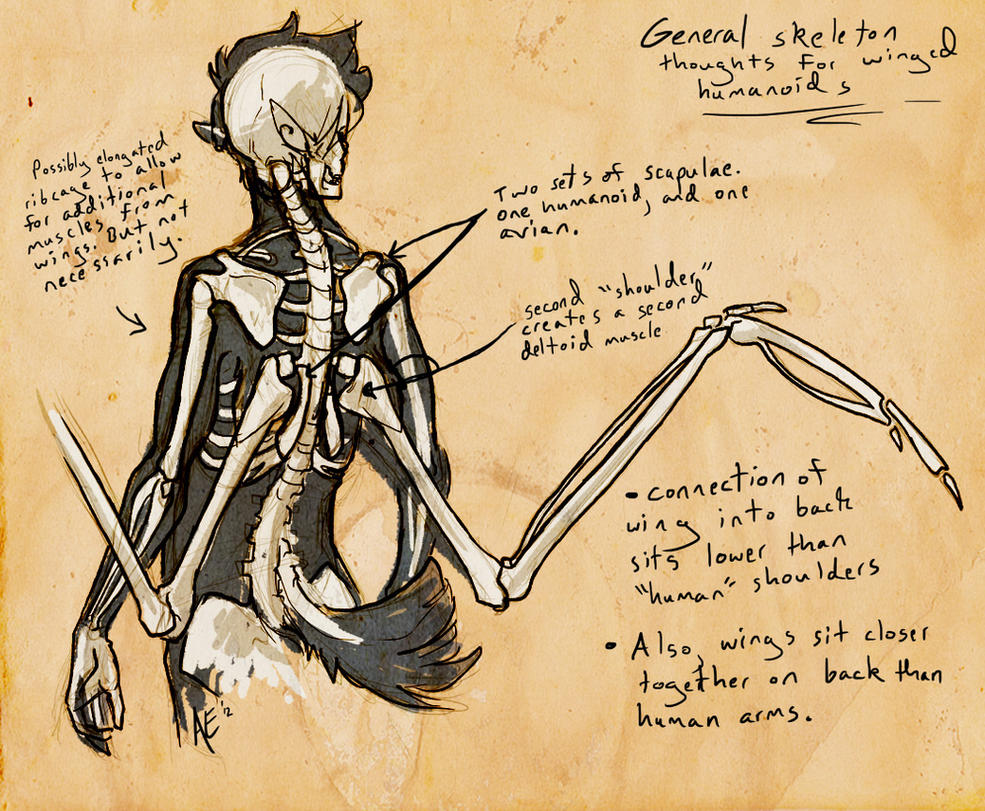
Tell me about Wings and Flight!
Hello Hello,
Uluri here with some questions about birds and their flight maneuverability. I've been curious to learn
about how the different sizes of wings would effect how a bird flies. I'm sure there's got to be maybe a few
of you who can help me out.
Understanding a subject's body can help in artwork greatly. I don't draw birds often, nor do I know much about them,
so I've always had some trouble with them. I want to understand what different types of bird's body structures are made for.
I want to get better at flight images beyond just trying to watch birds that happen to fly by. (Because I don't even know
what birds I'm looking at besides robins, crows, and bluejays. XD There's a bunch of them around I have no idea.)
Types of Wings | Their Faces/beaks | How weather effects birds | Anything else you want to add | Visual study images are quite welcome, too.
Uluri here with some questions about birds and their flight maneuverability. I've been curious to learn
about how the different sizes of wings would effect how a bird flies. I'm sure there's got to be maybe a few
of you who can help me out.
Understanding a subject's body can help in artwork greatly. I don't draw birds often, nor do I know much about them,
so I've always had some trouble with them. I want to understand what different types of bird's body structures are made for.
I want to get better at flight images beyond just trying to watch birds that happen to fly by. (Because I don't even know
what birds I'm looking at besides robins, crows, and bluejays. XD There's a bunch of them around I have no idea.)
Types of Wings | Their Faces/beaks | How weather effects birds | Anything else you want to add | Visual study images are quite welcome, too.
Category Current Events / All
Species Avian (Other)
Size 300 x 236px
File Size 48.7 kB


Well I don't really know, so here comes a pita theory. Most creatures arms (or arm like appendages) are the same length as the body. Some flightless birds have wings that are shorter than their body length, while others it depends on their feathers. I guess it comes down to the lifting capability of the wings.

The Albatross can fly for days on a single flap of their wings. Boeing used their wing shape to design the Boeing 787 Dreamliner Wings. Now the 787 is the most efficient airplane in the world, and it can travel to anywhere in the world, except Antarctica, without having to stop for gas. This is due to their ETOPs 330 rating. Now more aircraft manufacturers are looking into this wing and in 10 years, we may not even see winglets on planes anymore, but rather the sweptback curve wingtips that the 787 and the bird called the Albatross have. I love planes. :)


General observation from a radio control airplane standpoint, but it should translate to birbs fairly well.
Long wings are better for gliding/conserving energy, short wings are more maneuverable and allow for /need greater speeds.
the area where the wing joins the body aviators call chord.
Narrow chords (like on seagulls and falcons) improve maneuvering and reduce drag which is good for gliders, wide chords (owls, vultures) provide more lift but don't glide* as well.
*raw glide with no thermal/wind currents, which is why it's rare to see vultures flying on rainy days.
Anyone who knows better feel free to correct me if I'm wrong.
Long wings are better for gliding/conserving energy, short wings are more maneuverable and allow for /need greater speeds.
the area where the wing joins the body aviators call chord.
Narrow chords (like on seagulls and falcons) improve maneuvering and reduce drag which is good for gliders, wide chords (owls, vultures) provide more lift but don't glide* as well.
*raw glide with no thermal/wind currents, which is why it's rare to see vultures flying on rainy days.
Anyone who knows better feel free to correct me if I'm wrong.

(lil story) monday morn a stray bird decided to hang out right near our back door railings. It stayed there for several hours (forgot to take pictures) until it cried out and a mockingbird came. Then it finally flew away
Mockingbird babies do a lot of running and hopping when they're young, so it could have been a chick. Then again, the tail was short and it was pretty stout, so maybe the mockingbird had a stray egg in the nest and hatched another XD either way, it weren't scared of me or my dad at all (didn't touch, afraid of catching something)
Mockingbird babies do a lot of running and hopping when they're young, so it could have been a chick. Then again, the tail was short and it was pretty stout, so maybe the mockingbird had a stray egg in the nest and hatched another XD either way, it weren't scared of me or my dad at all (didn't touch, afraid of catching something)
mmm, Yeah it can be suspicious of usually scared animals to not be scared. (besides if it being a baby that wouldn't know better.)
The other day I was watching out the window birds flying around. It was cool to see how each of them dived from the air.
One of them up and pooped at me. It would have hit me in the face if it weren't for the window.
The other day I was watching out the window birds flying around. It was cool to see how each of them dived from the air.
One of them up and pooped at me. It would have hit me in the face if it weren't for the window.

I am not sure about the structure of 100% of birds, but I think it may help you:
- Peregrine Falcons and falcons in general usually have smaller body among birds of prey and have a distinctive silhouette of an anchor in flight, having a somehow long, slim and pointy wings and long tail. This is because the falcons are specialized divers, and they closes the wings in a "W" pattern and uses the tailfeathers as rudder to maneuver, this gives the P. Falcon the highest speed among all living beings. uvu
- Eagles have an overall larger body and large broad squared wings with shorter tail, this is because they are much like ground or water prey hunters and spends much time gliding (soaring) seeking for preys bellow. Their wings are stronger because they may need to take off with the additional weight of the prey.
- Hawks are the mid term of the hunters, having a more average size of wings as they are more generalistic hunters as well.
- Kites have a somehow unique ground searching method: they are of a size of a hawk, but you can see them hovering in mid air by short amount of time sometimes, this is because they makes short flapping like the hummingbird while they put themselves against the wind. It usually stands for 10 to 45 seconds depending on the species.
- Forest Eagles and Hawk Eagles are unique as forest flyers, and they have much dexterity to dodge the branches of the upper canopy of a forest, slow motion videos shows how they retracts the wings and banks their bodies in order to fit on the passage in a fraction of seconds.
- Owl are birds of prey but their flying pattern and body structure are pretty much different, they have much more softer feathers with fluffy endings, this is to minimize the turbulence and the sound caused by the air passage, also, their broad and round wings are meant to usually glide slowly and stealthy to its unaware prey at the darkness. Even how they flaps the wings have different pattern than other avians as well.
Well, this is possibly just 5 to 10% of the birds flying knowledge, this is much because there are many flying methods as birds. uvu
If you have any particular question, you can ask me as I am an hobbyist ornithologist that makes avian anthroes as well. UvU
- Peregrine Falcons and falcons in general usually have smaller body among birds of prey and have a distinctive silhouette of an anchor in flight, having a somehow long, slim and pointy wings and long tail. This is because the falcons are specialized divers, and they closes the wings in a "W" pattern and uses the tailfeathers as rudder to maneuver, this gives the P. Falcon the highest speed among all living beings. uvu
- Eagles have an overall larger body and large broad squared wings with shorter tail, this is because they are much like ground or water prey hunters and spends much time gliding (soaring) seeking for preys bellow. Their wings are stronger because they may need to take off with the additional weight of the prey.
- Hawks are the mid term of the hunters, having a more average size of wings as they are more generalistic hunters as well.
- Kites have a somehow unique ground searching method: they are of a size of a hawk, but you can see them hovering in mid air by short amount of time sometimes, this is because they makes short flapping like the hummingbird while they put themselves against the wind. It usually stands for 10 to 45 seconds depending on the species.
- Forest Eagles and Hawk Eagles are unique as forest flyers, and they have much dexterity to dodge the branches of the upper canopy of a forest, slow motion videos shows how they retracts the wings and banks their bodies in order to fit on the passage in a fraction of seconds.
- Owl are birds of prey but their flying pattern and body structure are pretty much different, they have much more softer feathers with fluffy endings, this is to minimize the turbulence and the sound caused by the air passage, also, their broad and round wings are meant to usually glide slowly and stealthy to its unaware prey at the darkness. Even how they flaps the wings have different pattern than other avians as well.
Well, this is possibly just 5 to 10% of the birds flying knowledge, this is much because there are many flying methods as birds. uvu
If you have any particular question, you can ask me as I am an hobbyist ornithologist that makes avian anthroes as well. UvU




Comments