
 FA+
FA+ Shop
Shop
2165
Views
Views
25
Favorites
Favorites
Category
Artwork (Digital) / Comics
Species Skunk
Size 960 x 1200
File Size 285.5 kB
Report this content
More from Chucky




Listed in Folders


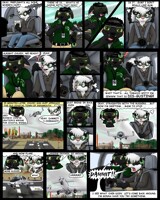
Things are starting to look right in the second to the last panel.
Category Artwork (Digital) / Comics
Species Skunk
Size 960 x 1200px
File Size 285.5 kB
Listed in Folders



Yes. His crosswind woes started back on this page.
https://www.furaffinity.net/view/15299626/
Just as he started to figure out landing, the winds started changing with the season and threw in the complication of a crosswind.
https://www.furaffinity.net/view/15299626/
Just as he started to figure out landing, the winds started changing with the season and threw in the complication of a crosswind.

there is youtube of huge jetliners having to do this, not quite at 45degrees to the runway, but not straight on.
as for landing, I remember a book where the elevator was stuck in place, so the pilot got as low as he could, then used the trim tabs to go down to the pavement. dunno how truthful that is, or what the book was that I read, but I figure you could tell me..
as for landing, I remember a book where the elevator was stuck in place, so the pilot got as low as he could, then used the trim tabs to go down to the pavement. dunno how truthful that is, or what the book was that I read, but I figure you could tell me..
The crab angle is what you want to do on the approach to keep the airplane's flight path aligned with the runway. In panel 5 the airplane is 'crabbed' into the wind. Some airplanes are actually built to land this way where either they can withstand a small side-load, or in the case of the Boeing B-52, it has castering landing gear.
The airplane will not lose excess altitude in a crab because the fuselage is still aligned with the wind. It's the slip that causes excess drag and aids in a quick descent because with the rudder input, you're forcing the airplane to be slight broadside to the wind.
The airplane will not lose excess altitude in a crab because the fuselage is still aligned with the wind. It's the slip that causes excess drag and aids in a quick descent because with the rudder input, you're forcing the airplane to be slight broadside to the wind.




Without any control inputs, and airplane will weather-vane itself into the wind, which is fine for flying. But when it comes time to land, you gotta realign the airplane with the runway. If the wind is blowing across the runway, you'll have to use the control inputs that  MichelMephit describes above. It's called a 'slip' because the airplane is 'slipping' sideways through the relative wind, but still lined up with the runway. It's something that takes some practice when you're learning to fly, or at least it took a bit for me to figure it out.
 MichelMephit describes above. It's called a 'slip' because the airplane is 'slipping' sideways through the relative wind, but still lined up with the runway. It's something that takes some practice when you're learning to fly, or at least it took a bit for me to figure it out.





Comments