
 FA+
FA+ Shop
Shop
207
Views
Views
1
Favorites
Favorites
Category
Photography / Miscellaneous
Species Unspecified / Any
Size 1280 x 573
File Size 219.3 kB
Report this content
More from GravenImageCat


Name: John Keyes
Location: Stratford, CT
Date: 1753
Carver: William Holland
Location: Stratford, CT
Date: 1753
Carver: William Holland
Category Photography / Miscellaneous
Species Unspecified / Any
Size 1280 x 573px
File Size 219.3 kB
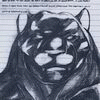
This is quite interesting as the type of stone goes. I don't know if it's weathering or oxidization of the surface of the headstone, which would be entirely understandable after two-hundred and sixty-five years of regular exposure to the elements, or if this is a type of stone I haven't often seen worked as a burial marker before. The unusual colouration of the stone, as well as the more porous-looking material of it, suggests something like sandstone or other porous rock. Would you happen to know, GiC, what type of stone this marker was hewn from?
-2Paw.
-2Paw.
I thought that might be the case! And thanks for the kind word on the pair of good eyes I've tried to train to recognize that sort of thing; it looked like limestone or sandstone, as opposed to volcanic slate or granite, which I believe would be more common in most of the carved headstones you've posted pictures of and others I've seen elsewhere. I guess in those days it would depend on what kind of stone was easily accessible; being that we're talking about colonial or post-colonial era burials, there might be a quarry within close enough distance that providing carvers with or enabling carvers to obtain economically-comfortable amounts of a given type of stone for carving things like headstones. And since a lot of the very early burials in America would be in coastal areas (Rhode Island, and New England in general) lighter, more porous stone would also be an option given how close to the water it would often be found. Knowing that granite and harder, more compact stone would be easier to carve detail (and allow for more force to be withstood in carving grooves or hammer blows) and would ideally weather a longer period of environmental impact on the material, I think it would be safe to say that more porous stones like limestone or sandstone would be less likely to be carved for headstone use.
-2Paw.
-2Paw.


Comments