
 FA+
FA+ Shop
Shop
867
Views
Views
10
Favorites
Favorites
Category
All / All
Species Unspecified / Any
Size 620 x 869
File Size 401 kB
Report this content
More from HoboPatch


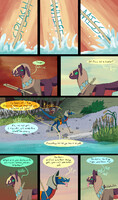


Hey folks! Another patreon lore doodle
I don't draw ormer often and there is partially a reason for that as they tend to be out of focus of the far more common and far more widespread drekir, ormer mostly live in Sivilão societies. They are one of the 3 Ëldimor Species, those being Drekir, Ormer, and Mavõtur who all come from an ancestral species known as the Ëldimor. Over thousands of years that species were gradually manipulated through genetic and magical manipulation into the 3 distinct species that exist today and each one was designed to do a job. Drekir do labor, Mavõtur do research and knowledge transferring, and Ormer do manufacturing
That is best seen with what they see with. the Eyeball.
Ormer are very large cyclopes like lizards that are quadrupedal but stand on two legs to do various forms of work and their eye is engineered for the purpose of looking at a small area as precisely as possible to ensure their job is done well. Ormer eyes are complex. They have four types of cones and rods in their eyes, giving them a greater range of color perception, an ocular nerve that is more sensitive to light, allowing in a greater focus of detail, and most alien like, they have muscles in their eyes that can push the eye forward or retract it backwards.
Much like how a camera can gain accurate focus and depth through zooming the lens in an out, ormer can do the same to gain a more accurate sense of depth and focus on whatever they are working on in a way that humans simply cannot. This allows them to work precisely on incredibly small projects and notice very small difficult to percieve flaws in work that might be difficult for a human to see
Their Eye is built for their caste, to very closely gaze upon their piece of work to monitor it and to solely focus upon that piece of work. And in combination with their training of dexterity and craftsmanship, it allows them to consistently crank out products of a significantly high quality when trained properly for it.
The eye of an Orm is also very often used to search, as the stronger vision and ability to adjust focus allows ormer to notice things that might fly past the sideyes of a drãlk such as broken twigs or the distinct pattern of a dreks scales hidden within a leafy bush. It also allows them to accurately perceive distances with training on how to do so with their one eye. Of course the thing an orms eye is ill equipped for is fast moving objects, which forces it to rapidly readjust their eye. So ormer who are not trained warriors can be quickly overwhelmed by speed adversaries and objects. Though with some training ormer can learn to keep their eye in a state of constant adjustment and, with some discipline and mental training, can very effectively track multiple opponents through a mix of precise vision and mental memory and prediction
But overall
The Orms eye, probably the big standout feature of them is true to their form and their duties as a creature designed wholly for manufacture and as a result they have a very different perspective of the world than the other Ëldimor or Humanity
I don't draw ormer often and there is partially a reason for that as they tend to be out of focus of the far more common and far more widespread drekir, ormer mostly live in Sivilão societies. They are one of the 3 Ëldimor Species, those being Drekir, Ormer, and Mavõtur who all come from an ancestral species known as the Ëldimor. Over thousands of years that species were gradually manipulated through genetic and magical manipulation into the 3 distinct species that exist today and each one was designed to do a job. Drekir do labor, Mavõtur do research and knowledge transferring, and Ormer do manufacturing
That is best seen with what they see with. the Eyeball.
Ormer are very large cyclopes like lizards that are quadrupedal but stand on two legs to do various forms of work and their eye is engineered for the purpose of looking at a small area as precisely as possible to ensure their job is done well. Ormer eyes are complex. They have four types of cones and rods in their eyes, giving them a greater range of color perception, an ocular nerve that is more sensitive to light, allowing in a greater focus of detail, and most alien like, they have muscles in their eyes that can push the eye forward or retract it backwards.
Much like how a camera can gain accurate focus and depth through zooming the lens in an out, ormer can do the same to gain a more accurate sense of depth and focus on whatever they are working on in a way that humans simply cannot. This allows them to work precisely on incredibly small projects and notice very small difficult to percieve flaws in work that might be difficult for a human to see
Their Eye is built for their caste, to very closely gaze upon their piece of work to monitor it and to solely focus upon that piece of work. And in combination with their training of dexterity and craftsmanship, it allows them to consistently crank out products of a significantly high quality when trained properly for it.
The eye of an Orm is also very often used to search, as the stronger vision and ability to adjust focus allows ormer to notice things that might fly past the sideyes of a drãlk such as broken twigs or the distinct pattern of a dreks scales hidden within a leafy bush. It also allows them to accurately perceive distances with training on how to do so with their one eye. Of course the thing an orms eye is ill equipped for is fast moving objects, which forces it to rapidly readjust their eye. So ormer who are not trained warriors can be quickly overwhelmed by speed adversaries and objects. Though with some training ormer can learn to keep their eye in a state of constant adjustment and, with some discipline and mental training, can very effectively track multiple opponents through a mix of precise vision and mental memory and prediction
But overall
The Orms eye, probably the big standout feature of them is true to their form and their duties as a creature designed wholly for manufacture and as a result they have a very different perspective of the world than the other Ëldimor or Humanity
Category All / All
Species Unspecified / Any
Size 620 x 869px
File Size 401 kB

Generally their brains are acclimated to this style of vision so in normal use no. In rapid readjustment it usually happens while an orm is learning but after a few years of practicing and demonstrating the ability to rapidly adjust their vision it gets a lot easier for them.
They could be! Though yeah sivilão society would rather churn out workers than try and put them through lengthy recoveries. Parts of the Great Machine of Fim Ëodin are more easily replaced than repaired.
They could be! Though yeah sivilão society would rather churn out workers than try and put them through lengthy recoveries. Parts of the Great Machine of Fim Ëodin are more easily replaced than repaired.


One thing it's worth noting about eye physiology is that moving the eye a small distance doesn't actually help with depth perception, or meaningfully enhance distant vision at all.
The way that eyes work (at least terrestrial vertebrate eyes) is that they have a single lens that can be squeezed to become more or less convex, causing the focal length to sweep through a wide range of focus. Light coming from an object at a certain distance is going to have an angle relative to that distance, and when the lens is shifted to the proper shape for said distance, the image becomes sharp, meanwhile light coming from objects that are nearer or farther than that object will focus either in front of the retina, or behind the retina, leading to a blurry image. One quirk of this method of focus is that it allows the eye to change it's focal depth without needing to change its field of view, allowing for the focusing on a near task sharply, while keeping the peripheral vision active and capable of sensing motion.
By contrast, a camera 'zooms' by moving more than just the aperture forward, it's a but more complicated than that. The main problem with changing the focal distance of a camera is that cameras have inflexible lenses, and as such, they need to be very creative with a long series of many aspherical lenses to adjust the focal depth in productive ways. For the simplest arrangements, changing the focal depth and changing the focal distance are intrinsically linked, and as such, the further out you try to focus, the longer your focal distance becomes and thus you field of view also decreases. While there are some modern camera lenses that can change the focal depth without changing the field of view, those lenses are incredibly complicated arrays of gears, tracks, and moving parts to keep the focus intact.
All that aside, having one big eye does further decrease the minimum resolution (smaller is better, in this case) of their focus, and depending on how flexible their lenses are, changing the lens shape along would easily allow them to have both sharp vision needed for fine inspection of works, as well as being able to sharply see objects at immense distances, as well as letting them sweep through focus ranges at distances allowing them a better sense of depth for very distant objects. They just wouldn't need to have the eye move forward or back to do that, but perhaps the eyes being able to move forward could be a consequence of the musculature needed to rotate such an immense eye with the precision needed to accurately assess the surface of a work piece. Though perhaps the aspect of being able to sink the eye further back into its orbit as a means of avoiding damage to the eye would be a more useful lateral use of such a structure.
The way that eyes work (at least terrestrial vertebrate eyes) is that they have a single lens that can be squeezed to become more or less convex, causing the focal length to sweep through a wide range of focus. Light coming from an object at a certain distance is going to have an angle relative to that distance, and when the lens is shifted to the proper shape for said distance, the image becomes sharp, meanwhile light coming from objects that are nearer or farther than that object will focus either in front of the retina, or behind the retina, leading to a blurry image. One quirk of this method of focus is that it allows the eye to change it's focal depth without needing to change its field of view, allowing for the focusing on a near task sharply, while keeping the peripheral vision active and capable of sensing motion.
By contrast, a camera 'zooms' by moving more than just the aperture forward, it's a but more complicated than that. The main problem with changing the focal distance of a camera is that cameras have inflexible lenses, and as such, they need to be very creative with a long series of many aspherical lenses to adjust the focal depth in productive ways. For the simplest arrangements, changing the focal depth and changing the focal distance are intrinsically linked, and as such, the further out you try to focus, the longer your focal distance becomes and thus you field of view also decreases. While there are some modern camera lenses that can change the focal depth without changing the field of view, those lenses are incredibly complicated arrays of gears, tracks, and moving parts to keep the focus intact.
All that aside, having one big eye does further decrease the minimum resolution (smaller is better, in this case) of their focus, and depending on how flexible their lenses are, changing the lens shape along would easily allow them to have both sharp vision needed for fine inspection of works, as well as being able to sharply see objects at immense distances, as well as letting them sweep through focus ranges at distances allowing them a better sense of depth for very distant objects. They just wouldn't need to have the eye move forward or back to do that, but perhaps the eyes being able to move forward could be a consequence of the musculature needed to rotate such an immense eye with the precision needed to accurately assess the surface of a work piece. Though perhaps the aspect of being able to sink the eye further back into its orbit as a means of avoiding damage to the eye would be a more useful lateral use of such a structure.
I mean small distance is relative first, for an orm their eye is moving forwards or backwards more than a foot. Remember ormer are upwards of 20ft tall standing and 50ft long so we just aren't talking about small distances here.
and no disrespect I think you're wrong at least from my understandings of focal length and motion parallax.
This is functioning on something that already exists in nature and its the idea of Motion Parallax and monocular adjustment, where an animal moves their head (or eye) forwards or backwards to bring extra information about a specific object into the brain that then helps to form a 3d image. Birds achieve this (for example) by moving their heads around rapidly which brings both parts of an image from each eye together into a single bit of depth. Ormer do this by zooming in and out in a manner similar to how animals like Chameleons are believed to perceive depth perception in spite of usually only being able to employ one eye at a time for vision.
It is the intention for their vision accommodation to shift as they zoom in and out, In adjusting their focal length they're essentially designed tunnel visioners so of course if they're focusing on one thing, everything else blurs out.
and no disrespect I think you're wrong at least from my understandings of focal length and motion parallax.
This is functioning on something that already exists in nature and its the idea of Motion Parallax and monocular adjustment, where an animal moves their head (or eye) forwards or backwards to bring extra information about a specific object into the brain that then helps to form a 3d image. Birds achieve this (for example) by moving their heads around rapidly which brings both parts of an image from each eye together into a single bit of depth. Ormer do this by zooming in and out in a manner similar to how animals like Chameleons are believed to perceive depth perception in spite of usually only being able to employ one eye at a time for vision.
It is the intention for their vision accommodation to shift as they zoom in and out, In adjusting their focal length they're essentially designed tunnel visioners so of course if they're focusing on one thing, everything else blurs out.
That makes a bit more sense. I was imagining an Ormer to be larger than drek in the scale of a bull compared to a herding dog, not a whale compared to one.
The reason that many birds move their head for parallax is that they often don't have the lens flexibility that our eyes have, so while we can finely adjust our focal plane across wide distances, birds like owls tend to have a much less granular focal depth that has more in focus at once in exchange for more narrow vision, as well as their eyes lacking much of the musculature that primate eyes have. They have literal tunnel vision whereas our tunnel vision is entirely based on how much we mentally focus on something.
Also, being able to extend their eyes out a whole foot (especially with eyes that big) on the scale of something that large falls within the same proportions as what people who can actually distend their eyes are capable of.
The reason that many birds move their head for parallax is that they often don't have the lens flexibility that our eyes have, so while we can finely adjust our focal plane across wide distances, birds like owls tend to have a much less granular focal depth that has more in focus at once in exchange for more narrow vision, as well as their eyes lacking much of the musculature that primate eyes have. They have literal tunnel vision whereas our tunnel vision is entirely based on how much we mentally focus on something.
Also, being able to extend their eyes out a whole foot (especially with eyes that big) on the scale of something that large falls within the same proportions as what people who can actually distend their eyes are capable of.
Nah there is an example of an orm that appears in the last chapter of Long Hike (Extraction, here is the page https://www.furaffinity.net/view/43985687/) That is a good example of how big they are.
Yeah im aware its just an example of a way that depth perception can be achieved, doesn't apply necessarily to ormer or drekir
Yeah im aware its just an example of a way that depth perception can be achieved, doesn't apply necessarily to ormer or drekir
I thought that was a Mavot for a while there, since it only had the speech bubble tail once while it was bellowing, so I thought it was using pulse resonance for the other instance of it talking. I had assumed that what is now clear as a protective plate was actually its face. It didn't occur to me that those black spots were actually a wide array of eyeholes for it to look through (though now that I look at it again you did mention Orm in the decsription).

Comments