
 FA+
FA+ Shop
Shop
725
Views
Views
19
Favorites
Favorites
Category
Story / Comics
Species Hyena
Size 1280 x 930
File Size 215.2 kB
Report this content
More from KDNightstar


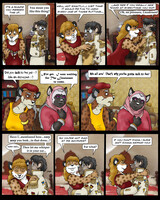
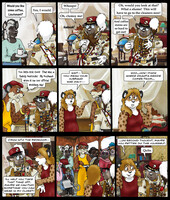



One of my readers, Marmoe, was able to assemble this video of my recent Anthrocon presentation using footage I'd shot combined with the slides I'd created to illustrate the live talk.
For everyone who had been asking if the show would be recorded: Enjoy!
https://www.crosstimecafe.com/viewt.....729017#p729017
Unfortunately the disc ran out of space in the last few minutes, but we hope to be able to restore the full audio track once Marmoe gets the footage from the opposite side of the room, shot by Uranium 235.
The text for the last three slides is in the Forum post entry I linked.
For everyone who had been asking if the show would be recorded: Enjoy!
https://www.crosstimecafe.com/viewt.....729017#p729017
Unfortunately the disc ran out of space in the last few minutes, but we hope to be able to restore the full audio track once Marmoe gets the footage from the opposite side of the room, shot by Uranium 235.
The text for the last three slides is in the Forum post entry I linked.
Category Story / Comics
Species Hyena
Size 1280 x 930px
File Size 215.2 kB


Thank you! I'm afraid I left out about ten minutes of discussion that I really wanted to mention, but I sort of drew a blank once I started talking. Hyena intelligence and social order is far more interesting than their sex lives, and yet that is what I fixated on!
"Kevin Richardson has said that every one of his trips to the emergency room was due to hyenas. They don't give any warning before biting you...and the animal handlers responsible for the dog that became the hyena in 'Birds of Prey' discouraged the filmmakers from using an actual hyena, because whatever a hyena touches, that thing then belongs to the hyena, and they are VERY territorial."
Yes, they can be adorably doglike. Humans are also on their menu.
Yes, they can be adorably doglike. Humans are also on their menu.
Yes, they can be adorably doglike. Humans are also on their menu.... hehe seen them want to do that at a local wildlife park - think I mentioned it a few years back to you. Families with small children in strollers near the triple layer fencing around the Hyena habitat. Kids going "Doggy!" at them. Hyenas just watching intently, drooling. Mesh layer of the fencing is designed to keep little hands and fingers out... The big cat fencing isn't nearly as elaborate. That pair of Hyenas are in their mid 20s now. First saw the male one when he was under a year old - spoiled brat - was being driven to an enrichment area on a golf cart by a handler. She had taken him on it once and after that he refused to go to the pool unless he got to ride...
I recently obtained a book "HUmans and Hyenas," which chronicles in scientific detail the adversarial relationship between the two species from the "very beginning." We were prey for them, we competed with them for carrion and caves, and we developed a strong and nearly universal loathing for them, in the way sports fans or political parties will loathe their rivals. We consider them magic, evil, witches, grave-robbers, livestock-killers, child-stealers...which things are mostly true, but I feel that it's the hyenas' success at what they do that inspires this human hatred. We hate rats and coyotes for a similar reason--they're just really good at what they do and even organized persecution can't kill them all off.
But reading this book is depressing, because it pretty much repeats the same conclusions over and over again--"humans hate hyenas as evil sorcerers."
Yet anyone who knows hyenas respects and admires their intelligence and how attached they become to the person who reared them. Had things gone differently, we might now have domesticated hyenas instead of domesticated wolves. However, the intelligence and adaptive thinking powers of hyenas would probably have made them more difficult to domesticate on a large scale.
There's one anecdote about a shepherd who trained a spotted hyena to protect his sheep. So it can be done. But any relations with hyenas would probably have had to be on an equal footing, rather than a servant-master dynamic as with dogs. Hyenas do what THEY want to do.
But reading this book is depressing, because it pretty much repeats the same conclusions over and over again--"humans hate hyenas as evil sorcerers."
Yet anyone who knows hyenas respects and admires their intelligence and how attached they become to the person who reared them. Had things gone differently, we might now have domesticated hyenas instead of domesticated wolves. However, the intelligence and adaptive thinking powers of hyenas would probably have made them more difficult to domesticate on a large scale.
There's one anecdote about a shepherd who trained a spotted hyena to protect his sheep. So it can be done. But any relations with hyenas would probably have had to be on an equal footing, rather than a servant-master dynamic as with dogs. Hyenas do what THEY want to do.
I've seen photos of ancient Egyptian art showing how they tried to tame just about every animal in their land - Hyena was attempted and given up on. Seen images from Nigeria of street gangsters with Hyenas on chains. A friend from that region has confirmed it.
Heh, would love to see a Hyena Shepherd - probably would be counting future dinners...
Heh, would love to see a Hyena Shepherd - probably would be counting future dinners...


The sloped profile and short hindlegs are speculated to assist in long treks by taking weight off the hips. It's even more prominent in striped and browns, which rely more heavily on scavenging.
>They're excellent at figuring out how to open puzzle boxes.
Cenobites hate them!
>They're excellent at figuring out how to open puzzle boxes.
Cenobites hate them!
The sources I consulted suggest that the short hind legs are to power running, and the heavy, long neck developed to carry off large chunks of meat. What's also weird is how their hocks are sort of double-jointed when they're hauling *ss. They truly are built for hunting.
Spotted hyenas are endurance hunters and can run or 'lope' over great distances in search for prey. Their relatively short hind legs and long neck are perfect adaptations to the loping locomotion because they minimize its energetic costs. Their long, muscular neck further enables them to carry heavy prey away from other hyenas and lions, or to bring food to their cubs at the communal den.
That source?
That source?

To be honest, I've read so many articles on hyenas that they all run together. A lot of them repeat the same information. And yet others give contradictory information.
When it comes to hyena research, keep in mind the three C's--complex, contradictory, and confusing.
(That was a line I forgot to use in the program...I even had it written on my cheat sheet!)
As far as the striped and brown hyenas go--they rely more on scavenging, whereas the spotted hyenas bring down big game like wildebeests, Cape buffalo, zebras, and the young of giraffes and elephants. They are therefore built far more robustly and adapted to long-haul pursuit than their cousins are. Scavenging is a start-and-stop affair, although one scavenging trip could cover many miles in a night.
Spotted hyenas also compete with lions, leopards, and humans for food, so they developed a fighting physique.
When it comes to hyena research, keep in mind the three C's--complex, contradictory, and confusing.
(That was a line I forgot to use in the program...I even had it written on my cheat sheet!)
As far as the striped and brown hyenas go--they rely more on scavenging, whereas the spotted hyenas bring down big game like wildebeests, Cape buffalo, zebras, and the young of giraffes and elephants. They are therefore built far more robustly and adapted to long-haul pursuit than their cousins are. Scavenging is a start-and-stop affair, although one scavenging trip could cover many miles in a night.
Spotted hyenas also compete with lions, leopards, and humans for food, so they developed a fighting physique.
I've always preferred to say that current science isn't the final say, it's just the best we know so far. I think this is something which should probably be driven home a bit better in school, that we can't claim to be at final answers since they're open to be revised as we learn more. A corollary to this is that depending on the date of the literature you can get different theories and conclusions on the same topic, which can be confusing and seemingly contradictory if you're not paying attention to where (and when) your info comes from. It gets even hairier when reinterpreted and passed through the telephone game by lay persons.
So if you want three Cs, I'd go with "Citations! Citations! Citations!" Any damn fool can dub themselves an expert and spew forth whatever they like online, whether for ad views & clicks, a need for adulation, or even being genuinely well-intentioned but misguided in their information. For the faults which can be leveled at the peer review system, it still beats the wild west of online "research." These problems existed prior to the Internet too of course, though it certainly exacerbated them.
Anyway, I'd noticed that the topic of hyena morphology in your presentation only covered myths, so I thought I'd offer a speck of info there. It might not hurt also--unless I missed it--to preface any future presentations with a note that you're covering spotted hyenas specifically, since there were multiple points which don't apply to the other species, and not specifying the scope of your talk could lead to erroneous interpretations.
So if you want three Cs, I'd go with "Citations! Citations! Citations!" Any damn fool can dub themselves an expert and spew forth whatever they like online, whether for ad views & clicks, a need for adulation, or even being genuinely well-intentioned but misguided in their information. For the faults which can be leveled at the peer review system, it still beats the wild west of online "research." These problems existed prior to the Internet too of course, though it certainly exacerbated them.
Anyway, I'd noticed that the topic of hyena morphology in your presentation only covered myths, so I thought I'd offer a speck of info there. It might not hurt also--unless I missed it--to preface any future presentations with a note that you're covering spotted hyenas specifically, since there were multiple points which don't apply to the other species, and not specifying the scope of your talk could lead to erroneous interpretations.
I do apologise on that score, there was a lot of information I intended to get to but blanked out on. I also meant to go into greater detail on how I use real hyena research to create my cartoon, but that got fluffed as well. I was in a race against the fursuit parade, see...anyway, if I do this program again, I'll be much more thorough. I'm expecting to put together another video version with narration over the images and better, slower explanations.
I agree that the Internet has made it easier to look things up, but also easier to get wrong information.
I could make excuses for my program, but what I'll say is that I was trying to keep it entertaining, PG-13, and to promote my comic strip. I've seen a "Darwin's Amazing Animals" on hyenas where they show the greeting ceremony, but make no mention of pseudopenises, because the show is aimed at young kids. On the other hand, almost everything you can read these days that mention spotted hyenas fixate on their strange anatomy. So my program sort of did, too. But I wanted it to be funny.
There of course are acres of fascinating information about spotted hyenas that don't involve their sex lives. There's a lot less known about the other species. I of course focused on the spotted hyenas because they're the ones I use as characters.
I agree that the Internet has made it easier to look things up, but also easier to get wrong information.
I could make excuses for my program, but what I'll say is that I was trying to keep it entertaining, PG-13, and to promote my comic strip. I've seen a "Darwin's Amazing Animals" on hyenas where they show the greeting ceremony, but make no mention of pseudopenises, because the show is aimed at young kids. On the other hand, almost everything you can read these days that mention spotted hyenas fixate on their strange anatomy. So my program sort of did, too. But I wanted it to be funny.
There of course are acres of fascinating information about spotted hyenas that don't involve their sex lives. There's a lot less known about the other species. I of course focused on the spotted hyenas because they're the ones I use as characters.
Well, I see no need to apologize. Stay curious and keep learning! Just be aware of your sources. For instance, here's a site I ran across recently:
https://www.bioexpedition.com/brown-hyena/
They have a poorly organized "References" page but no way of determining where they got any of their specific tidbits, and I'd really like to know where they got some of the info on that particular article. Like where brownies've been observed taking down large game. Not that I'm any sort of expert on 'em, but everything I've seen so far indicates the poor dears really aren't very good at hunting, managing the occasional bat-eared fox or similar sized snacks, but even those on the Skeleton Coast with easy pickings taking in only about 5% of their nutrition from hunting and the rest from scavenging.
Places like Wikipedia can be good starting points for finding papers and articles to read and terms/concepts to do further searches on, but not a great primary source. I've caught citations there which wound up being the Wiki contributor's own school reports--not a great source of reliable info, and a good example of why wiki articles should be regarded skeptically. https://scholar.google.com/ is a decent place to search though.
Heh, public speaking is a challenge. I've been able to go up and give a presentation without even notecards, no problem--then there've been times when as soon as I'm in front of everyone I suddenly can't even remember the topic of my talk. I don't recommend that experience. ;) A good, simplified outline and practice ahead of time can go a long ways, in front of friends being even better than by yourself.
https://www.bioexpedition.com/brown-hyena/
They have a poorly organized "References" page but no way of determining where they got any of their specific tidbits, and I'd really like to know where they got some of the info on that particular article. Like where brownies've been observed taking down large game. Not that I'm any sort of expert on 'em, but everything I've seen so far indicates the poor dears really aren't very good at hunting, managing the occasional bat-eared fox or similar sized snacks, but even those on the Skeleton Coast with easy pickings taking in only about 5% of their nutrition from hunting and the rest from scavenging.
Places like Wikipedia can be good starting points for finding papers and articles to read and terms/concepts to do further searches on, but not a great primary source. I've caught citations there which wound up being the Wiki contributor's own school reports--not a great source of reliable info, and a good example of why wiki articles should be regarded skeptically. https://scholar.google.com/ is a decent place to search though.
Heh, public speaking is a challenge. I've been able to go up and give a presentation without even notecards, no problem--then there've been times when as soon as I'm in front of everyone I suddenly can't even remember the topic of my talk. I don't recommend that experience. ;) A good, simplified outline and practice ahead of time can go a long ways, in front of friends being even better than by yourself.
To be quite honest, my main ambition for making giving this program, was to demonstrate how I used research on live hyenas to build the world of my comic strip. I also hoped to inspire other people to do their own research to learn more about these misunderstood animals. I was actually kind of surprised when my proposal was accepted by the Anthrocon staff. I went through four drafts of the script before settling on the one I used, and even that one got changed on the fly. I was going more for comedy than for education. The first draft was more scholarly and bored me. The second draft tried to be a stand-up act and just didn't work. The third draft was back to being educational, with my illustrations instead of photos off the web when someone pointed out I would have to give citations for every picture I used. Then I hit upon the version in this video.
I didn't talk much about the other three species for several reasons. First, my characters are mainly spotted hyenas. Second, there's a lot less research done on the other three. Third, I had some serious time constraints, and giving equal time to comparing the four species would have gotten pretty dull ( as in "while spotted hyenas are cooperative hunters capable of pulling down large prey, striped hyenas and brown hyenas are mainly scavengers, and the aardwolf is exclusively an insectivore. Striped hyenas can hunt small animals, and brown hyenas target baby seals on the Namib coast. Yet all hyenas are accused of killing livestock, which is generally not true; most scavenge carcasses of livestock which died of other causes. Being opportunists, no hyena is above taking a used carcass. Except of course the aardwolf, whose dentition and jaw structure are not strong enough to eat anything larger than termites and possibly small rodents.")
I didn't talk much about the other three species for several reasons. First, my characters are mainly spotted hyenas. Second, there's a lot less research done on the other three. Third, I had some serious time constraints, and giving equal time to comparing the four species would have gotten pretty dull ( as in "while spotted hyenas are cooperative hunters capable of pulling down large prey, striped hyenas and brown hyenas are mainly scavengers, and the aardwolf is exclusively an insectivore. Striped hyenas can hunt small animals, and brown hyenas target baby seals on the Namib coast. Yet all hyenas are accused of killing livestock, which is generally not true; most scavenge carcasses of livestock which died of other causes. Being opportunists, no hyena is above taking a used carcass. Except of course the aardwolf, whose dentition and jaw structure are not strong enough to eat anything larger than termites and possibly small rodents.")

Comments