
 FA+
FA+ Shop
Shop
276
Views
Views
2
Favorites
Favorites
Category
Artwork (Digital) / Human
Species Unspecified / Any
Size 600 x 600
File Size 18.8 kB
Report this content
More from AndreaniG20




Listed in Folders


Name: Intestine fish
Scientific Name: Homoitchys intestinum (Intestine merfolk)
Taxonomy: Gentically modified humans
Max HP: 6
Max ATK: 1
Diet: Omnivore
Sapience: Non-sapient
Length: 0.25in
Weight: 175mg
Lifespan: 3 years
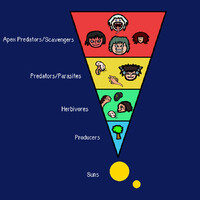
Bio: Intestine Fish are neotenic cousins of Ocean Mers that have abandoned their adult forms to be able to live inside the bodies of larger posthumans. Their favorite place to camp out in is the small and large intestines, hence the posthuman's name. These posthumans are relatively large for endoparasites, coming in at around a quarter of an inch long from tail to tooth. Intestine fish will occasionally travel to the stomach of their host to feed on the meals provided by the host, with schools often eating a large chunk of the host's original meal and causing them to go hungry. After reproducing, the Intestine fish will lay its eggs, which are then carried off in the wind from gas.
The smallest viable host for a Intestine fish is the Neet, the most humanlike posthuman of Anthropoterra. Neets afflicted by Intestine fish would become more ravenous than usual and eat more frequently, sometimes to the point of eating each other in extreme cases. Despite this, the Neet are quite fond of this parasite and see it as a boost to becoming heavier and fatter (something I forgot to mention in the Neet section is that they're also chronic chubby chasers, with fatter Neets being considered hotter than skinnier Neets). Neets infected by these parasites are considered the most attractive considering that they eat the most out of most members of their society. This makes the neet the only posthuman species so far to live in true symbiosis with the Intestine fish.
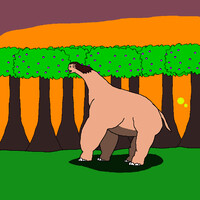
On the flipside, the largest host an Intestine fish can inhabit are the Grazing Titans, with thousands of them being found inside the bodies of those sauropod-sized posthumans. It is very hard to distinguish an infected Grazing Titan from its normal counterpart due to the latter already being gluttonous without the parasite. In fact, infected Grazing Titans only seem to eat 15% more than healthy Titans. Some reporters believe that these parasites also infect Zoridians and Multures, but this has yet to be proven.
Scientific Name: Homoitchys intestinum (Intestine merfolk)
Taxonomy: Gentically modified humans
Max HP: 6
Max ATK: 1
Diet: Omnivore
Sapience: Non-sapient
Length: 0.25in
Weight: 175mg
Lifespan: 3 years
Bio: Intestine Fish are neotenic cousins of Ocean Mers that have abandoned their adult forms to be able to live inside the bodies of larger posthumans. Their favorite place to camp out in is the small and large intestines, hence the posthuman's name. These posthumans are relatively large for endoparasites, coming in at around a quarter of an inch long from tail to tooth. Intestine fish will occasionally travel to the stomach of their host to feed on the meals provided by the host, with schools often eating a large chunk of the host's original meal and causing them to go hungry. After reproducing, the Intestine fish will lay its eggs, which are then carried off in the wind from gas.
The smallest viable host for a Intestine fish is the Neet, the most humanlike posthuman of Anthropoterra. Neets afflicted by Intestine fish would become more ravenous than usual and eat more frequently, sometimes to the point of eating each other in extreme cases. Despite this, the Neet are quite fond of this parasite and see it as a boost to becoming heavier and fatter (something I forgot to mention in the Neet section is that they're also chronic chubby chasers, with fatter Neets being considered hotter than skinnier Neets). Neets infected by these parasites are considered the most attractive considering that they eat the most out of most members of their society. This makes the neet the only posthuman species so far to live in true symbiosis with the Intestine fish.
On the flipside, the largest host an Intestine fish can inhabit are the Grazing Titans, with thousands of them being found inside the bodies of those sauropod-sized posthumans. It is very hard to distinguish an infected Grazing Titan from its normal counterpart due to the latter already being gluttonous without the parasite. In fact, infected Grazing Titans only seem to eat 15% more than healthy Titans. Some reporters believe that these parasites also infect Zoridians and Multures, but this has yet to be proven.
Category Artwork (Digital) / Human
Species Unspecified / Any
Size 600 x 600px
File Size 18.8 kB

Comments