
 FA+
FA+ Shop
Shop
314
Views
Views
7
Favorites
Favorites
Category
Story / General Furry Art
Species Canine (Other)
Size 120 x 77
File Size 67.4 kB
Report this content
More from Walt46





The Havana
A Veteran’s Day story
© 2024 by Walter Reimer
Thumbnail art by Christopher Rave
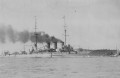
“Well, where shall we go first?” one of the sailors asked. The pinscher and three of his crewmates had just left their ship, intent on enjoying a few days’ liberty. Behind them sat the dockyards and wharves of Kiel. The wind was coming in from the Baltic, chill and raw, and seagulls mewed in the distance as they drifted through the clear blue sky.
“Drinks first,” the boar, Albert, said.
“Beer,” Karl amended. The marten adjusted his uniform cap.
“And something to eat,” Gerhardt said, the brown-furred feline adding, “Before we go to the Bordel.” The others all grinned and nudged each other at the prospect of some female companionship.
The pinscher, whose name was Johannes, glanced around as they continued beyond the docks and he pointed at one sign. “How about there?”
The bar was a few blocks inland from the harbor, with lights shining convivially behind windows smudged with dust, grime and salt. The doorframe had been carved to resemble two palm trees flanking the front door, and the sign overhead announced that the place was called Das Havanna.
“Looks good,” Albert said, and the quartet went inside.
The interior was comfortably lit, and there were a few sailors and civilians enjoying their drinks and snacks as the four went up to the bar. A cheerful-looking canine femme said, “Welcome! What can I get you fine boys?”
Gerhardt grinned. “Four beers, please.”
“Coming up,” and she began to put mugs under the tapped keg.
Johannes looked around the place as he took a drink from his beer, and his ears went up. “Hey, fellows,” and when the other three looked his way he nodded toward a corner of the establishment. The corner was embellished with an old and slightly frayed naval jack, the black-white-red tricolor with its black Maltese cross flanked by a few framed photographs and, beneath them, seated at a small table, was a slightly portly wirehaired pointer dressed in a suit. He was reading the newspaper and placidly smoking a pipe.
Curious, the quartet walked over to the older man. “Excuse us, mein Herr,” Johannes said, and when the older man looked up the pinscher gestured at the flag with his mug. “What’s the story behind that?”
The pointer set the paper aside and took the pipe from his mouth. “It might have something to do with those pictures, and where else should the Kaiserliche Marine’s flag be flying, if not in a sailor’s bar?” He smiled and half-twisted, looking up at the flag.
Albert craned his neck and looked at the photographs. “Is – is that you, Sir?” he asked, pointing at one that showed a much younger wirehaired pointer in uniform posing with a few palm trees in the background. In the distance a harbor could be seen.
“That it is, my young friend, that it is,” the old canine said with a broad smile. “Name’s Franz.”
The others introduced themselves, and Johannes asked, “Where was the picture taken? Havana?”
“No, it was in Nassau, in one of the British colonies near America,” Franz replied. “The Bahamas, they call them. Had that picture taken before the battle.”
Four pairs of young ears perked. “Battle?” Gerhardt asked.
Karl asked, “What battle?”
“Tell us, please!” Albert said.
A wide grin creased the pointer’s muzzle. “All right, I shall,” Franz said. “You lot have a seat over there, and I’ll join you.” He got up slowly from his seat while the younger men retreated to a larger table. The older man gestured to the woman behind the bar before he sat down. “So, four of the Kaiser’s best on liberty, eh?” he said, and laughed as the quartet exchanged grins. “What ship are you serving on?”
“The Pommern,” Johannes said proudly.
“Pommern!” Franz said. “I’ve seen her. Quite a fine battleship, and nearly new! You must all be proud of being part of her complement.”
“We are, Sir,” Albert said.
“Big ship,” Franz observed, as the woman plunked down a tray bearing more mugs of beer, including one for the canine, along with sausages, mustard and small loaves of bread. He nodded to her as she walked away.
“Um, Sir, we – “ Karl started to say.
“Don’t think of it, my boy.” Franz leaned forward a little. “I own this place; that’s my daughter-in-law.” The others looked relieved and two started to eat as the older canine sat back, his own mug in one paw. “Now, where was I? Ach, ja; you’re in a big, fine new ship. Not like the one I served in.”
“And what was that?” Gerhardt asked.
“I joined the Navy back in ’69,” Franz said after taking a drink. “I was sent aboard the Meteor.” Seeing a quizzical look he sighed. “What are they teaching children these days, I ask you . . . “ He set the mug down. “She was only four hundred tons; four officers and sixty-seven men. I was barely settled in when they sent us off to South America.”
“Four hundred tons?” Albert asked. “How did you make it across?”
“It wasn’t easy,” the wirehaired pointer admitted. “We had sails and a steam engine, and the ship wasn’t really built very well – rolled so hard that more than once I thought we’d capsize, but we finally made it across to Barbados, and from there to Venezuela. The locals there were having some sort of revolution, and even though we didn’t have many guns, we wanted them to know that the Kaiser would look after Germans.” He paused to sip his beer. “No matter where they were.”
The others nodded, listening to him as they ate and drank.
Franz took another sip of his beer. “We were in The Bahamas when we got word the war had started.”
Four pairs of ears perked, and Gerhardt asked, “The one with France?”
The older canine grinned, displaying two missing teeth. “Just so! It’s good to see young people are paying attention in school.”
The feline said, “My grandfather was in the Army. He fought at Sedan.” He regarded the bread in his paw. “He said he saw Prince Bismarck.”
“Did he now? Good for him,” Franz said. From the looks of the other three younger furs, it was obvious that at least one member of their families had also served in that war, forty years earlier. “Like I said, we didn’t have big guns like your Pommern, but the Captain, Captain von Knorr that was, had us set sail to Cuba to raid some French ships.”
He paused to cough before continuing, “When we got to Havana, there she was, a French mail ship. It’d be a good, fat, slow prize, but we couldn’t touch it. Spain was neutral, so we’d have to wait.” He winked. “Like a feral cat at a mousehole,” and he grinned as Albert nudged Gerhardt, who grinned sourly. “So we settled down to wait for it to leave harbor. Of course,” and he winked, “we did have a chance to live it up a little while we waited.” The four younger men all laughed.
Franz signaled to his daughter-in-law, and she gathered up the empty mugs to refill them. “Pretty girls there, eh?” Karl asked.
“Oh yes,” the older man replied, “and the rum will make your head spin. Now, where – oh, thank you, Maria,” he said to his daughter-in-law as she set a full mug down in front of him, patted him on the shoulder and kissed his cheek before returning to the bar, “where was I? Oh, ja. Soon, a little French dispatch boat, the Bouvet, comes into the harbor, and we start glaring at them. Sure, they start glaring at us too, but we were in a neutral port so we had to play nice.”
“The mail ship tried to leave but came scurrying back in when they remembered we would be coming after them. Then the French captain gets an idea in his head, and he sends a message to our Captain von Knorr,” the wirehaired pointer said. “Challenging us to combat.”
While he paused to fill his pipe and light it, the four sailors busied themselves with their beer and their food. “As I was saying,” Franz said as he shook the match out and placed it in an ashtray, “the French issued a challenge, and von Knorr was honor-bound to take it up. So we got everything ready, and we steamed out of the harbor with two Spanish ships coming along – “
“Why?” Albert asked.
“We had to be more than ten miles out,” Franz explained. “The Spanish were along to make sure we didn’t violate their neutrality. So, we head out, and as soon as we cross the line that afternoon the French start shooting.”
“Did they hit you?” Gerhardt asked.
“No. We shot back, of course, but our aim was pretty poor. We were slower, but nimble; they were faster, but clumsy.” He moved his paws around, miming two ships maneuvering. “For about two hours, we tried to hit each other, and then the Bouvet comes in for a ram.” He paused and took a puff from his pipe. “It was sort of a bad angle, thanks to Captain von Knorr seeing the danger and trying to get out of its way, but the Bouvet hit us.”
“Down comes our mast and rigging,” he continued, “and we end up dead in the water because a rope fouled our propeller. A few of us tried to board the Frenchman, but they shot back and the boat backed off.”
“We’re trying to get the screw cleared, and someone shouts, ‘Here they come again!’ Sure enough, here they came, and we all get ready for a bump but then one of our shells hits their boiler.” He thumped a fist on the table for emphasis.
“So much for ramming you,” Johannes said.
“True. So they raise sails as we get the rope cleared, and we set off after them. We start getting into range, and the Spanish corvette fires a shot across our bows.”
“Why?” Karl asked. “You could have caught up to them.”
“Ten miles,” Franz reminded him. “The French got across the line first, so the battle was over, and we went back to Havana for repairs. Ended up spending months there, because the French asked the Spanish nicely to drag their feet.” He sat back. “By the time we left, the war was over, and we had won.”
There was a pause, and the older man said, “We lost one man that day, with two wounded. They were friends and shipmates.” The four younger sailors saw that his ears drooped in a gesture of melancholy.
Albert raised his mug. “’To the fallen, and to absent friends,’” he said. Franz got a little misty-eyed as he raised his mug, and all five clinked them together before drinking.
Gerhardt said, “To The Day.”
“What’s that?” Franz asked.
“Why, the day we go out and beat the English Navy,” the feline said. The others had raised their mugs, and looked at the older man expectantly.
“I’ll drink with you,” Franz said, reaching out with his mug to touch the others, “but have you heard what I’ve been saying?”
“Of course,” Gerhardt said. “You fought in a battle – “
“Which lost me a friend, and wounded two more,” the older man said, “and in the end was completely pointless. It’s the truth,” he said to the astounded Gerhardt and saw the other three start in surprise. “In your schooling, and your elders’ reminiscences, do you ever hear of the great naval battles we Germans fought against the French? No? That’s because the affair we had in Cuba was the only battle there was. It was a draw, and was completely pointless.” He met their gazes unflinchingly. “And let me tell you something, young men.”
“You sit here and talk of battle, and that’s good if you’re sitting in here, safe. But it’s a greatly different matter if bullets and shells are flying, and you see and smell powder and blood, and you feel your bladder let go and your bowels loosen in fear. Think of all the people you know aboard Pommern, and how a fine a ship it is, and imagine seeing your friends and shipmates dead or injured, and your fine ship a flaming wreck.” He lapsed into a sullen silence, puffing his pipe.
The quartet of young sailors glanced at each other as the silence lengthened until finally Johannes cleared his throat and said, “I suppose we should be going.” The others nodded, while Franz remained still. “Thank you for your hospitality, Sir,” the pinscher said as he stood, gathering up his uniform cap.
Franz nodded, once, and raised his pipe to his lips as the quartet left the bar.
The four walked along in silence for a moment before Albert said, “Crazy old man.”
“What do you mean?” Karl asked.
“Trying to scare us like that,” the boar said. “Sure, he fought one battle, but he was a little tub compared to our battleships.” He grunted. “Hell, our destroyers are bigger than his ship was.”
Gerhardt nodded. “You’re right about that. We’ve got the best armor and guns in the world.” He glanced at the pinscher. “What do you think, Johannes?”
The canine shrugged. “I think he was just wanting to talk to us. But time for talk’s over,” he declared, rubbing his paws together, “and I think there’s a Bordel nearby. Since he didn’t charge us for the beer, we have a little extra to spend.” The others grinned and started off down the road.
End
_________________________
Historical note: SMS Pommern was sunk with all hands at Jutland in 1916, the only battleship to be lost on either side.
Moral: Listen to veterans before you start going on about ‘glorious battles.’ They may know something about that.
A Veteran’s Day story
© 2024 by Walter Reimer
Thumbnail art by Christopher Rave
“Well, where shall we go first?” one of the sailors asked. The pinscher and three of his crewmates had just left their ship, intent on enjoying a few days’ liberty. Behind them sat the dockyards and wharves of Kiel. The wind was coming in from the Baltic, chill and raw, and seagulls mewed in the distance as they drifted through the clear blue sky.
“Drinks first,” the boar, Albert, said.
“Beer,” Karl amended. The marten adjusted his uniform cap.
“And something to eat,” Gerhardt said, the brown-furred feline adding, “Before we go to the Bordel.” The others all grinned and nudged each other at the prospect of some female companionship.
The pinscher, whose name was Johannes, glanced around as they continued beyond the docks and he pointed at one sign. “How about there?”
The bar was a few blocks inland from the harbor, with lights shining convivially behind windows smudged with dust, grime and salt. The doorframe had been carved to resemble two palm trees flanking the front door, and the sign overhead announced that the place was called Das Havanna.
“Looks good,” Albert said, and the quartet went inside.
The interior was comfortably lit, and there were a few sailors and civilians enjoying their drinks and snacks as the four went up to the bar. A cheerful-looking canine femme said, “Welcome! What can I get you fine boys?”
Gerhardt grinned. “Four beers, please.”
“Coming up,” and she began to put mugs under the tapped keg.
Johannes looked around the place as he took a drink from his beer, and his ears went up. “Hey, fellows,” and when the other three looked his way he nodded toward a corner of the establishment. The corner was embellished with an old and slightly frayed naval jack, the black-white-red tricolor with its black Maltese cross flanked by a few framed photographs and, beneath them, seated at a small table, was a slightly portly wirehaired pointer dressed in a suit. He was reading the newspaper and placidly smoking a pipe.
Curious, the quartet walked over to the older man. “Excuse us, mein Herr,” Johannes said, and when the older man looked up the pinscher gestured at the flag with his mug. “What’s the story behind that?”
The pointer set the paper aside and took the pipe from his mouth. “It might have something to do with those pictures, and where else should the Kaiserliche Marine’s flag be flying, if not in a sailor’s bar?” He smiled and half-twisted, looking up at the flag.
Albert craned his neck and looked at the photographs. “Is – is that you, Sir?” he asked, pointing at one that showed a much younger wirehaired pointer in uniform posing with a few palm trees in the background. In the distance a harbor could be seen.
“That it is, my young friend, that it is,” the old canine said with a broad smile. “Name’s Franz.”
The others introduced themselves, and Johannes asked, “Where was the picture taken? Havana?”
“No, it was in Nassau, in one of the British colonies near America,” Franz replied. “The Bahamas, they call them. Had that picture taken before the battle.”
Four pairs of young ears perked. “Battle?” Gerhardt asked.
Karl asked, “What battle?”
“Tell us, please!” Albert said.
A wide grin creased the pointer’s muzzle. “All right, I shall,” Franz said. “You lot have a seat over there, and I’ll join you.” He got up slowly from his seat while the younger men retreated to a larger table. The older man gestured to the woman behind the bar before he sat down. “So, four of the Kaiser’s best on liberty, eh?” he said, and laughed as the quartet exchanged grins. “What ship are you serving on?”
“The Pommern,” Johannes said proudly.
“Pommern!” Franz said. “I’ve seen her. Quite a fine battleship, and nearly new! You must all be proud of being part of her complement.”
“We are, Sir,” Albert said.
“Big ship,” Franz observed, as the woman plunked down a tray bearing more mugs of beer, including one for the canine, along with sausages, mustard and small loaves of bread. He nodded to her as she walked away.
“Um, Sir, we – “ Karl started to say.
“Don’t think of it, my boy.” Franz leaned forward a little. “I own this place; that’s my daughter-in-law.” The others looked relieved and two started to eat as the older canine sat back, his own mug in one paw. “Now, where was I? Ach, ja; you’re in a big, fine new ship. Not like the one I served in.”
“And what was that?” Gerhardt asked.
“I joined the Navy back in ’69,” Franz said after taking a drink. “I was sent aboard the Meteor.” Seeing a quizzical look he sighed. “What are they teaching children these days, I ask you . . . “ He set the mug down. “She was only four hundred tons; four officers and sixty-seven men. I was barely settled in when they sent us off to South America.”
“Four hundred tons?” Albert asked. “How did you make it across?”
“It wasn’t easy,” the wirehaired pointer admitted. “We had sails and a steam engine, and the ship wasn’t really built very well – rolled so hard that more than once I thought we’d capsize, but we finally made it across to Barbados, and from there to Venezuela. The locals there were having some sort of revolution, and even though we didn’t have many guns, we wanted them to know that the Kaiser would look after Germans.” He paused to sip his beer. “No matter where they were.”
The others nodded, listening to him as they ate and drank.
Franz took another sip of his beer. “We were in The Bahamas when we got word the war had started.”
Four pairs of ears perked, and Gerhardt asked, “The one with France?”
The older canine grinned, displaying two missing teeth. “Just so! It’s good to see young people are paying attention in school.”
The feline said, “My grandfather was in the Army. He fought at Sedan.” He regarded the bread in his paw. “He said he saw Prince Bismarck.”
“Did he now? Good for him,” Franz said. From the looks of the other three younger furs, it was obvious that at least one member of their families had also served in that war, forty years earlier. “Like I said, we didn’t have big guns like your Pommern, but the Captain, Captain von Knorr that was, had us set sail to Cuba to raid some French ships.”
He paused to cough before continuing, “When we got to Havana, there she was, a French mail ship. It’d be a good, fat, slow prize, but we couldn’t touch it. Spain was neutral, so we’d have to wait.” He winked. “Like a feral cat at a mousehole,” and he grinned as Albert nudged Gerhardt, who grinned sourly. “So we settled down to wait for it to leave harbor. Of course,” and he winked, “we did have a chance to live it up a little while we waited.” The four younger men all laughed.
Franz signaled to his daughter-in-law, and she gathered up the empty mugs to refill them. “Pretty girls there, eh?” Karl asked.
“Oh yes,” the older man replied, “and the rum will make your head spin. Now, where – oh, thank you, Maria,” he said to his daughter-in-law as she set a full mug down in front of him, patted him on the shoulder and kissed his cheek before returning to the bar, “where was I? Oh, ja. Soon, a little French dispatch boat, the Bouvet, comes into the harbor, and we start glaring at them. Sure, they start glaring at us too, but we were in a neutral port so we had to play nice.”
“The mail ship tried to leave but came scurrying back in when they remembered we would be coming after them. Then the French captain gets an idea in his head, and he sends a message to our Captain von Knorr,” the wirehaired pointer said. “Challenging us to combat.”
While he paused to fill his pipe and light it, the four sailors busied themselves with their beer and their food. “As I was saying,” Franz said as he shook the match out and placed it in an ashtray, “the French issued a challenge, and von Knorr was honor-bound to take it up. So we got everything ready, and we steamed out of the harbor with two Spanish ships coming along – “
“Why?” Albert asked.
“We had to be more than ten miles out,” Franz explained. “The Spanish were along to make sure we didn’t violate their neutrality. So, we head out, and as soon as we cross the line that afternoon the French start shooting.”
“Did they hit you?” Gerhardt asked.
“No. We shot back, of course, but our aim was pretty poor. We were slower, but nimble; they were faster, but clumsy.” He moved his paws around, miming two ships maneuvering. “For about two hours, we tried to hit each other, and then the Bouvet comes in for a ram.” He paused and took a puff from his pipe. “It was sort of a bad angle, thanks to Captain von Knorr seeing the danger and trying to get out of its way, but the Bouvet hit us.”
“Down comes our mast and rigging,” he continued, “and we end up dead in the water because a rope fouled our propeller. A few of us tried to board the Frenchman, but they shot back and the boat backed off.”
“We’re trying to get the screw cleared, and someone shouts, ‘Here they come again!’ Sure enough, here they came, and we all get ready for a bump but then one of our shells hits their boiler.” He thumped a fist on the table for emphasis.
“So much for ramming you,” Johannes said.
“True. So they raise sails as we get the rope cleared, and we set off after them. We start getting into range, and the Spanish corvette fires a shot across our bows.”
“Why?” Karl asked. “You could have caught up to them.”
“Ten miles,” Franz reminded him. “The French got across the line first, so the battle was over, and we went back to Havana for repairs. Ended up spending months there, because the French asked the Spanish nicely to drag their feet.” He sat back. “By the time we left, the war was over, and we had won.”
There was a pause, and the older man said, “We lost one man that day, with two wounded. They were friends and shipmates.” The four younger sailors saw that his ears drooped in a gesture of melancholy.
Albert raised his mug. “’To the fallen, and to absent friends,’” he said. Franz got a little misty-eyed as he raised his mug, and all five clinked them together before drinking.
Gerhardt said, “To The Day.”
“What’s that?” Franz asked.
“Why, the day we go out and beat the English Navy,” the feline said. The others had raised their mugs, and looked at the older man expectantly.
“I’ll drink with you,” Franz said, reaching out with his mug to touch the others, “but have you heard what I’ve been saying?”
“Of course,” Gerhardt said. “You fought in a battle – “
“Which lost me a friend, and wounded two more,” the older man said, “and in the end was completely pointless. It’s the truth,” he said to the astounded Gerhardt and saw the other three start in surprise. “In your schooling, and your elders’ reminiscences, do you ever hear of the great naval battles we Germans fought against the French? No? That’s because the affair we had in Cuba was the only battle there was. It was a draw, and was completely pointless.” He met their gazes unflinchingly. “And let me tell you something, young men.”
“You sit here and talk of battle, and that’s good if you’re sitting in here, safe. But it’s a greatly different matter if bullets and shells are flying, and you see and smell powder and blood, and you feel your bladder let go and your bowels loosen in fear. Think of all the people you know aboard Pommern, and how a fine a ship it is, and imagine seeing your friends and shipmates dead or injured, and your fine ship a flaming wreck.” He lapsed into a sullen silence, puffing his pipe.
The quartet of young sailors glanced at each other as the silence lengthened until finally Johannes cleared his throat and said, “I suppose we should be going.” The others nodded, while Franz remained still. “Thank you for your hospitality, Sir,” the pinscher said as he stood, gathering up his uniform cap.
Franz nodded, once, and raised his pipe to his lips as the quartet left the bar.
The four walked along in silence for a moment before Albert said, “Crazy old man.”
“What do you mean?” Karl asked.
“Trying to scare us like that,” the boar said. “Sure, he fought one battle, but he was a little tub compared to our battleships.” He grunted. “Hell, our destroyers are bigger than his ship was.”
Gerhardt nodded. “You’re right about that. We’ve got the best armor and guns in the world.” He glanced at the pinscher. “What do you think, Johannes?”
The canine shrugged. “I think he was just wanting to talk to us. But time for talk’s over,” he declared, rubbing his paws together, “and I think there’s a Bordel nearby. Since he didn’t charge us for the beer, we have a little extra to spend.” The others grinned and started off down the road.
End
_________________________
Historical note: SMS Pommern was sunk with all hands at Jutland in 1916, the only battleship to be lost on either side.
Moral: Listen to veterans before you start going on about ‘glorious battles.’ They may know something about that.
Category Story / General Furry Art
Species Canine (Other)
Size 120 x 77px
File Size 67.4 kB



Comments